
After a wild weekend that saw four double-digit seeds advance to Round 2, we’re left with just one as we enter the Sweet 16. Cinderella is sporting a new look in 2026, so let’s break down what the field’s biggest underdogs look like and assess their upset chances as we look ahead to the regional semifinals.
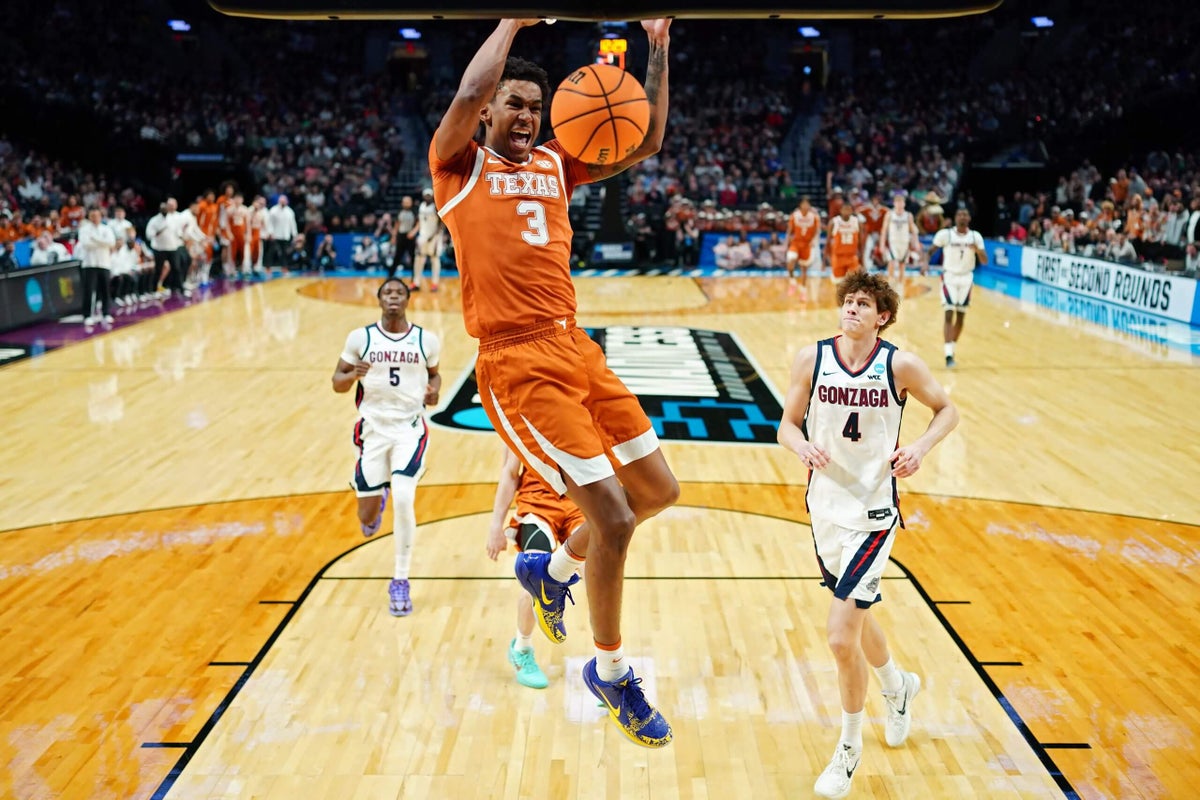
No. 11 Texas Longhorns vs. No. 2 Purdue Boilermakers
Upset Chance: 19.3 percent
Before the tournament, we wrote that in the modern era of NIL and the transfer portal, major conference teams that underperformed during the regular season — “wounded assassins” in the parlance of our upset projection model — would need to carry the underdog banner. Sure enough, Texas is the lone double-digit seed to reach the Sweet 16. Now the question becomes whether it can be the latest power-conference team to rebound from a rough regular season to make a run to the Final Four.
In three of the five past tournaments, we saw long shots from big leagues reach the tournament’s final weekend:
2024: NC State (No. 11 seed)
2022: North Carolina (No. 8 seed)
2021: UCLA (No. 11 seed)
Texas’ task is more difficult. The Longhorns will face the Purdue Boilermakers, the No. 2 seed in the West, in the Sweet 16. If they win, they are most likely to run into top-seed Arizona (although Darius Acuff and Arkansas might have something to say about that). Of the three teams above, only UCLA had to face the top two seeds during the regional rounds. (The others? NC State beat No. 2 seed Marquette and No. 4 Duke; UNC beat No. 4 UCLA and No. 15 St. Peter’s.) But those teams the Bruins bested — No. 2 seed Alabama and No. 1 Michigan — had Net Ratings on KenPom of 25.09 and 29.67, respectively. Purdue is at 31.9 this year; Arizona is at 37.96.
So the road is arduous, and it starts with a Purdue team that is starting to shed its label as the Worst. Giant. Ever. The Boilermakers handled an upstart Miami squad on Sunday (despite giving up offensive rebounds on 40 percent of the Hurricanes’ shots) and have won six games in a row. Texas will have to bring the same energy to the boards, since the Longhorns don’t force turnovers (352nd in the country) and aren’t particularly good from beyond the arc.
Our upset projection model, Slingshot, says Purdue is about 14 points per 100 possessions better than Texas. Even if this version of the Longhorns is better than what we’ve seen for most of the season, it isn’t 14 points better. So the Longhorns need to incorporate some higher-risk/higher-reward strategy into their game plan and/or hope randomness shifts in their favor.
Could that happen? Of course. It’s March — anything can happen, and Texas is several steps above “anything.” Still, it’s not likely, at least as far as Slingshot is concerned.
No. 9 Iowa Hawkeyes vs. No. 4 Nebraska Cornhuskers
Upset Chance: 42.3 percent*
When writing about the 18.6 percent odds our model said Iowa had of beating Florida in the second round, we told you to take the number as a sign that anything could happen. Here’s what that meant: If a favorite lets an underdog hang around in a slow game without ever exerting its physical dominance for more than a couple of possessions at a time, its skills won’t matter.
The kid from Málaga can hit a 3. (Inspirational quote from Alvaro Folgueiras: “March is for the dreamers, and there is no better dreamer than us.”) Even the national champions can fail to get a last-second shot off. And a No. 9 seed can beat a No. 1 for the first time in nine years.
Iowa, the slowest of the Slow Killers, played the role of long shot to perfection against Florida. The Hawkeyes held the Gators to 61 possessions (10.8 fewer than Florida’s average this season). They protected the ball and, incredibly, grabbed more offensive rebounds (10-9), which meant they attempted more field goals (51-46) — and they hardly ever missed from inside. As a result, we will now enjoy a rarity: There have been only five No. 4 vs. No. 9 matchups since the Tournament expanded in 1985, and the lower seed has won three of those matchups.
This contest is unusual for another reason, too: It’s a Bracket Breakers game — meaning the opponents are separated by at least five seeds — that is also an intraconference matchup. This will be the third meeting between the Hawkeyes and Cornhuskers this season. Iowa won, 57-52, at home in February, and Nebraska won, 84-75 in overtime, at home earlier this month, so they are very familiar with one another.
And they’re close in strength, to boot, with a gap between them of fewer than 3 points per 100 possessions in our power ratings. There’s just no reason to expect one to play like a Goliath and the other as an underdog, or to treat this as a giant vs. a killer matchup via our model. So we won’t.
*With an asterisk denoting our departure from standard procedure but adherence to common sense, we are listing Iowa’s upset chance according to a straight power-ratings analysis. (Slingshot’s extra bells and whistles would produce a result of 32 percent.)
Nebraska needed a kind bounce on a last-second heave to get by Vanderbilt, but the Huskers are extraordinarily efficient on defense, choking off fast breaks in transition, forcing opponents to repeatedly take bad shots from long range, and allowing just 92 points per 100 possessions (sixth-fewest in the nation). But their five-out style leaves them vulnerable to opponents who can exploit their statistically remarkable absence from the offensive boards (ranking: 331st in offensive rebounding percentage).
Iowa just grabbed 65.4 percent of shots missed by Florida, typically one of the most dominant offensive rebounding teams in the country. Iowa also forces turnovers on more than 20 percent of opponent possessions (ranking 15th).
Add up the appropriate numbers, and this game is nearly a coin flip. Reinforcing that estimate, four of the 10 games most like Nebraska-Iowa in our database resulted in upsets by the lower seed. (This matchup resembles Wisconsin-Oregon in 2019, which should give Wisconsin fans Children of the Corn-level nightmares about the Huskers.) And Nebraska is -150 on the moneyline, implying 60 percent odds of a win for the favorite. So maybe March Madness upsets aren’t quite dead yet.
Top conferences are getting stronger and bigger. Matchups like this, involving “wounded assassins” and familiar foes, will probably become more common. And those games are likely to be tight. Bring on No. 4 seed vs. No. 9 as the new 5 vs. 12.