
Dallas has long been known for its grand ambitions and bold developments. This forward-thinking mindset has shaped the city into one that confidently pursues a brighter future, driven by a resolve to secure its place among the world’s leading cities. But ambition must be grounded in rigor.
Today, Dallas stands at an important moment in the evolution of its urban core. The rebuilding of the Kay Bailey Hutchison Convention Center, the potential for new entertainment venues and mixed-use development and the opportunity to reconnect neighborhoods along the southern edge of downtown represent real possibilities for the city. Done thoughtfully, these investments could bring about new housing, walkability, culture and energy to an area that has long struggled to reach its full potential – a bookend to the success of uptown.
Everyone wants a more vibrant downtown. What many of us question is the suggestion that the only way to achieve that vitality is by tearing down Dallas City Hall.
Let’s begin with an uncomfortable truth. City leaders have deferred maintenance on this building for decades. As has happened with many public institutions across the country, routine capital reinvestment has too often been postponed in favor of more immediate priorities. This dynamic is partly a byproduct of our form of governance.
Opinion
Dallas operates under a council/manager form of government where 14 district-based council members and a mayor with limited authority set policy, while professional staff manage operations. This approach addresses each district’s needs but can make citywide agreement difficult. Major civic issues like City Hall’s future often lack attention, though they require disciplined, evidence-based analysis comparable to any effective business or institution.
The maintenance backlog we face today did not appear overnight. It accumulated gradually through years of incremental underinvestment and myopic, polarized initiatives. That reality deserves acknowledgment.
Acknowledging deferred maintenance is a start but it doesn’t warrant the immediate acceptance of what is probably an inflated cost estimate or the narrative of a building in structural crisis.
Last month’s estimates suggesting that Dallas City Hall requires roughly $1 billion to repair, maintain and operate, including $329 million for repairs alone, deserve serious scrutiny. Even the repair estimate itself appears to include aggressive contingencies and escalation assumptions that dramatically expand the projected overall cost.
When a cost analysis conveniently aligns with a preferred outcome, in this case demolition in favor of an arena and entertainment complex, it stops being neutral analysis and begins to look like advocacy disguised as arithmetic.
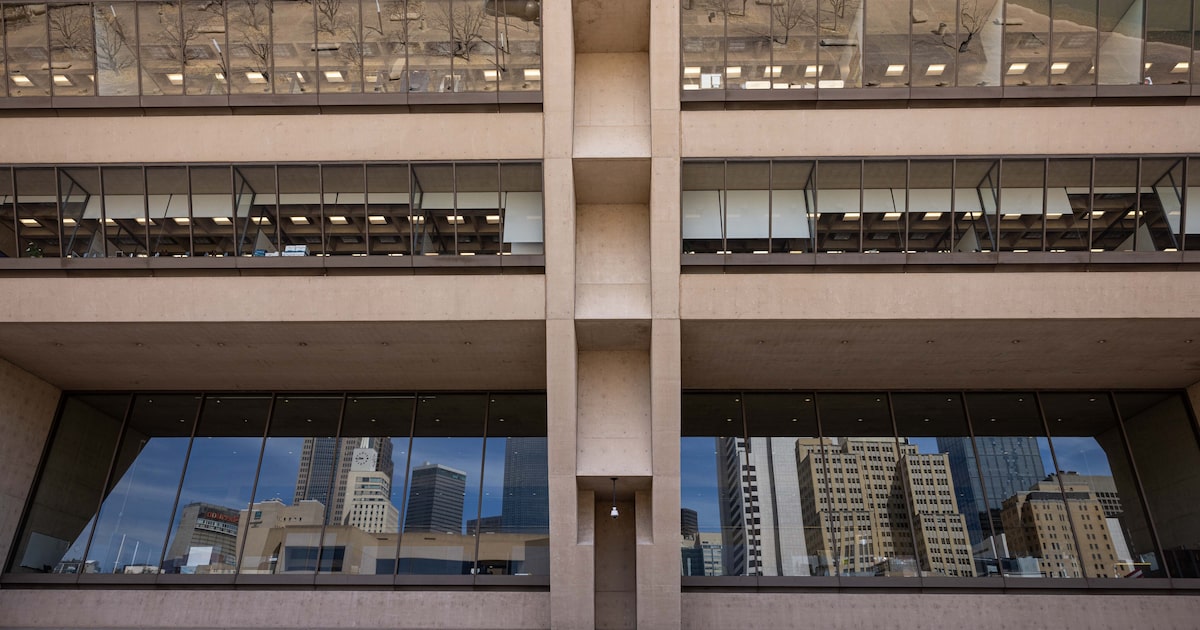
Dallas City Hall is not an ordinary office building; it is one of the most architecturally significant civic buildings in Texas and a defining piece of Dallas’ public identity.
I.M. Pei’s monumental inverted-pyramid form was not an arbitrary gesture. The building’s dramatic cantilever, one of the largest of its kind when it was completed, was meant to symbolize openness in government, with the structure literally leaning forward to embrace the citizens gathered in the plaza below. Its massive concrete geometry and civic scale were deliberate expressions of permanence, designed to anchor the southern edge of downtown and give Dallas a seat of government that matched the city’s growing ambition. In short, it was built to endure.
Every major civic building requires reinvestment over time. That is not mismanagement; it is stewardship. The responsible question is not whether reinvestment can cost a lot of money; it often does. The real question is whether the numbers being presented are credible, transparent and free from agenda.
In a recent column in The Dallas Morning News, architecture critic Mark Lamster raised many of these same concerns. Writing after marathon City Council hearings on the building’s future, Lamster described the remarkable outpouring of public support for preserving City Hall. Nearly 90 speakers appeared before the council to argue for repairing and reinvesting in the building, compared with only about 20 advocating abandonment.
Lamster also noted the growing skepticism surrounding the city’s cost estimates. Independent architects reviewing the report presented to the council concluded that the repair projections appeared inflated and biased toward relocation. As one architect testified during the hearings, the estimates were “filled with contradictions, gaps and fuzzy numbers” and failed to consider a responsible strategy of phased renovation.
Perhaps most troubling, Lamster observed that Dallas appears to be rushing toward a major decision without a coherent plan for the surrounding district. More than 30 acres of land soon to be vacated by the reconstruction of the convention center could accommodate major new development, including an arena, without requiring the demolition of City Hall.
Why, then, the urgency? Demolishing City Hall would take time. Relocating city government would take time. Building a new arena would take years. The urgency currently being cited seems to be more closely related to immediate market trends in a downtown area experiencing a real estate downturn and some negative PR punches, rather than driven by genuine civic necessity. Momentum for creating an energetic and lively downtown has stalled since COVID and needs a jumpstart. Something needs to be done. I get it.
Dallas has seen moments before when large redevelopment ideas promised transformative results but produced mixed outcomes. The struggles of Victory Park to sustain vibrant street life, despite enormous investment, should remind us that creating successful urban districts is far more complex than simply clearing land and starting over. Cities thrive through patient layering, not sudden erasure.
Preservation and progress are not mutually exclusive. There are thoughtful ideas on the table that would both modernize City Hall and strengthen the surrounding district:
Reimagining the City Hall Plaza as an inviting civic parkImproving access and wayfindingFocusing on safety and encouraging “eyes on the street” Modernizing interior spaces, creating a one-stop permitting center that brings daily activity into the district Connecting the civic campus more directly to the Cedars through new public spaces and infrastructureDeveloping a master plan that connects to the new convention center and downtownIntegrating the recently completed Parks for Downtown Dallas sites to this reimagined civic plaza.
Combined with redevelopment around the convention center, these investments could transform this part of downtown into a lively civic, entertainment and cultural hub. What if the 30 acres available through the re-siting of the convention center were used to bridge together the convention center, an entertainment complex and our home of city government along with a mixed-use housing development that brought 24/7 life to this part of our city?
Great cities evolve by layering new energy onto meaningful existing places. They do not casually discard the architecture that defines their civic identity. They evaluate carefully, adapt thoughtfully and preserve when warranted.
Dallas can correct past underinvestment. We can strengthen our urban core. We can modernize City Hall. And we can do it without erasing one of the most significant civic buildings in Texas.
Bold vision is welcome. Manufactured urgency is not.
Dan Noble is CEO emeritus at HKS.
We welcome your thoughts in a letter to the editor. See the guidelines and submit your letter here.
If you have problems with the form, you can submit via email at letters@dallasnews.com