
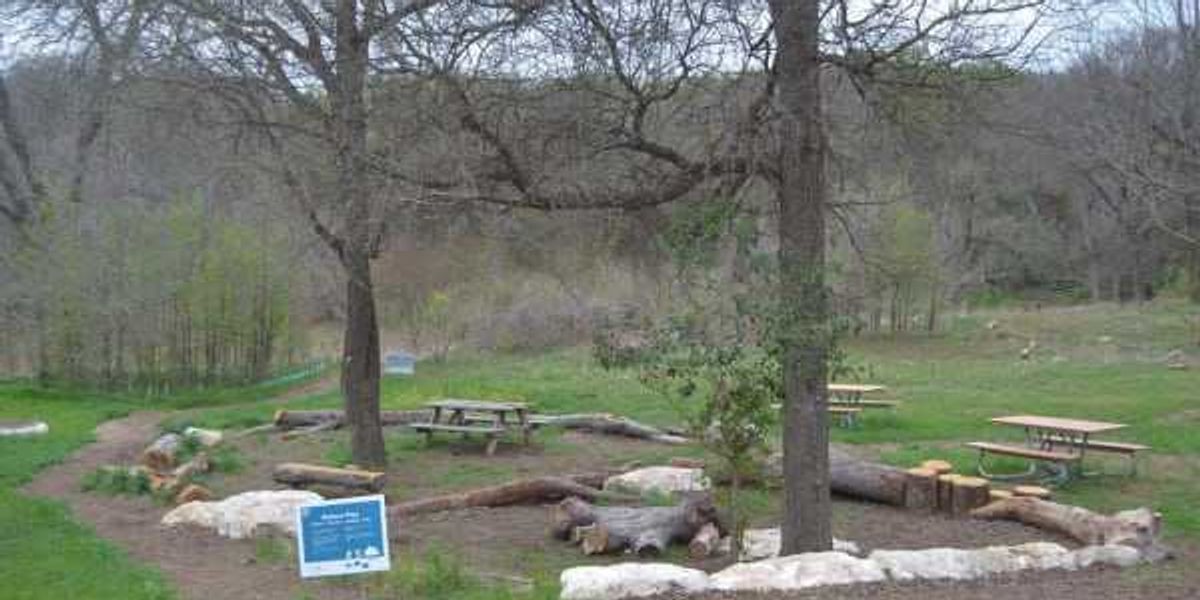
This March, Southeast Austinites gained a new space to play and enjoy the outdoors in an area that reduces the risk of floods. Like many park development projects, this one at the East Williamson Creek Greenbelt exists in multiple phases; the recently completed phase added a new trail entry and play materials.
The work, unveiled March 6, was a collaborative effort between the neighborhood Adopt-a-Creek group, who originated the project, and Go Austin/Vamos Austin (GAVA), UT Austin’s Community & Regional Planning Program, Austin’s Neighborhood Partnering Program, Austin Parks and Recreation, Austin Watershed Protection, and Austin Capital Delivery Services. The community proposal was dubbed Donde Corre el Agua (Where the Water Runs).
From a city newsletter, the following upgrades were unveiled:
a completed network of trailsa new entrywaya nature play area for kids with logs and bouldersbenches and picnic tablesnative landscapingmajor flood reduction infrastructure to direct stormwater to the creek
According to a project background summary, the site used to have homes on it until the ’90s, when a major flooding event took them out. In 2001, the city acquired the land and built a wall to keep more floods from affecting the neighborhood.
People who live in the Dove Springs neighborhood — including longtime residents Blanca Ortíz, Elena Rodríguez and Enedina Sánchez, who “adopted” some of the creek — remember the forested area before the wall and continued to enjoy it after the wall. The goal was to preserve those connections and create something that continues to be meaningful to the community.
Community members got involved by offering personal memories and knowledge, and taking walks through the space to take pictures, draw, create mental maps, and otherwise participate in the design. To suit existing conditions, planners noted that locals had already established their own foot trails, and that the homes around the area tended to house multiple generations and a high Hispanic and Latino population, making it important to design for all ages and include bilingual signage.
“These projects carry special significance, not only because of the site’s history, but because they were brought forward by dedicated neighbors and community advocates,” said director of Austin Transportation and Public Works Richard Mendoza in the newsletter. “They represent the power of collective action, with multiple City departments working hand-in-hand with the community to bring residents’ vision to life. That collaboration is exactly what our Neighborhood Partnering Program is designed to achieve.”