
San Antonio plans to revisit the relatively low campaign contribution limits it places on candidates running for City Council and mayor, currently set at $500 and $1,000 respectively per election cycle.
The city’s Ethics Review Board just completed a comprehensive review of San Antonio’s Municipal Campaign Finance Code in 2024, and didn’t touch those limits.
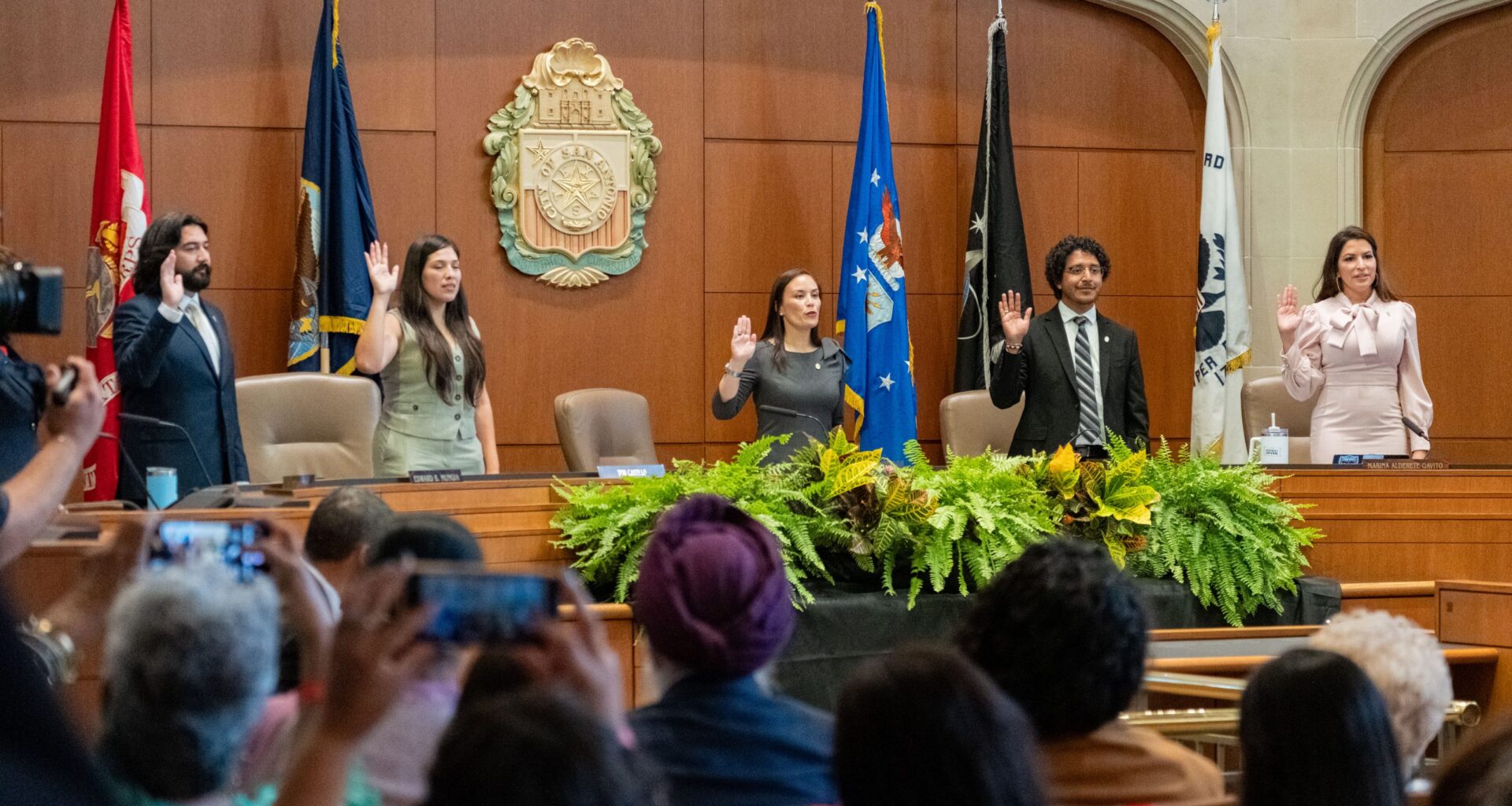
But San Antonio just moved to longer, four-year terms when its 10 council members and mayor were sworn in last June.
Under the current rules, that means individual donors who’ve already given the maximum contribution to the current council members couldn’t do so again until June 30, 2028 — the beginning of the election cycle for a November 2029 municipal election.
Many donors have already maxed out what they can give for this four-year cycle, ahead of an election where Mayor Gina Ortiz Jones will be on the ballot, and three of her biggest council rivals, Sukh Kaur (D1), Marina Alderete Gavito (D7) and Marc Whyte (D10), are all term-limited from seeking a full four years in their existing roles.
“The campaign election cycles changed from two years to four years, and where we’re seeing the impact is specifically in the Municipal Campaign Finance Code, and that’s on contribution cycles,” said Compliance Auditor Maria Perez, who serves as the official liaison between the city and its Ethics Review Board.
“Contribution cycles run pre-election, post-election and runoff, and now that’s spread over four years versus two years,” Perez told the board Monday night. “It has impacted campaign funding, and it’s something that the board may want to think about.”
6 biggest takeaways from the last semi-annual campaign finance reports
The Ethics Review Board is comprised of 11 members who are appointed by the council and mayor.
Based on their comments Monday night, Perez said staff has been given the green-light to start formulating a process for them to again review and propose changes to the Municipal Finance Code this year.
“We just did this full overview. I don’t know that we really need to do another full overview, [versus] just target those sections,” she told the board.
But a panel with many new members since then will have the ultimate say over what they reopen and how they approach making the contribution limits match the new terms.
“I’m going to bring it the board and see what we think about it,” Ethics Review Board Chair Patrick Lang said in an interview after the meeting. “We don’t want to stray too far from where we’re at, in my humble opinion.”
A rise in PAC spending
San Antonio’s relatively low contributions limits were intended to level the playing field for candidates from different parts of the city, and with varying degrees of wealth within their networks of supporters.
But the policy came under scrutiny in the last city election, when some political watchers blamed it for giving outsized influence to PACs and self-funders.
2025 mayor’s race among San Antonio’s most expensive
PACs aren’t subject to the same individual donor limits, and candidates can give unlimited personal contributions to their own campaigns.
After Monday’s meeting, Lang said concerns about the rise in PAC spending have some validity. But at the same time, he said, he doesn’t believe higher contribution limits will make it more fair.
“PACs are an issue, but that’s something that we can’t police from here,” Lang said. “It doesn’t matter if we raise [the contribution limit] to a million dollars, there’s still going to be PAC spending.”
All changes would have to be approved by the full board, then voted on by the council as well.
Mandatory ethics training
Based on comments at Monday’s meeting, city staff will also start helping the Ethics Review Board draft a potential policy requiring ethics training for elected officials.
Monday was the first time the board had met for regular business in over a year, Perez said, due to the slew of ethics complaints it had to consider against candidates and elected officials during the 2025 municipal election.
In total, 10 complaints were filed, and five were considered by the board or a panel of its members, she said, “which was a huge number for us.”
In many cases, the Ethics Review Board wound up referring council members to individual ethics training sessions — something they were supposed to have already reviewed and completed on their own.
Lang said the board had grown frustrated with council members breaking rules they were supposed to know, so it planned to look at updating the city’s Ethics Code to mandate in-person training.
That way, he said, it would have a record of when council members received and signed off on the policies, and could have that “ammunition” handy when members say they’ve been blind-sighted.
“It’s not that we want to play gotcha,” he said. ” … [But] as you go along, you’ll see the same violation from the same people with the same excuses.”
In September, the board cited former Mayor Ron Nirenberg for using city resources to create social media content. Councilman Jalen McKee-Rodriguez (D2) was sanctioned in January of 2025 for his handling of a zoning issue.
Council members Sukh Kaur (D1) and Marc Whyte (D10) were also both punished for campaign violations in June — marking Whyte’s second offense with the Ethics Review Board.
Some of the issues council members have been cited for in the past could get more clarity in this year’s update, Perez said, such as how official council staff is allowed to split its time on campaign work, and how official city logos are treated when appearing in campaign photos.