
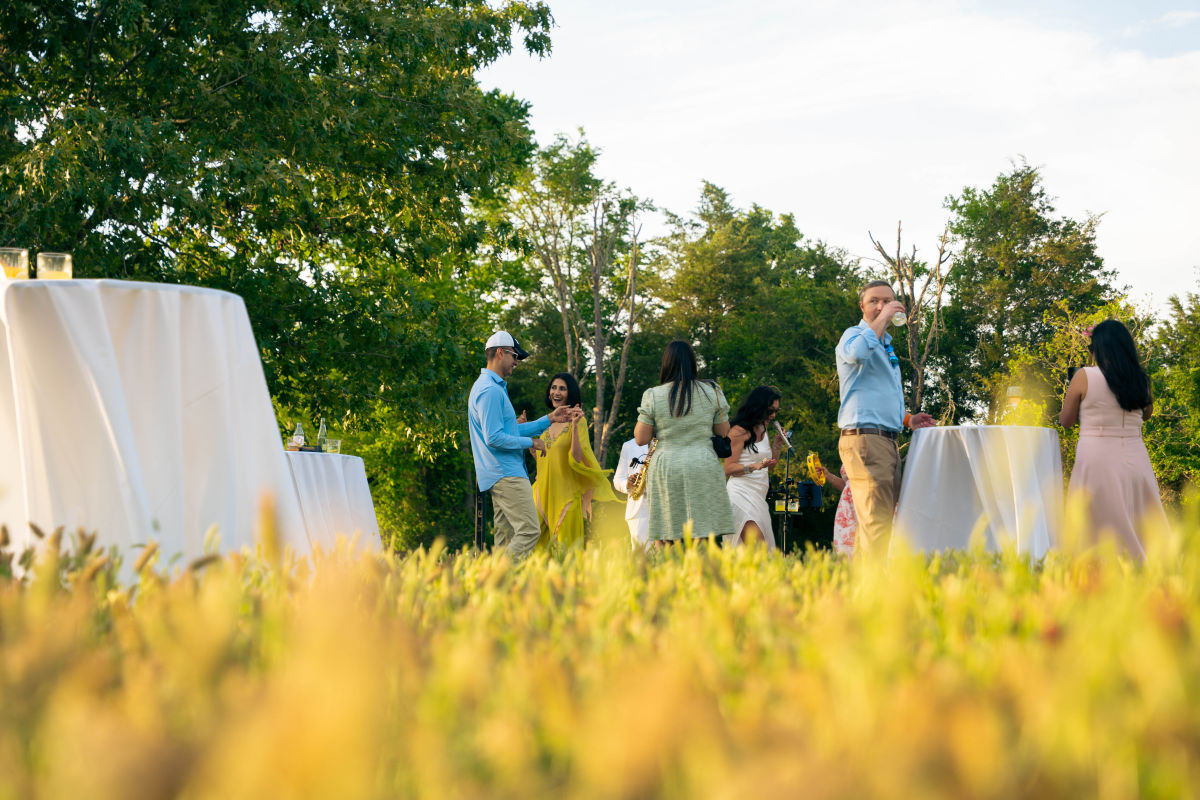
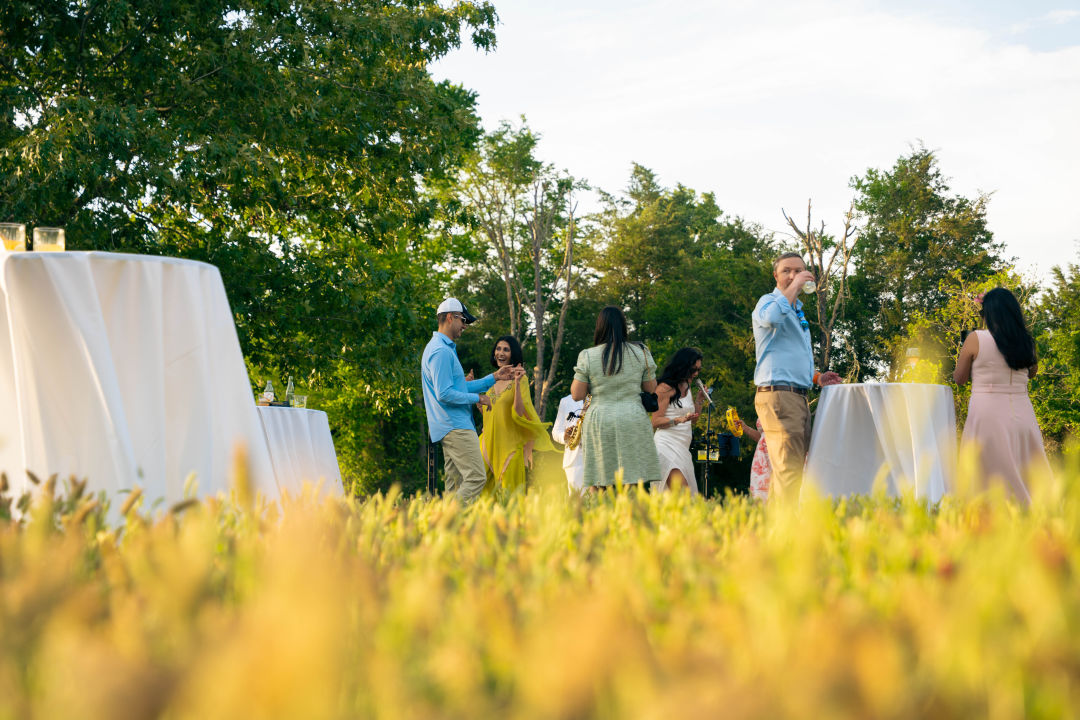
Musaafer’s annual Spring Soiree is the dinner party of the season.
Somewhere between a goat slow-roasted in an underground pit and a cocktail spiked with pickle juice, it becomes clear that this is not a typical dinner party.
Since 2021, Mayank Istwal, the chef behind Houston’s award-winning restaurant Musaafer, has led no more than 70 diners a year through Blackwood Educational Land and Institute—a working Hempstead farm that, for one night, becomes the setting for a Michelin-starred meal. For some, the annual Spring Soiree offers a unique connection between a dish and its origin that a verbal or written explanation just can’t replace.
“Sometimes people don’t know how the actual vegetable grows or what it looks like,” Istwal says of Musaafer’s annual Spring Soiree. “But through this event, at least, it’s a little endeavor that we do so that people can just finally come here and [escape] from their busy life. It’s so much fun to just drive to a farm like this…have a Michelin-star meal, a sit-down dinner, paired with wine and cocktails.”
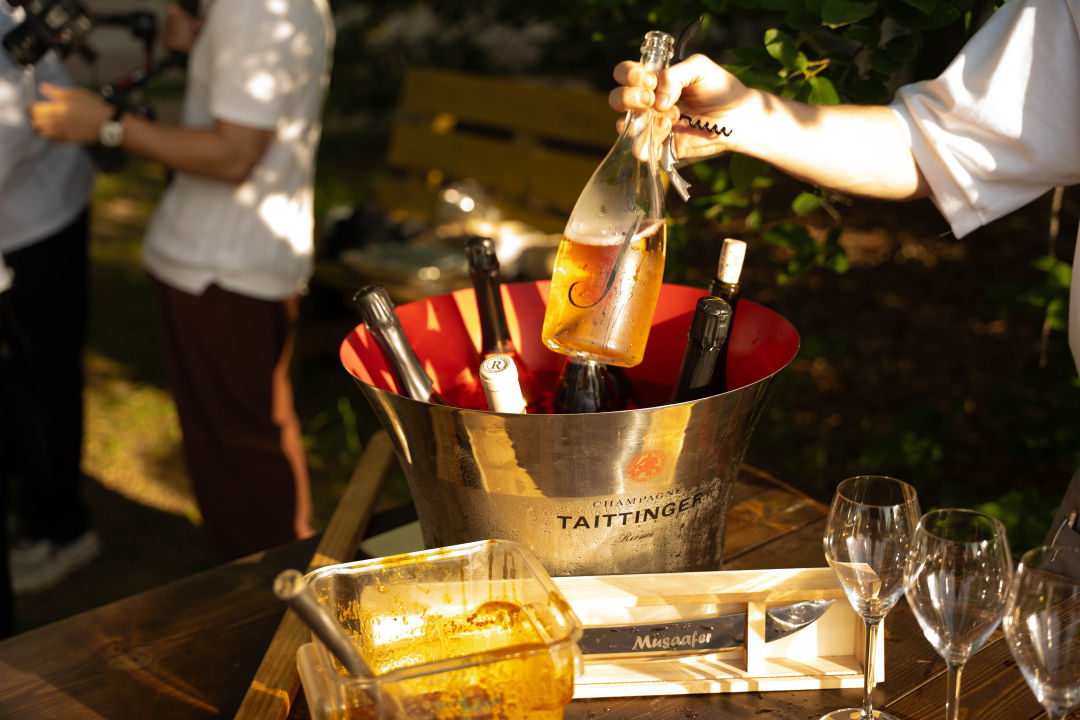
The evening begins with rosé and champagne on a trail leading to the farm.
The evening unfolds like a slow reveal. “It grows on you slowly,” Istwal says. Last year’s experience began with glasses of champagne and rosé on a lush trail, followed by an elaborate spread garnished with delicate flower petals arranged like butterflies fluttering in the breeze; gin and teas blended with foraged herbs, and live, soulful music played by a lake. Guests were encouraged to wander Blackwood, where much of the produce Istwal uses in his dishes is grown. Then, just before the sun fully set, guests were guided to a 10-course tasting menu on the farm—a preview of Musaafer’s spring menu—with wine and a DJ set.
The restaurant plans to host its sixth soiree on Thursday, April 9, a night that’s set to be equal parts amuse-bouche, bubbly, and live entertainment across three stages, with a newer component: live fire.
Immersion has always been Istwal’s mode. Musaafer is a manifestation of his upbringing in India, where he was raised on a farm in the Himalayan mountains—a backyard stocked with 16 varieties of citrus, six varieties of mango, lychee, turmeric, and fields of basmati rice. That exposure eventually became a fixation that carried him through 29 states of India before landing at Houston’s Galleria, where Musaafer now stands ornate with original art and more than 10,000 mirrors imported directly from India. He’s since held special dinners and collaborations, including a creative ode to the many roles of motherhood on Mother’s Day and, for Valentine’s Day, a reframing of the Kama Sutra using ingredients that elicit feel-good hormones—oysters among them.
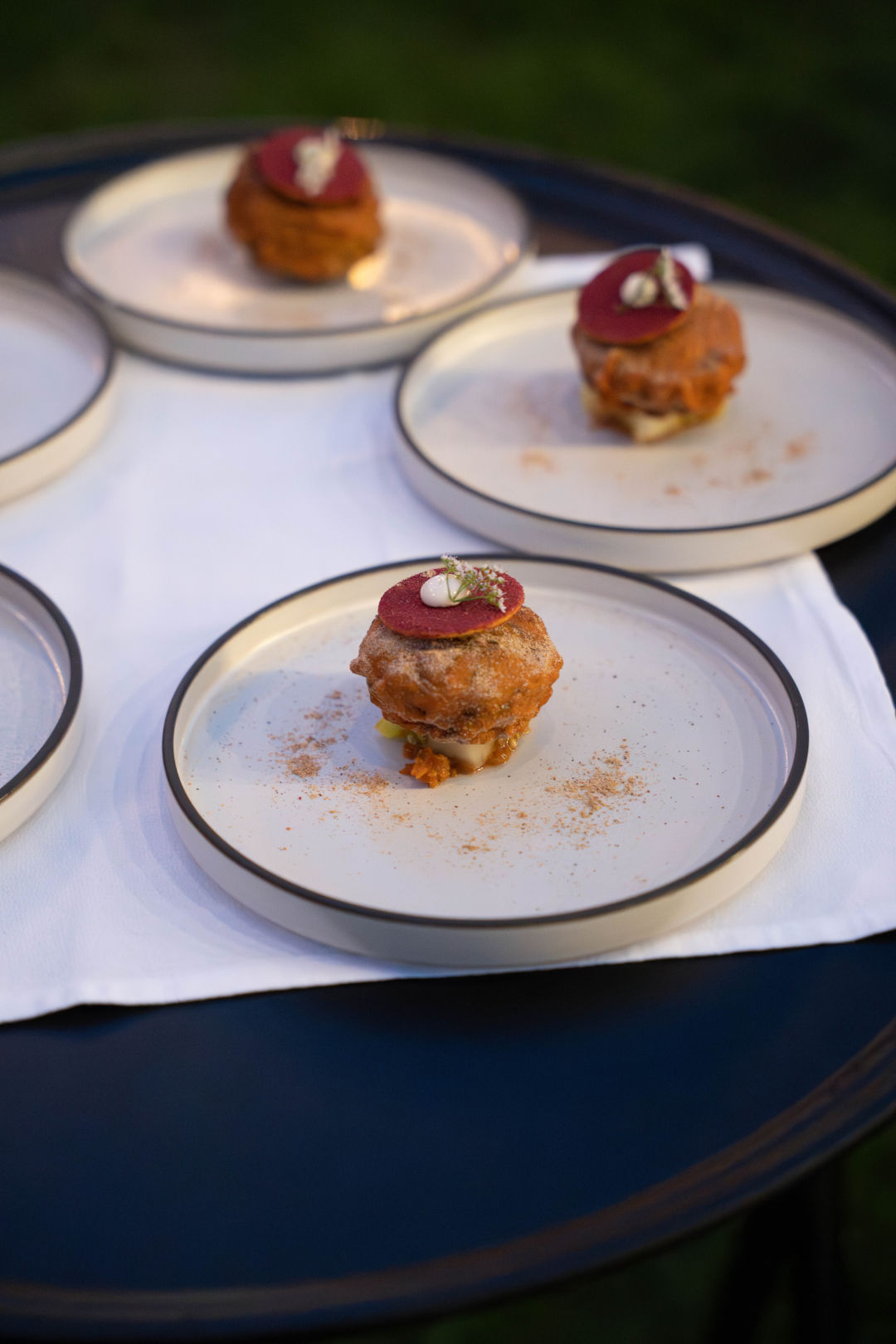
Bites from Musaafer are offered throughout the grounds of Blackwood.
It’s also characteristic of Istwal to take “seasonal” to another level. Ask him about his chai recipe, for example, and prepare for a thorough lesson on why tea should be prepared with spices that fit the season. Starbucks, he’ll tell you, has it completely wrong. He pours the same logic into this Spring Soiree, incorporating Thandai, a blend of “cooling spices” like fennel and green cardamom, along with single-origin dried spices flown in from India—what he calls the “life” of his dishes. “You also have to change the spice box in the kitchen,” he says.
Thus, the annual farm dinner is, too, a meditation on seasonality and foraging. Last year’s event incorporated corn, various tomatoes, chiles, and peppers, alongside crab infused with tropical fruits; a rendition of kulfi, an Indian ice cream; and a refined sorbet he had enjoyed in New Delhi. The Musaafer team also foraged Blackwood for many of the greens used for chutneys, garnishes, and condiments. “Spring is an amazing time to forage in life,” he says, noting that he often journeys through Spring, The Woodlands, the War Memorial, and Sam Houston Park in search of edible plants.
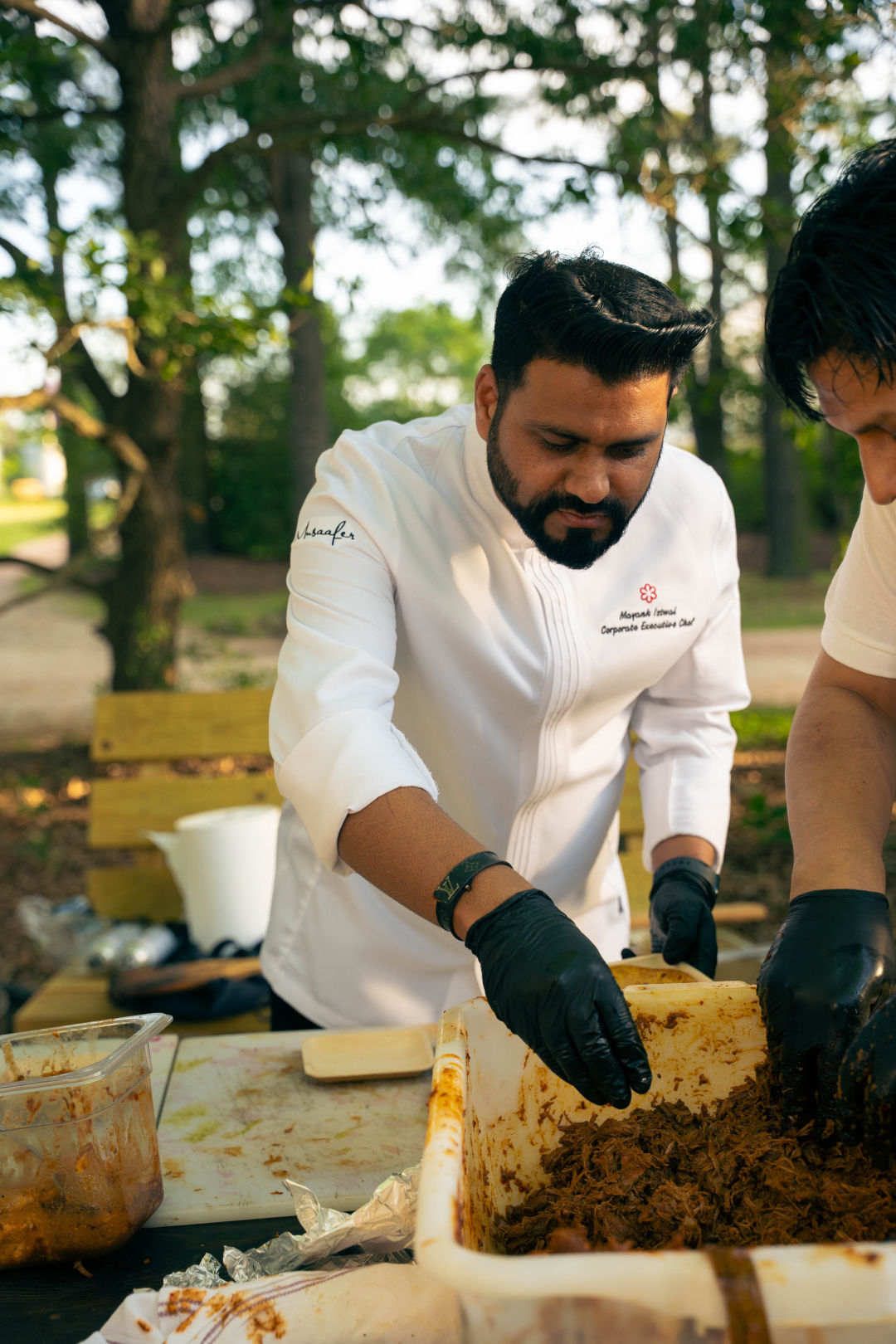
Chef Mayank Istwal aims to use Blackwood’s grounds to offer a rare dining experience and a glimpse of Musaafer’s spring menu.
Though Indian food is his expertise, Istwal says sustainability always comes before authenticity. “I cannot cook the same Indian food that is cooked back home. Why? Because the ingredients that grow there, they breathe a different air,” he says. “That’s the reason I try to do that recipe with the local ingredient, but it’s found in Texas.”
Partnering with the farm has been a long-term goal to take advantage of one of Texas’s most pleasant, albeit briefest, seasons, and bring Houston diners closer to the land that feeds them. “I always believe in the four Fs: flora, fauna, farm, and, then, food,” Istwal says. “Food is the end product, right? But as a chef, if you take care of the 3 Fs in the beginning, the food will be phenomenal, for sure, because you’re really focused on working with the produce on the farm, and you’re also taking care of the animals.”
Finding the right venue wasn’t immediate. It had to be a farm, Istwal knew, but one with a kitchen capable of supporting his team’s needs. His microgreen supplier eventually suggested Blackwood, a sprawling estate with a lake, a working kitchen, and distinct spaces that could each serve as dining destinations in their own right. “There are so many different parts on the farm,” he says. “…So many farms in one.”

Musaafer’s Spring Soiree offers an experience for all the senses, including live music.
In a city where spring lasts a only few weeks before the heat takes over, there’s something almost urgent about a dinner that insists you go outside, slow down, and pay attention to what’s on the plate and where it came from.
“People don’t realize that there’s a whole food philosophy in every single thing that we put on a plate,” Istwal says. “…We don’t stop on, like, five senses. We will tickle your sixth sense. We will touch your heart with amazing storytelling.”
In this case, the farm is both a backdrop and an integral part of the culinary story, Istwal says. “We really want people to connect with nature,” he says. “It’s a gift.”
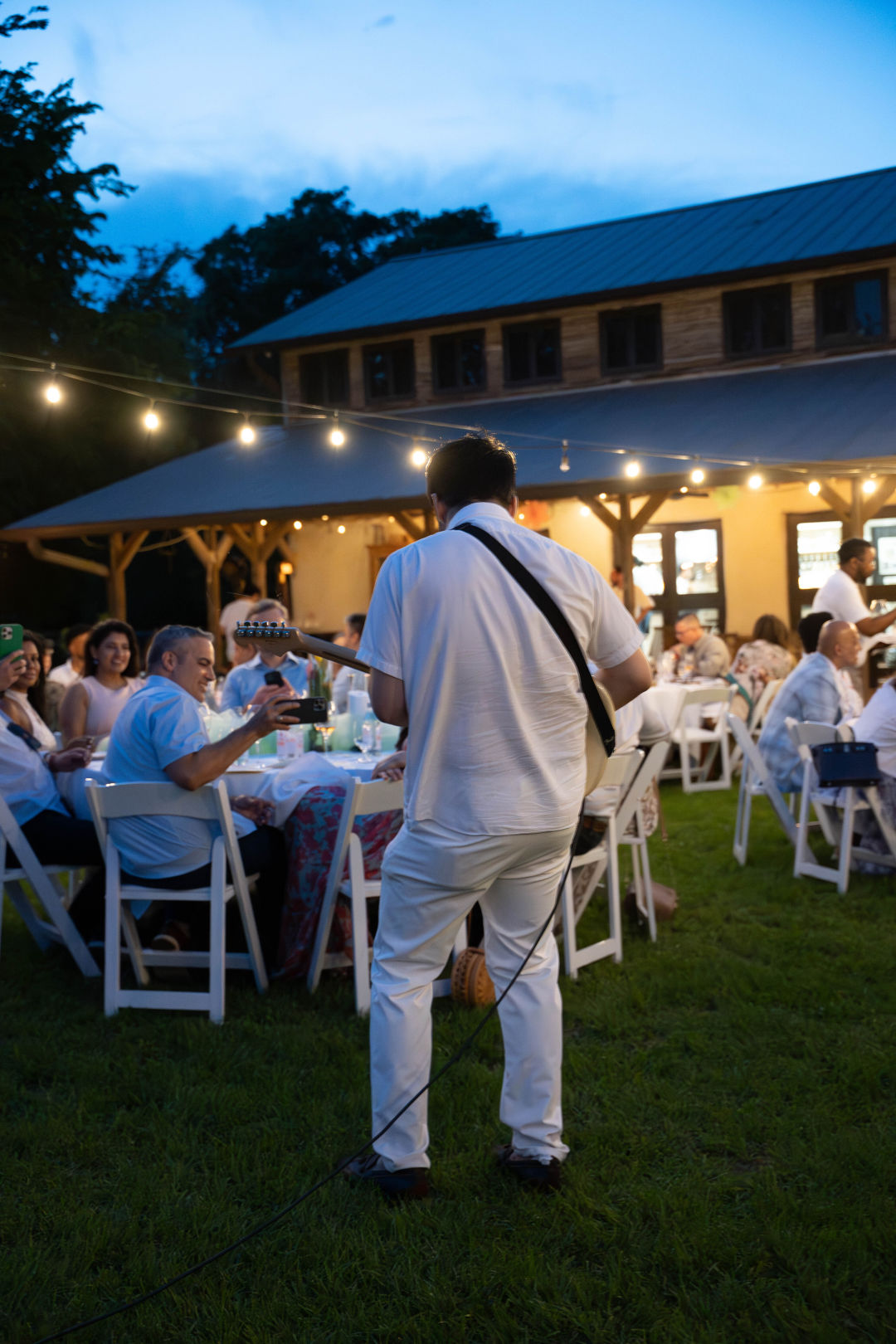
Musaafer’s Spring Soiree invites diners to get outside, slow down, and pay attention to what’s on their plate and where it came from.