
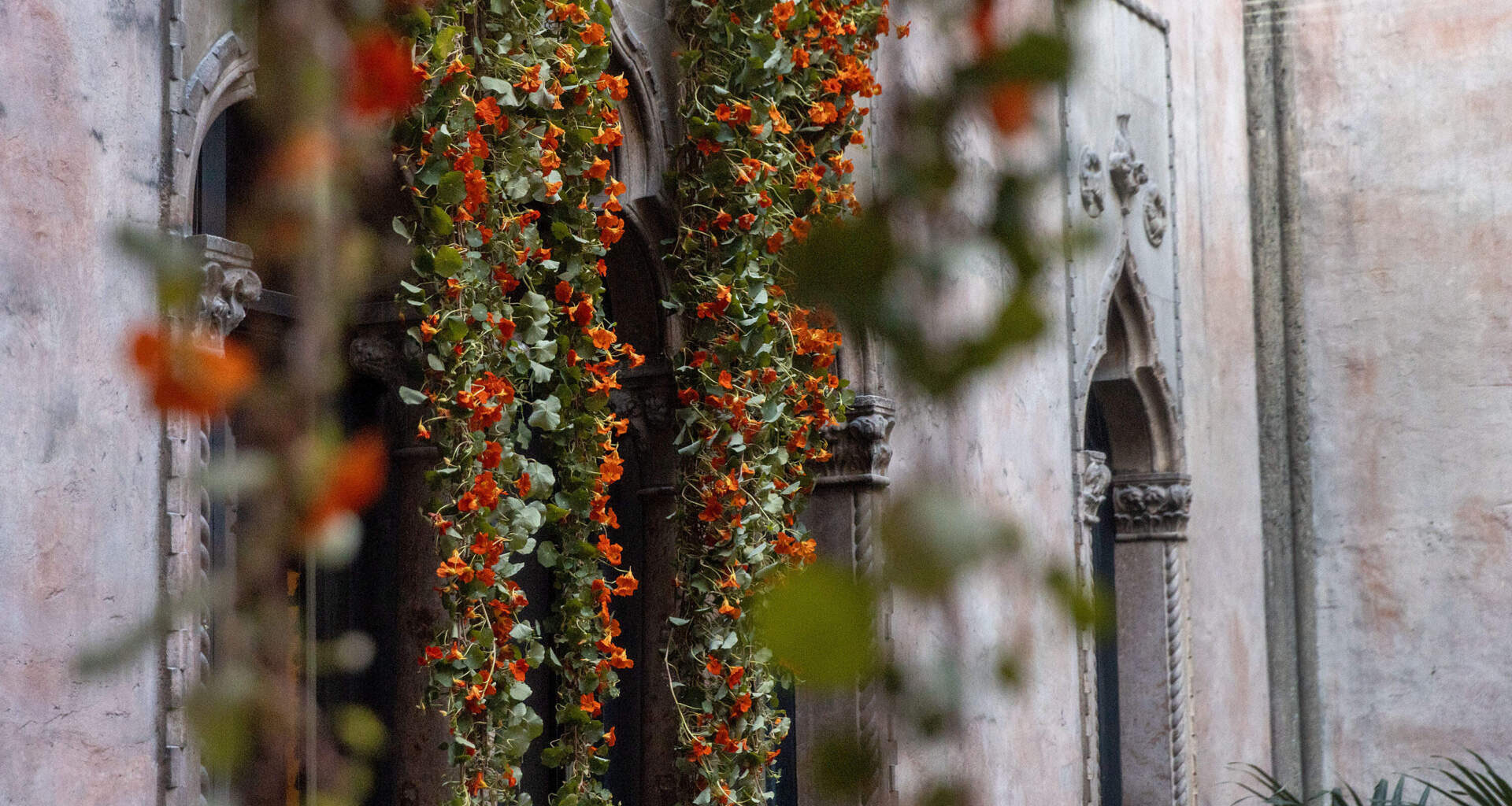
Delicate, bright orange signs of spring are again filling the Isabella Stewart Gardner Museum with some much-needed new life.
“We just came out of a really cold, snowy winter, and so I think the nasturtiums feel like a bit of extra medicine,” director of horticulture Erika Rumbley said while standing in the middle of the museum’s historic indoor courtyard.
The annual “Hanging Nasturtiums” tradition itself is a harbinger of hope for winter’s end. Isabella Stewart Gardner started cultivating the delicate, flowering tendrils with her horticulturists in the early 1900s.
Rumbley’s team began nurturing this year’s crop of nasturtiums last June. They always start from seed, then transplant the little plant babies one by one from an open nursery flat to successively larger and larger pots.
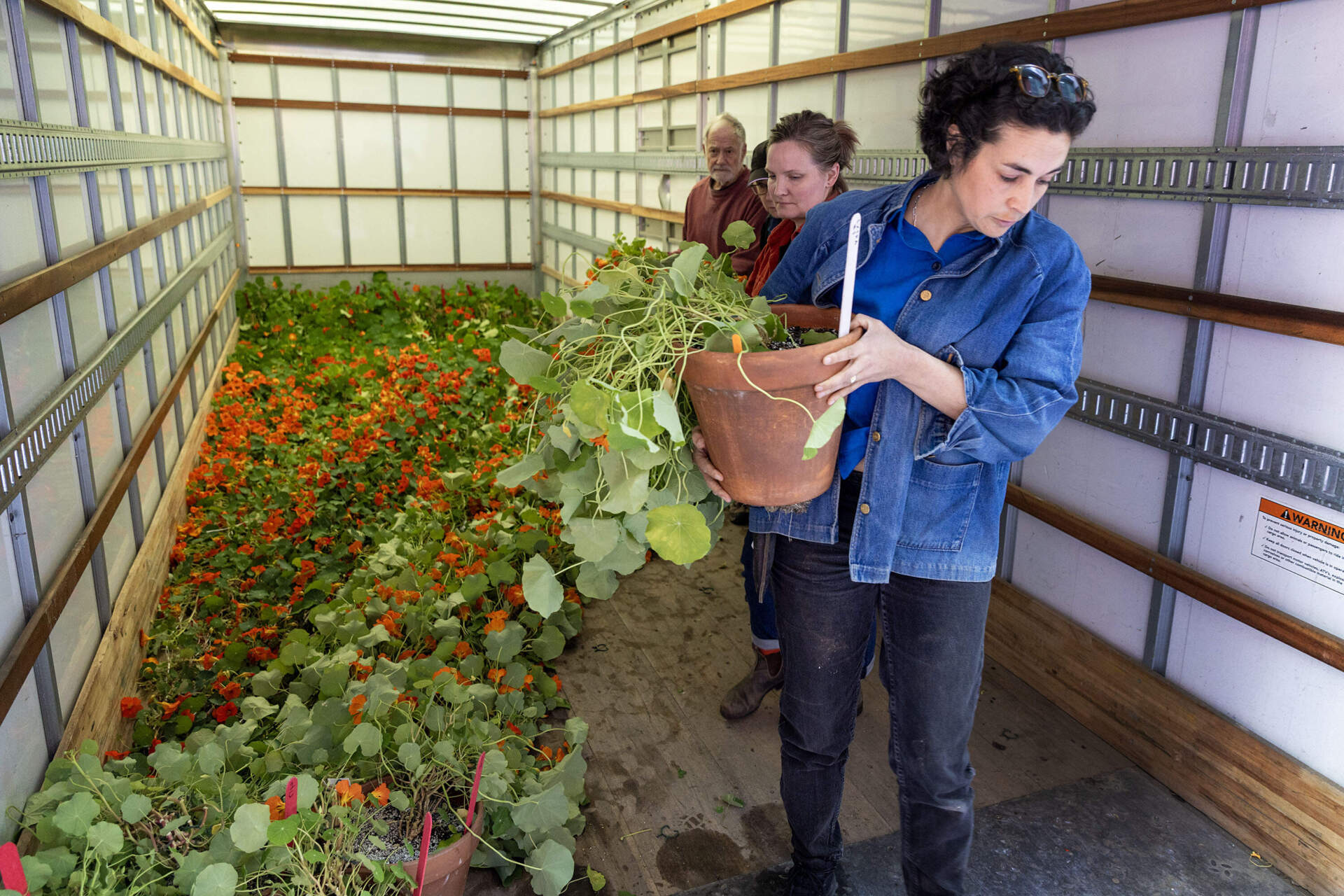 Members of the horticulture team move nasturtium vines from the truck that brought them from the museum’s greenhouses into the museum. (Robin Lubbock/WBUR)
“And once they start blooming, we cull every plant that’s not the ‘Gardner orange’ — that deep saturated orange on the verge of red.”
For all the gardeners out there, the museum’s nasturtium variety is called “gleam,” or Tropaeolum magus. It’s the very same one Gardner preferred. Gleam blooms in six colors, but the museum only displays its namesake’s favorite.
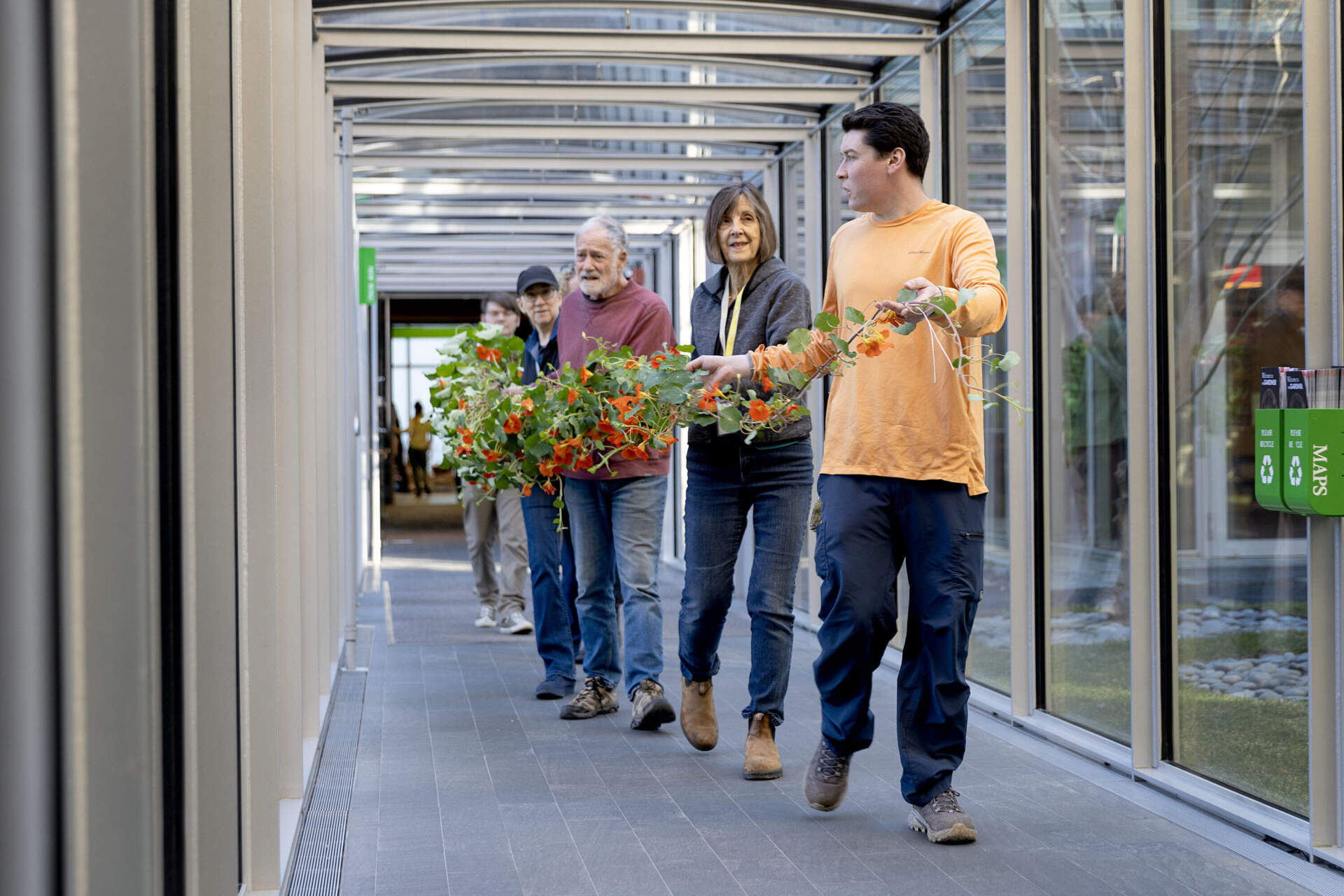 Members of the museum’s horticulture team and volunteers walk nasturtium vines to the courtyard at the Isabella Stewart Gardner Museum. (Robin Lubbock/WBUR)
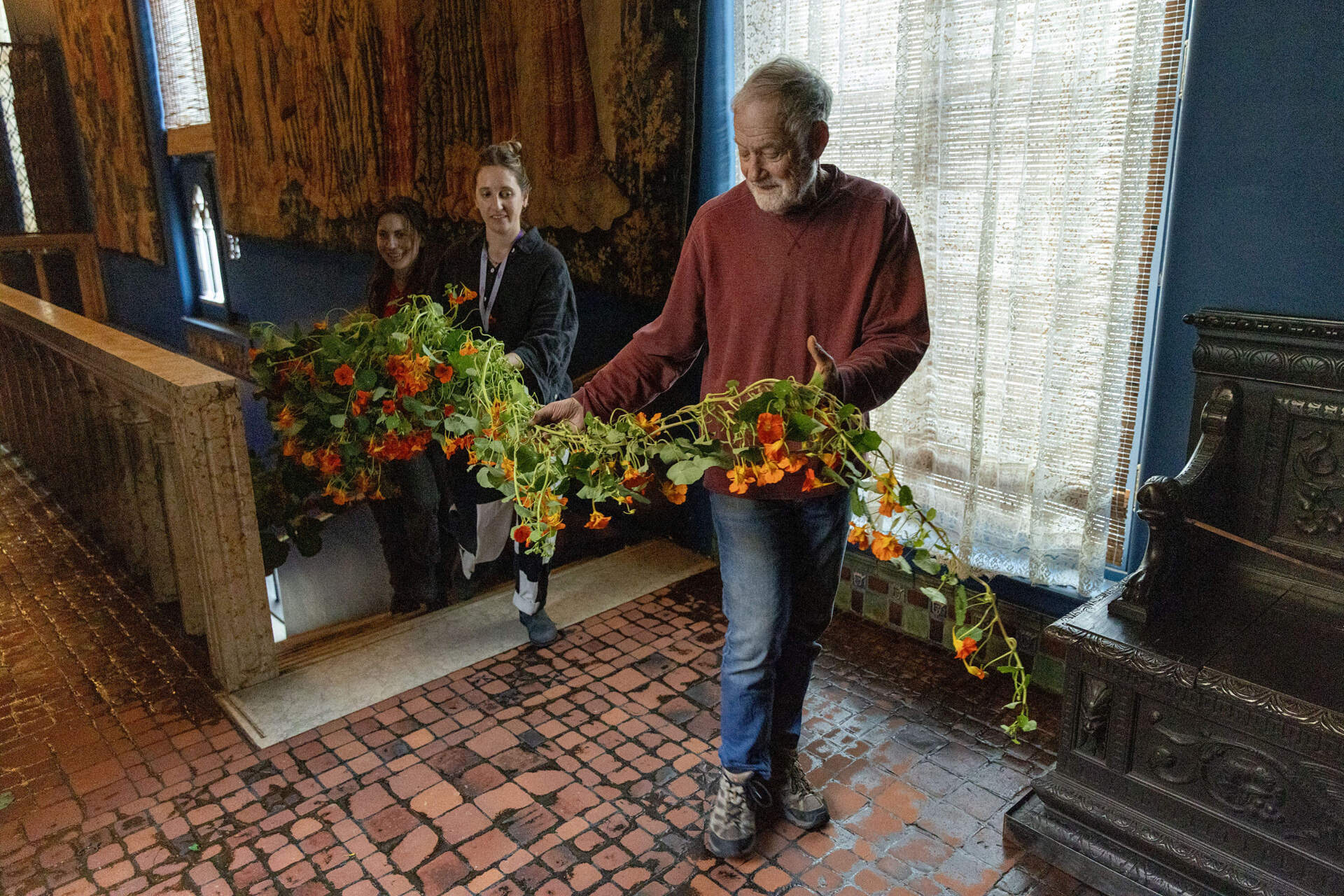 Members of the museum’s horticulture team and volunteers carry a nasturtium vine up to the third floor of the Isabella Stewart Gardner Museum. (Robin Lubbock/WBUR)
The nasturtiums did well in their greenhouses over the winter, but Rumbley said the team did worry about dropping temperatures. “A greenhouse grower’s nightmare is that something will go wrong with the heater. But there’s a whole village of people around this collection — knowing the historic importance of it — making sure it’s safe.”
They can control variables like heat and water, but light is another matter. “And we had a very bright winter. So, in that way, it was a really good season for the nasturtiums.
The horticulture team installs the nasturtiums at the end of March, but the exact day is always a moving target. Rumbley said they need to wait until the temperature is sufficiently warm.
“We’re looking for seven or eight hours over 38 degrees — that’s the sweet spot.”
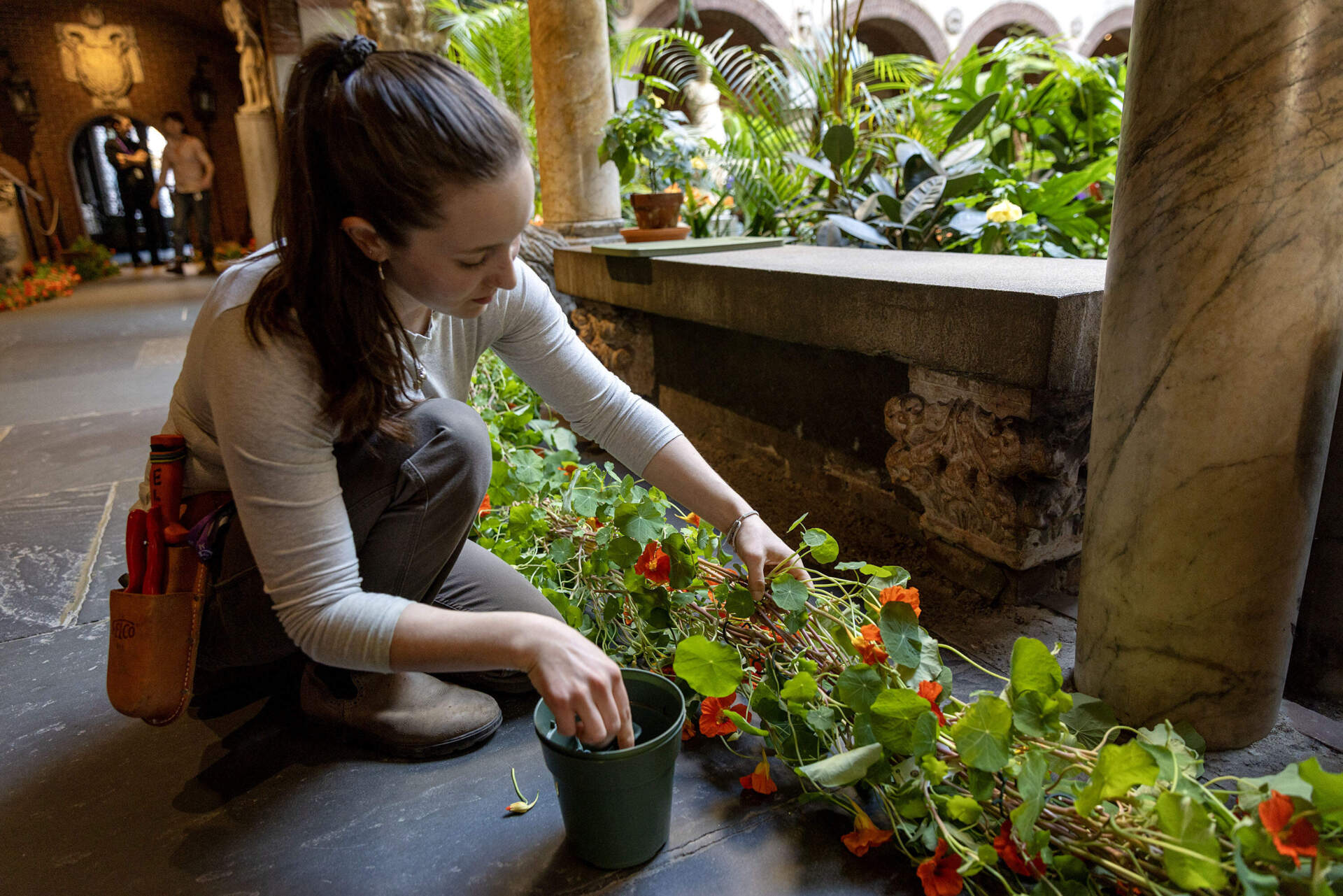 Horticulturist Edie Banovic prepares nasturtium vines for display in the Courtyard at the Isabella Stewart Gardner Museum. (Robin Lubbock/WBUR)
Once the temperature is right, and the nasturtiums are about 20 feet in length, the team transports the vulnerable tendrils and their individual pots to the museum in box trucks. Each of the 18 plants weighs around 50 pounds. At the museum, they’re carried one by one up to the third-floor balconies.
“To do this longform labor of love — whose real purpose is just to delight people and to let them let their shoulders down and enjoy some bright color — I think that’s a real honor,” Rumbley said.
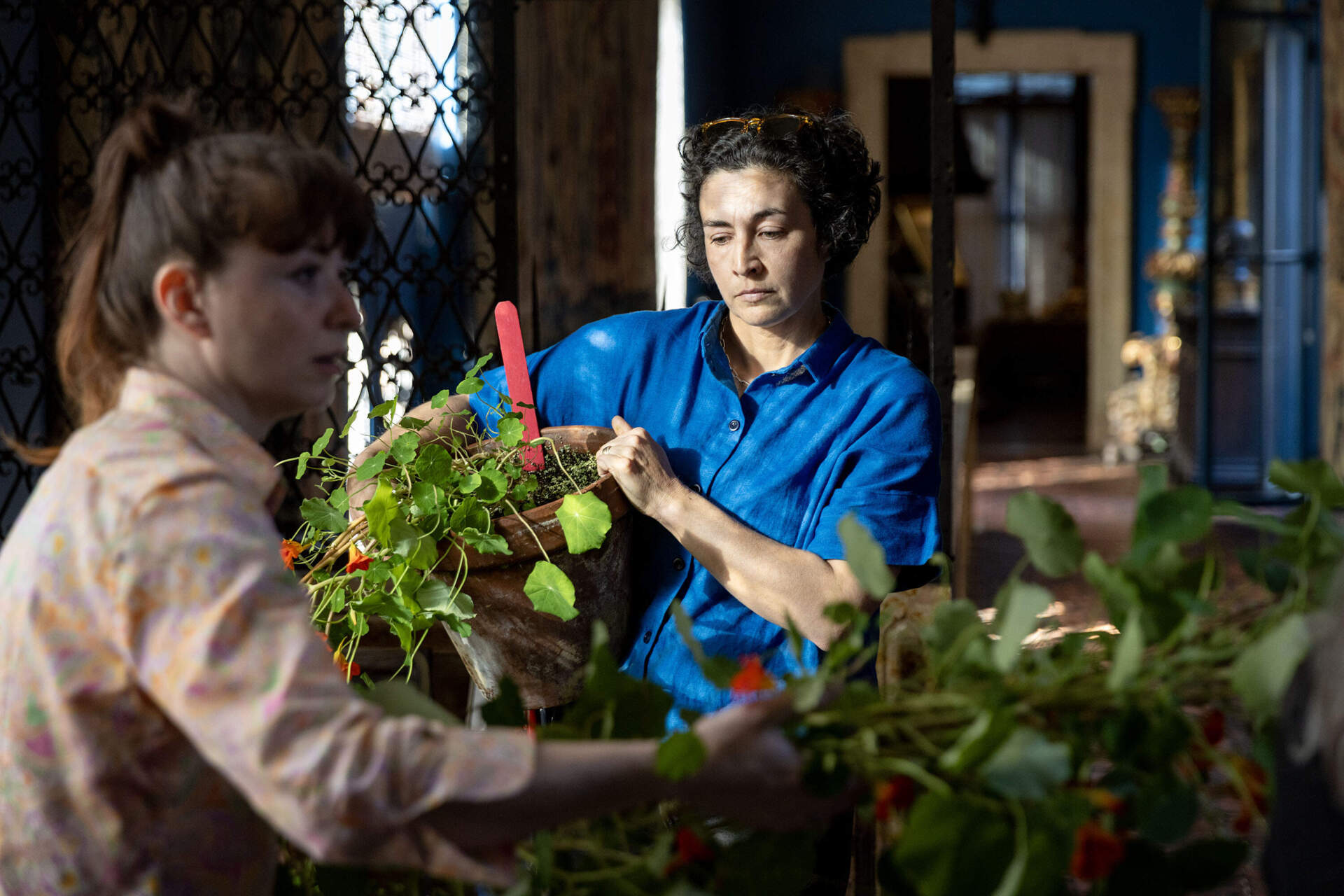 Director of Horticulture Erika Rumbley carries a pot at the base of a string of nasturtium vines through the hallways of the courtyard at the Isabella Stewart Gardner Museum. (Robin Lubbock/WBUR)
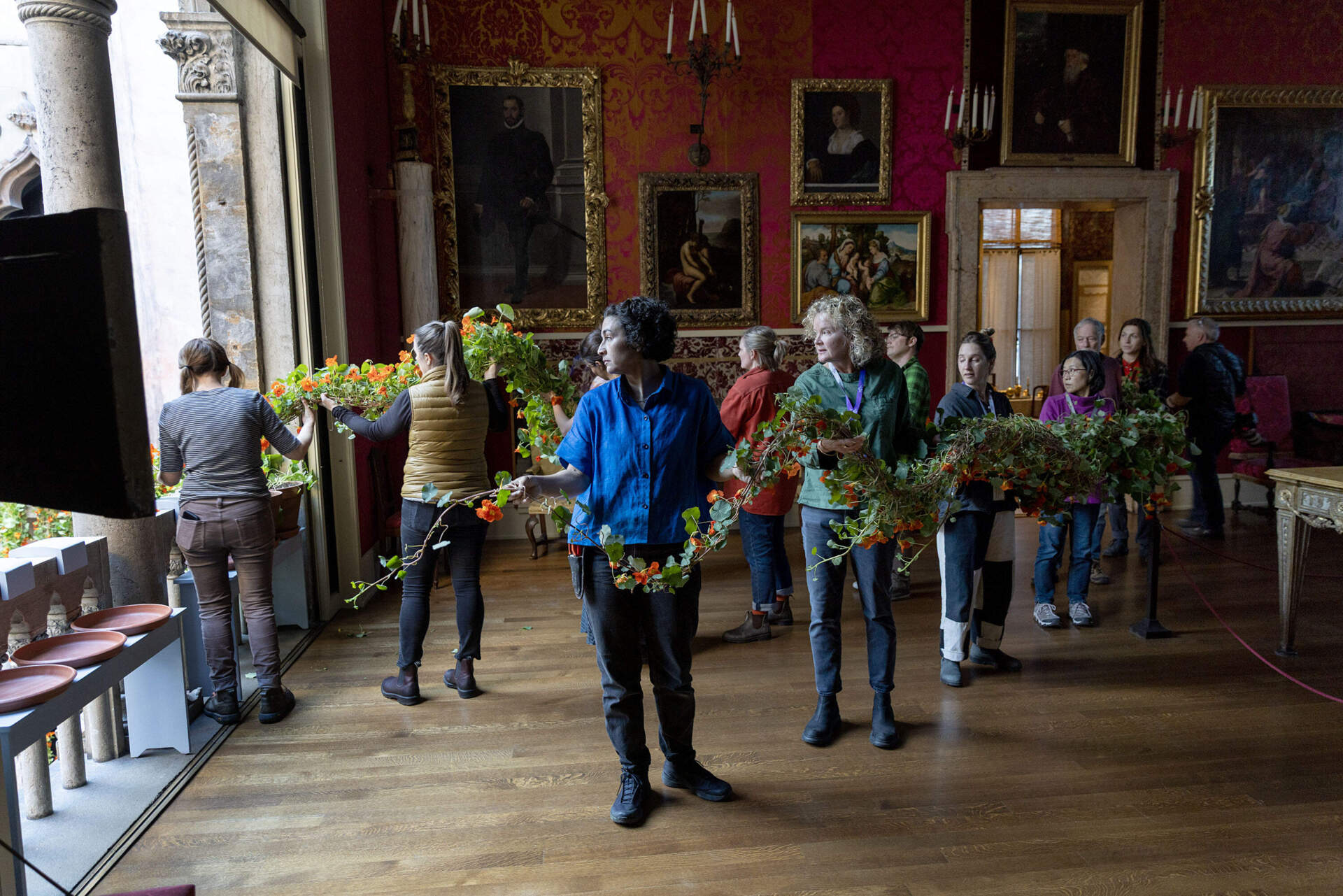 Members of the museum’s horticulture team and volunteers move nasturtium vines through the Titian Room and out of one of the windows into the courtyard at the Isabella Stewart Gardner Museum. (Robin Lubbock/WBUR)
The annual nasturtium ritual has graced the courtyard’s walls most years throughout the museum’s history. The show did not go on during the Great Depression, World War II or in 2020 during the pandemic.
The big moment when the museum team unfurls the plants from the courtyard’s windows is always exciting. “The thing we say again and again when we’re carrying them in is that there’s no rush now. It took us nine months to get here, so let’s take our time.”
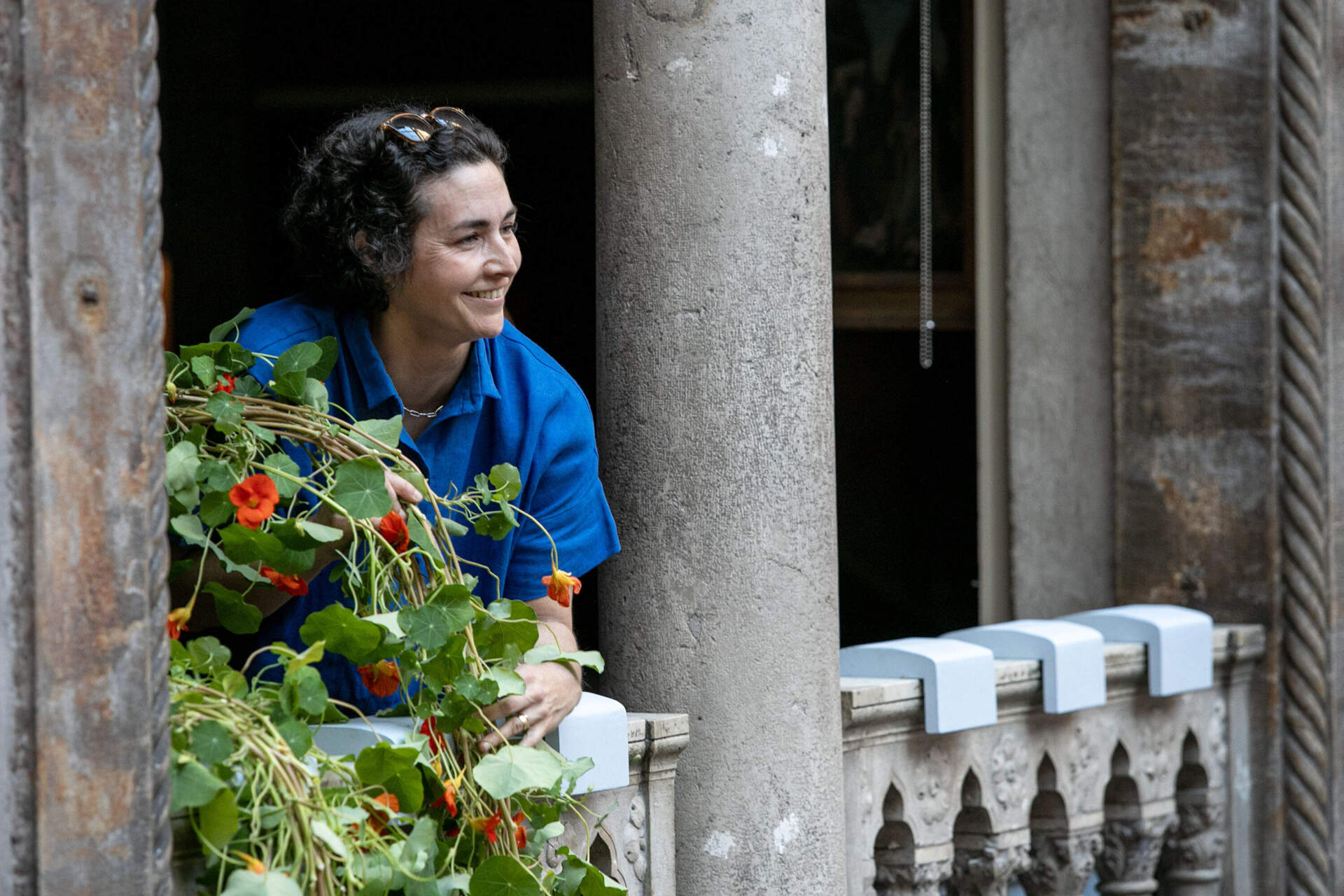 With the help of a colleague across the courtyard, Director of Horticulture Erika Rumbley positions a nasturtium vine in a window of the Titian Room at the Isabella Stewart Gardner Museum. (Robin Lubbock/WBUR)
On Wednesday, visitors lined up outside, waiting to feast their eyes on the nasturtium vines draping down the historic courtyard walls, including 25-year-old Hayden Doughty.
“The second you walk in, it’s just like, wow,” she exclaimed. “It really makes you feel alive again, especially after such a cold winter.”
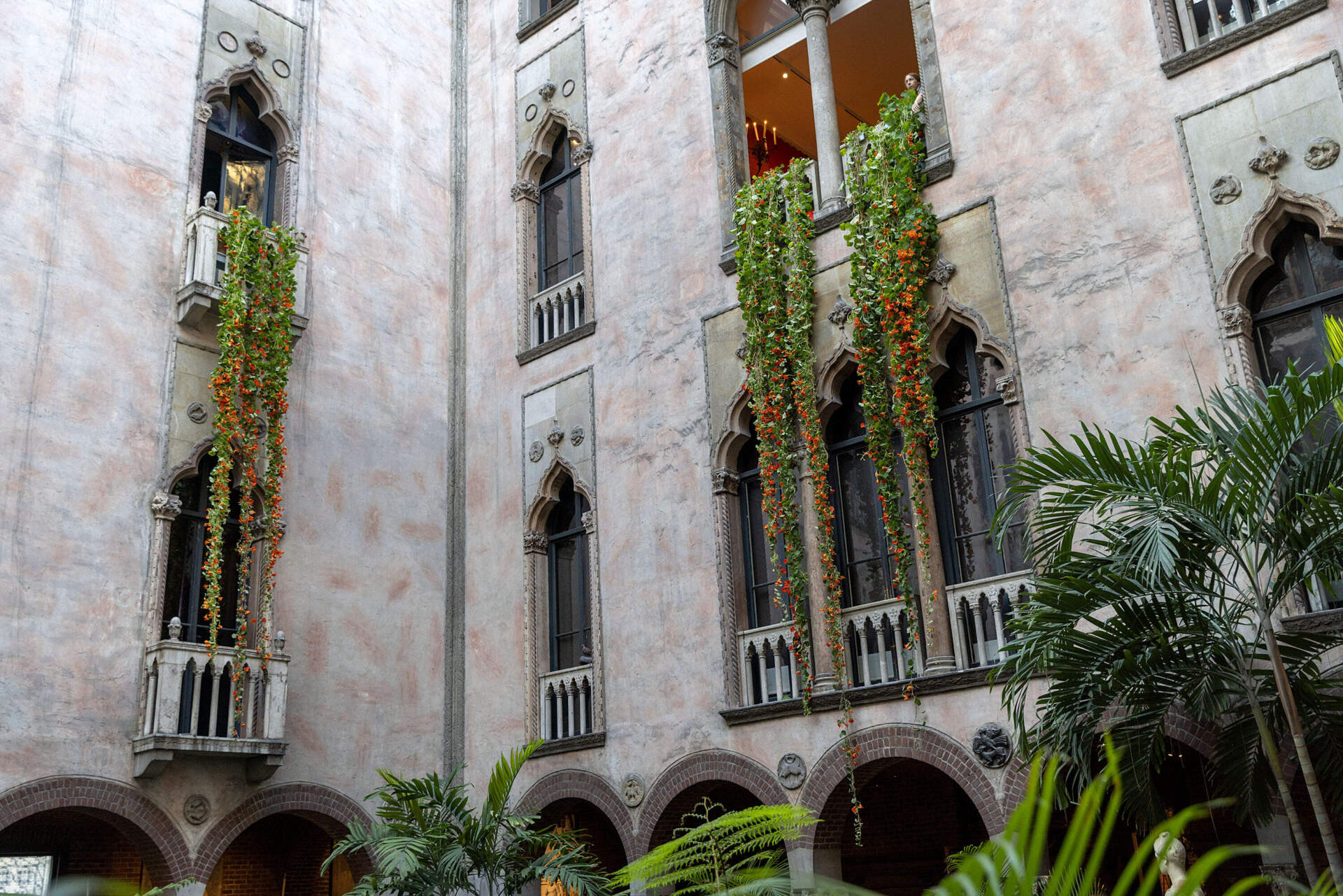 Nasturtium vines hang down the walls of the courtyard at the Isabella Stewart Gardner Museum. (Robin Lubbock/WBUR)
That’s exactly the type of reaction Rumbley hopes for.
“To have a ritual of spring that is so turned up to 11, you know, that can push through all of the noise and say, ‘No, no, really it’s spring. Take a moment, we made it.’”
The nasturtiums will be on display at the Isabells Stewart Gardner Museum for about three weeks. And because nasturtiums are edible, the museum’s Café G is serving a few dishes and drinks made with the flowers, including a nasturtium-infused, blood orange juice cocktail with cava or sparkling water.
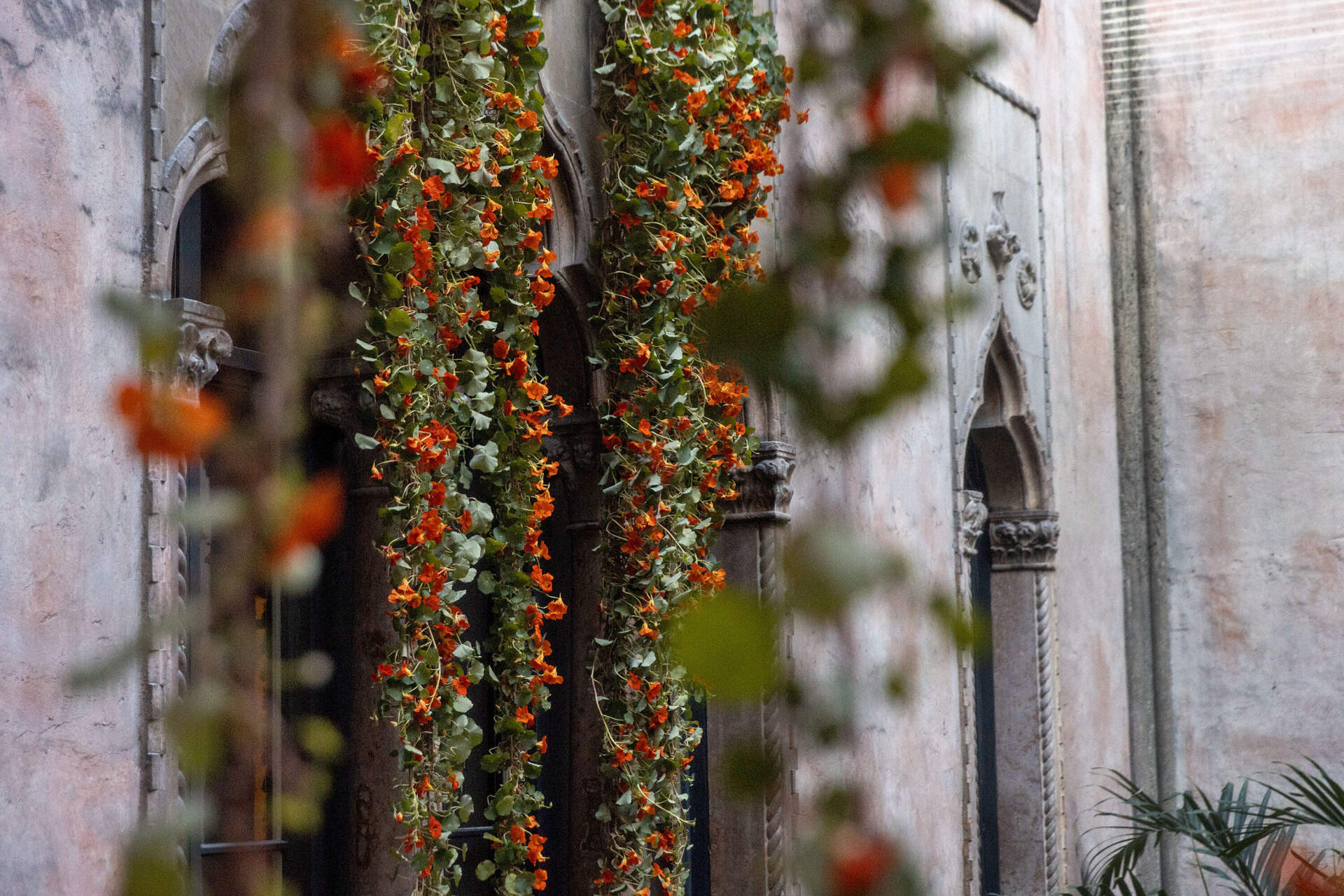 Nasturtium vines hang down the walls of the courtyard at the Isabella Stewart Gardner Museum. (Robin Lubbock/WBUR)