
HOUSTON – A new licensing rule approved by the Texas Department of Licensing and Regulation (TLDR) could impact thousands of workers across the state and potentially trickle down to consumers through higher prices and longer wait times.
New Texas license rule
Big picture view:
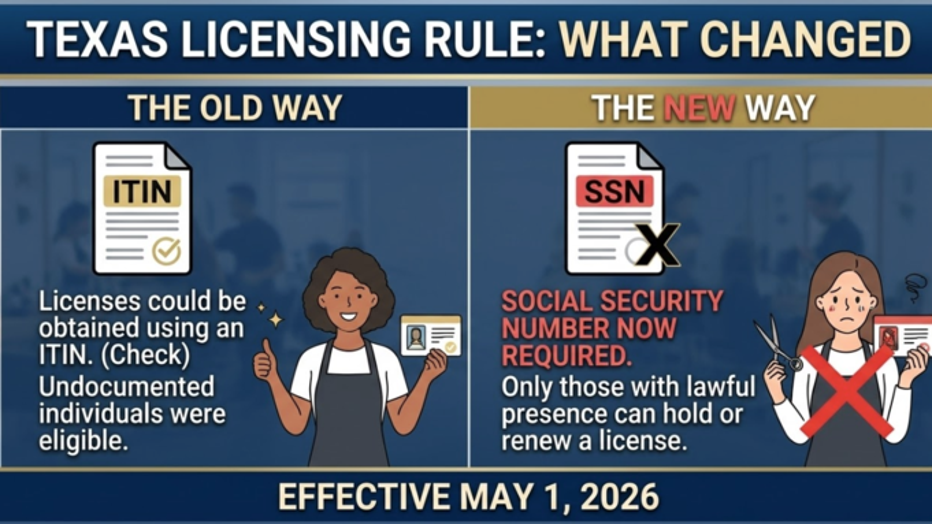
In a unanimous vote Tuesday, TDLR approved a change requiring applicants to provide a Social Security number for a professional license.
The move closes what officials described as a loophole that had allowed some people without a Social Security number to obtain professional licenses in Texas using other forms of identification or documentation.
The new rule takes effect May 1.
 Trickle-down effect
Why you should care:
State officials say about 18,000 licensed workers could be impacted.
The industries affected stretch across a wide range of jobs regulated by TDLR, including cosmetology fields like hair and nail services, as well as trade professions such as plumbing and HVAC. That means if workers are unable to meet the new requirements, they could lose the ability to legally work in their profession.
Local perspective:
FOX 26 spoke with Hilton Lyles, an HVAC business owner and owner of Stay Comfortable AC & Heating, who said he was surprised to learn a Social Security number was not already required for licensing.
Lyles said he believes the new rule could reduce the number of available workers, including skilled technicians he knows who may not have a Social Security number but still do quality work.
He also warned that losing those workers could create delays for customers and drive up the cost of services. In Texas, he said, that kind of slowdown could be especially serious when it comes to air conditioning repairs during extreme heat.
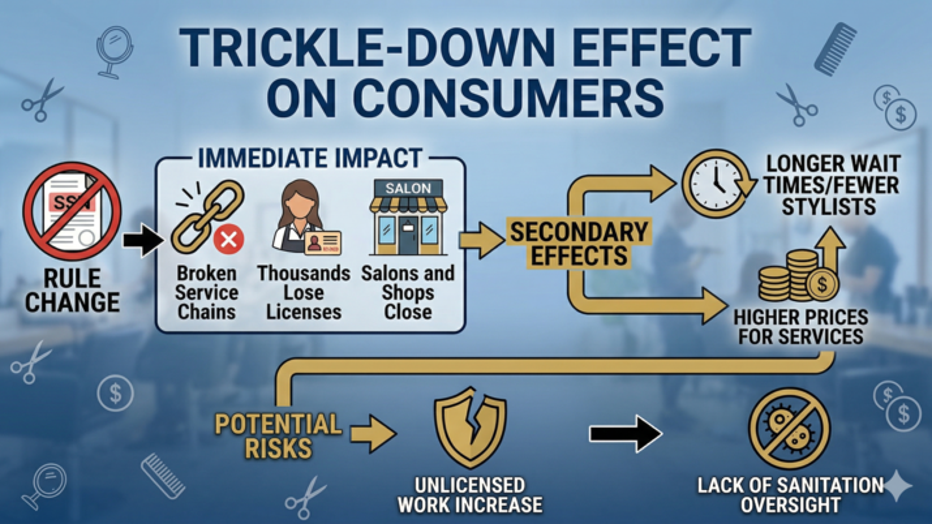
The concern, according to critics of the change, is that the impact may not stop with workers alone. If thousands of people lose their licenses, that could disrupt service industries and force some businesses to close.
Fewer licensed workers could also mean longer wait times for appointments and repairs, along with higher prices for consumers.
There is also concern that if some workers can no longer legally do their jobs, some may turn to unlicensed work, which could mean less oversight and, in some industries, possible sanitation or safety concerns.
TDLR regulates a broad list of industries across Texas, so the full impact of the rule could reach well beyond salons and barber shops.
The Source: Texas Department of Licensing and Regulation, and HVAC business owner Hilton Lyles.