
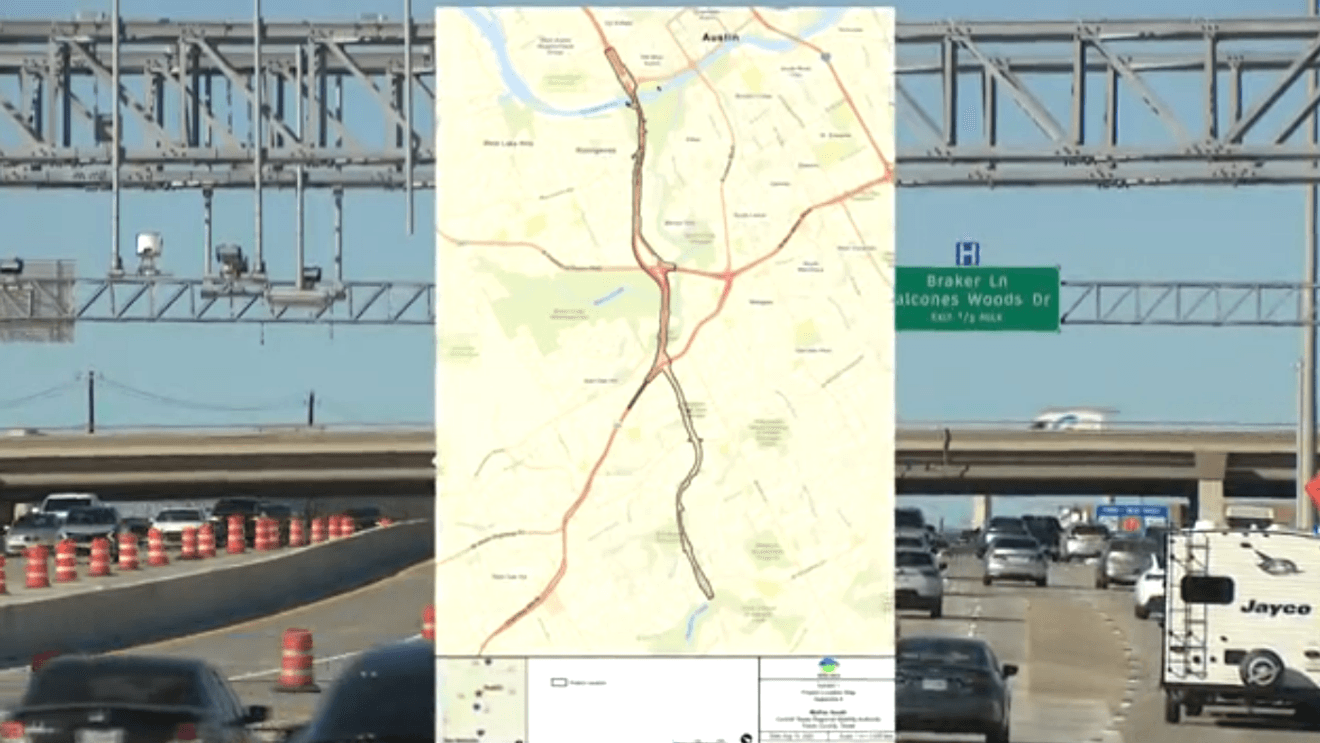
AUSTIN, Texas — Community members packed a public hearing to learn more about a proposed expansion of MoPac South, with many raising concerns about potential environmental impacts.
The project, which has been in the works since 2013, would expand nearly nine miles of the MoPac Expressway from Cesar Chavez Street to Slaughter Lane. Transportation leaders say the effort is aimed at addressing growing traffic congestion.
A recently released environmental study suggests commute times could worsen by 2045 if no changes are made, while adding express lanes could significantly reduce travel times.
For some who attended, the potential impact of construction stood out.
“That’s going to be a big impact,” said Amanda Sherard, who lives in South Austin. “Just the infrastructure alone, the noise, the construction.”
Local leaders also emphasized the need to fully understand environmental consequences before moving forward.
“We don’t want them to do anything until they really understand what the environmental situation is,” said Travis County Commissioner Ann Howard.
ALSO| 18-wheeler lodges under 11th Street bridge on I-35 in Downtown Austin, causing delays
mopac south project expansion hearing pkg farrah live intro outro
Austin City Council Member Paige Ellis noted the length of the planning process.
“They had begun their environmental assessment reports over a decade ago,” Ellis said.
Ellis also pointed to the area’s sensitivity.
“It is where a lot of the water feeds into Barton Springs pool,” she said. “We need to make sure that this project is done right.”
The corridor includes natural areas and habitat for endangered species, raising additional concerns among environmental advocates.
“It’s extremely damaging to Zilker Park, Ladybird Lake, and Austin High School,” said Bill Bunch, executive director of Save Our Springs.
The Central Texas Regional Mobility Authority is proposing adding up to two express lanes in each direction in the median. Howard said that, in some cases, added infrastructure could provide benefits.
“If building a new lane could add protection, that could be a win for the environment and a win for the people,” she said.
The draft environmental assessment evaluates potential impacts to water, land, and wildlife, and project leaders say mitigation measures are included to help limit those effects.
Still, some advocates remain skeptical and are urging continued public involvement.
“In our view, they’re sort of setting it up to where they already have an answer,” Bunch said. “We need the public to speak up and participate.”
The public comment period remains open through early May.
The project must still complete environmental review and receive clearance before construction can begin.