
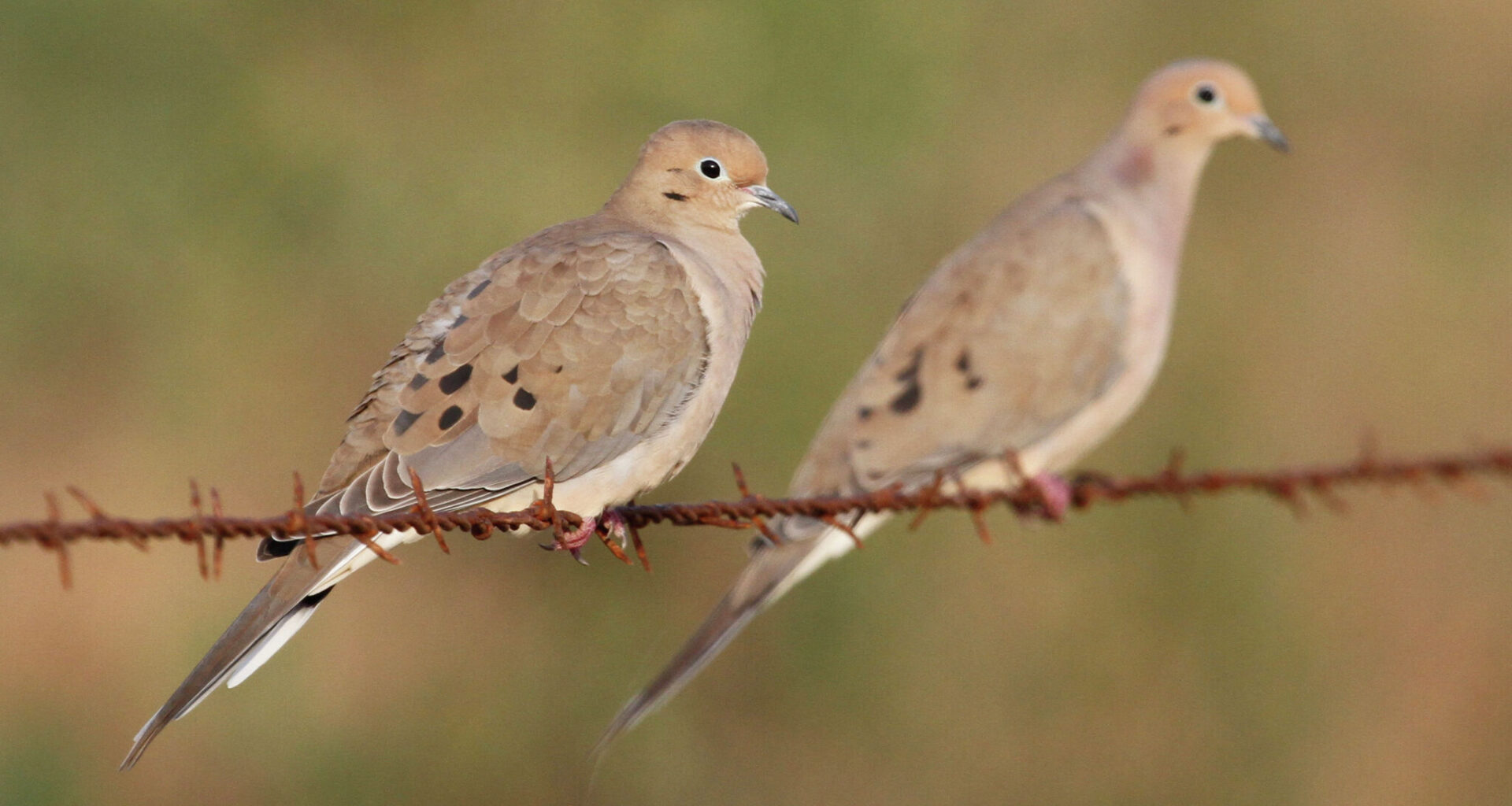
Dove hunting season in Texas’ South Zone will begin Sept. 1, joining the rest of the state in kicking off fall hunting seasons statewide.
Shannon Tompkins/Houston Chronicle
Dove hunting season in Texas’ South Zone will now begin Sept. 1, aligning with the North and Central zones and making it the de facto “opening day” for the various fall hunting seasons across the state.
The first split of dove season in the South Zone will run Sept. 1-Oct. 25 and the second split resumes Dec. 18-Jan. 21.
The Texas Parks and Wildlife Commission approved the change Thursday at its meeting in Austin. The South Zone is a popular region for dove hunting, spanning a vast landscape from east to west below I-10, from Orange to Houston, under Loop 1604 near San Antonio and below U.S. 90 to Del Rio.
Article continues below this ad
South Texas had been the only dove hunting zone in the U.S. not allowed to open Sept. 1, a restriction stemming from a historical concern about the potential effects of hunting on late-nesting mourning doves.
The U.S. Fish and Wildlife Service, which sets the federal framework for migratory bird hunting, gave Texas Parks and Wildlife Department approval to move the season opener up after reviewing contemporary data that indicated an earlier opener would have negligible impact on late-nesting mourning doves. That approval was given on a three-year experimental basis, so TPWD biologists will increase monitoring of mourning dove populations during that time to ensure the earlier opener isn’t causing harm.
Nearly 80% of the 971 public comments agreed with this change. Reasons for disagreeing included some preferring to have the opener on a Friday or Saturday instead of a specific date, seeing fewer birds in early September and others didn’t want to lose the tradition of the “special white-winged days.”
Those days were eliminated with the approval of the Sept. 1 opener. The days were typically a pair of three-day weekends set before the mid-September season opener. Hunting was allowed only from noon to sunset and the 15-bird daily bag limit prevented the harvest of more than two mourning and white-tipped doves apiece. The rest of the bag had to be whitewings. The special white-winged days offered early-season opportunity, but could cause confusion due to the fluctuation of the calendar.
Article continues below this ad
The move to Sept. 1 simplifies the hunting calendar and makes it consistent.
A second proposed change to dove season was tabled Wednesday, when the commission decided against shifting the start of the South Zone’s second split to the Wednesday before Thanksgiving, thereby eliminating January hunting opportunity. That late-season opportunity proved to be valuable to many. Nearly half of the public commenters opposed the proposal before it was pulled Wednesday. Three people also spoke in person Thursday to express opposition.
Turkey season regulations also had changes approved Thursday, including the closure of two seasons in counties in Southeast Texas.
Hunters get one last spring to hunt wild turkeys in Matagorda and Wharton counties, two counties in Texas’ “western one-gobbler zone,” which will consist of Bastrop, Caldwell, Colorado, Fayette, Jackson, Lavaca, Lee and Milam after the closures that will go into effect this spring.
These counties have been subject to mandatory harvest reporting since 2022. Harvest reporting was made mandatory statewide in the fall of 2024 and has been required for turkey harvest in East Texas since 1995.
Article continues below this ad
The department’s threshold for closing a county’s season is three years with one or fewer reported harvests. No birds have been reported in Matagorda County and only one has been reported in Wharton. And that bird came from a stocking effort.
“The only bird killed in the last four years and reported to mandatory reporting was a bird that was not born in Wharton County,” said Jason Hardin, TPWD’s wild turkey program leader, noting the season closure provides potential opportunity for the department to direct stocking efforts to these counties.
Another major change to turkey hunting was approved Thursday with the prohibition of unbearded hen harvest statewide. North Zone hunters and four counties on the South Texas Sand Sheet (Brooks, Kenedy, Kleberg, and Willacy) could previously harvest female turkeys during the fall season.
The move is intended to protect hens and address a 10-year trend in declining turkey populations across the state.
“Recent research in wild turkey population dynamics indicates that the number of hens entering the nesting season is the most critical factor for long-term sustainability,” TPWD small game program director Shaun Oldenburger said during the commission meeting Thursday.
Article continues below this ad
Bearded hens are still viable reproducers, but they make up a slim portion of wild turkey populations, anywhere from 3% to 10% of a local population, Hardin said, so the regulation protects the bulk of hens while offering hunters some room for forgiveness in taking what they may have thought was a gobbler.
Based on mandatory reporting, hens made up 41% of the total harvest during the 2024 fall hunting season, but only 9% had beards.
Chachalaca season also shifted a few days with an approved change Thursday. Last year, quail season moved to the first day of Nov. through the last day of February. The dates for hunting Chachalaca, a bird whose only native range in the U.S. exists in the Lower Rio Grande Valley, will be aligned with quail season moving forward. Last season, chachalaca hunting occurred Oct. 25 through Feb. 22.
On the big game side of the ledger, “doe days” were expanded in 21 Post Oak Savannah counties. Those counties are Austin, Bastrop, Caldwell, Colorado, Comal (east of Interstate 35), DeWitt, Fayette, Goliad (north of U.S. 59), Gonzales, Guadalupe, Hays (east of Interstate 35), Jackson (north of U.S. 59), Karnes, Lavaca, Lee, Travis (east of Interstate 35), Victoria (north of U.S. 59), Waller, Washington, Wharton (north of U.S. 59) and Wilson.
Those counties had four “doe days” originally implemented in 2019, and those days will expand to 16 after Thursday’s commission meeting.
Article continues below this ad
In Texas, 89 counties have some form of doe days, which allow for the harvest of does during the regular season on a particular set of days. Prior to 2019, hunters in the 21 Post Oak Savannah counties could only harvest does during archery, youth-only or muzzleloader seasons, and only during the regular season with a Managed Lands Deer Program permit.
As deer densities in the region have increased, the added doe days give hunters more opportunity to harvest, which would also help keep skewed sex ratios in check.
The expanded doe days will run from the second Saturday of the general season and close the Sunday following Thanksgiving. Depending on the calendar, the doe days could run as long as 23 days in some years.
Harvest reporting is mandatory for antlerless deer in these counties.
The definition of muzzleloader was also changed to include newer muzzleloading technology. The change would make systems like the Federal Premium FireStick and compatible firearms such as Traditions’ NitroFire Series legal to use.