
About five miles southwest of downtown San Antonio is a reminder of a forgotten part of the city’s past. But really, it’s a reminder of a different city entirely.
South San Antonio, also known as South San, was a townsite unto itself that sprouted up thanks to Charles Fowler around 1916, and you can find remnants of it today in the area of West Southcross Boulevard, New Laredo Highway and Quintana Road.
A stop along the Texas and New Orleans Railroad, South San Antonio had a post office and hundreds of residents in the years after its founding, according to the Texas State Historical Association. By the 1930s, thousands lived there — but in 1944, it became part of the Alamo City through annexation. Today, much of it looks like any other Alamo City neighborhood. However, there are still a few hidden gems around that point to South San’s unique roots.
When MySA took a drive down West Southcross Boulevard, a few old buildings stood out, evocative of a bygone main street. Restored in 2022, restaurant Cuba 1918 is one of those spots, serving Cuban flavors in a building dating back to, unsurprisingly, 1918. According to the Express-News, co-owner Erica Rodriguez’s aunt purchased the building four decades ago, and Rodriguez “said she sees Cuba 1918 as an anchor in the historical Quintana Road corridor.”
A blog post by a family member of a former resident claims that most people who lived in South San Antonio during those few decades between founding and incorporation had gardens and livestock because the neighborhoods weren’t as tightly crammed as they are today. In the 1920s, there was also a 12-room, three-story brick school building called Fleming, a trolley system, and a bustle of activity along the main street.
“A movie theater, an important part of the community, was at the corner of Quintana Rd and Bynum. Such stars as Gene Autry, Roy Rogers, Johnny Mack Brown, etc., could be seen on the big screen for a dime,” the blog post reads.
Many residents worked at the nearby Duncan Field, a division of Kelly Field (later Kelly Air Force Base). After annexation and the end of World War II, South San Antonio “continued to prosper” with a barbershop, a drug store, a cafe, a butcher shop, a Masonic Lodge, a Piggly Wiggly store, a Veterans of Foreign Wars hall and more, according to the blog post.
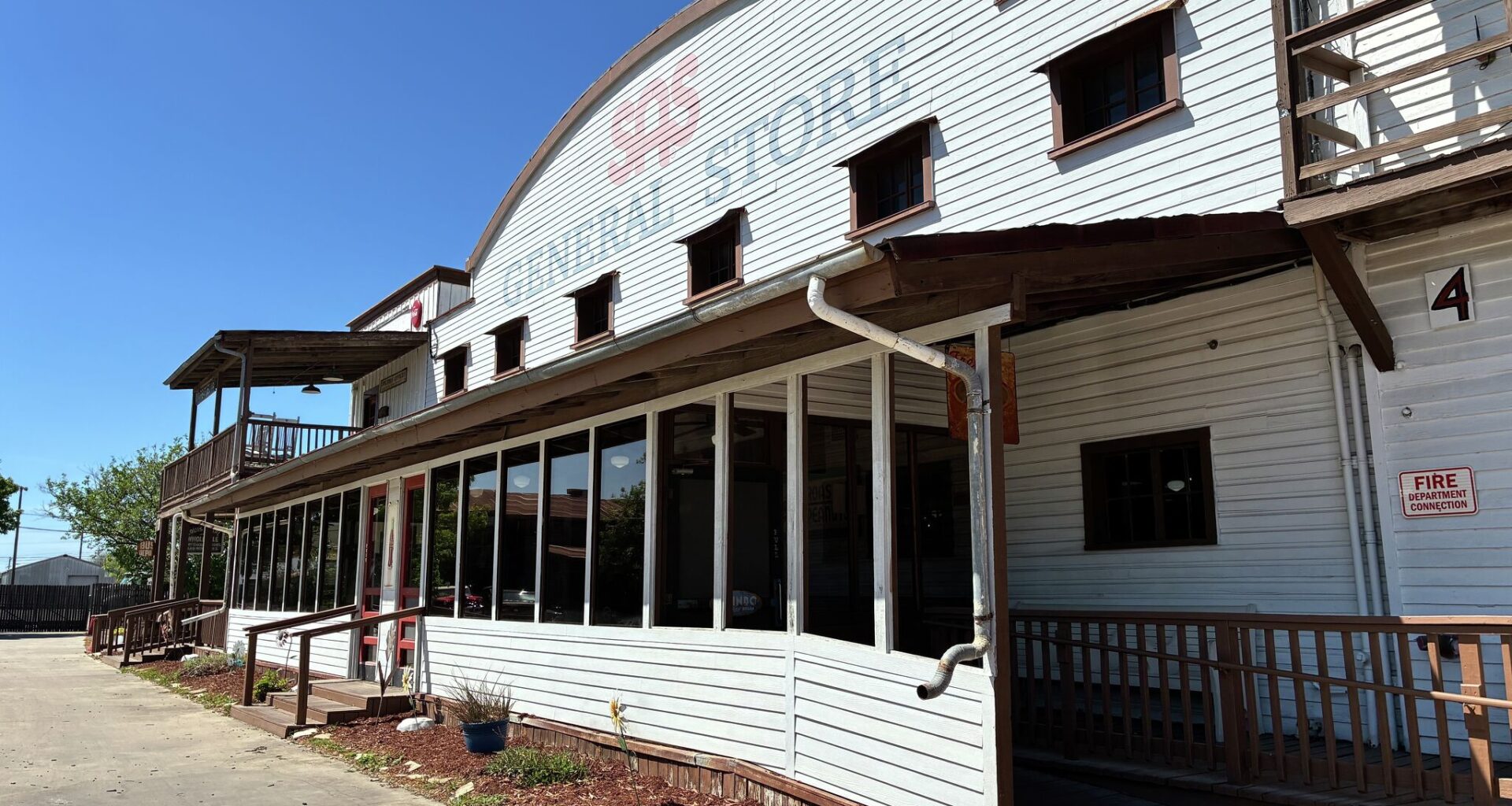
Since 1976, the SAS General Store and Factory Outlet at the corner of Zarzamora Street and New Laredo Highway has been a focal point of the area for its old-timey feel. Vintage Coca-Cola decor, classic cars and an Old West sensibility are all around at this shoe factory with an interior not unlike a Cracker Barrel gift shop. But look around close enough in South San, and you can find pieces of old San Antonio that aren’t just decorations — they’re real vestiges of Alamo City history.