
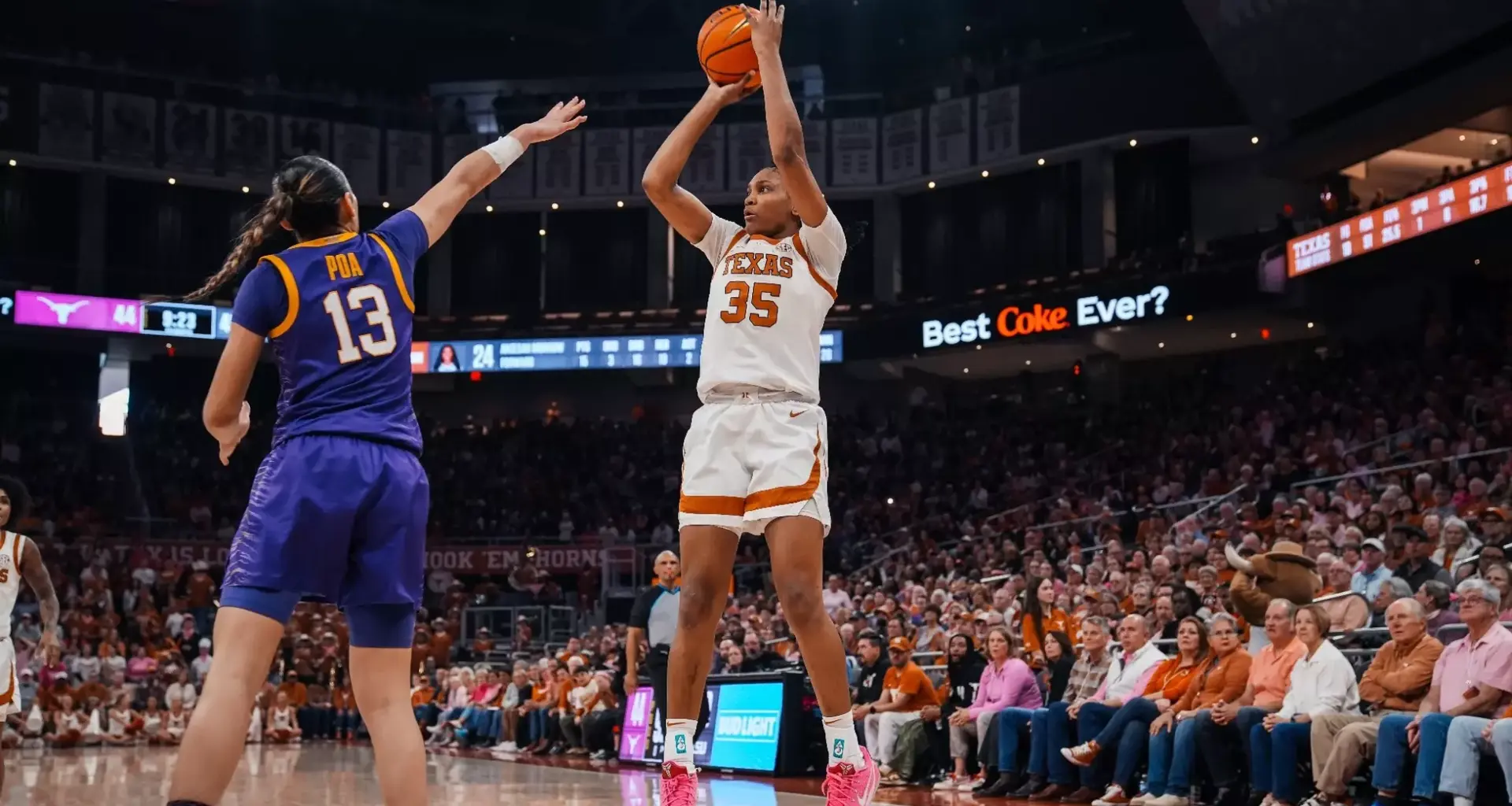
PHOENIX – With the Sweet 16 set and the Women’s Final Four headed to Phoenix, the road runs through Fort Worth for these four teams in the Fort Worth 3 Regional.
After two rounds, the field has narrowed to No. 1 Texas, No. 2 Michigan, No. 3 Louisville and No. 5 Kentucky, each now two wins away from the Final Four.
Three of the four top seeds advanced, and in many cases, they dominated, with each victorious team posting at least one win of 15 or more points.
Now, with a trip to the Valley two wins away, the games shift from dominance to heavyweight bouts. Which teams can adapt may decide who keeps dancing.
Here is a look at the coaches, key players and matchups that will decide which team books a ticket to Phoenix.
Coaches
Vic Schaefer (Texas): Schaefer has built Texas into one of the most physical and defensively dominant programs in the country. Before arriving in Austin, he led Mississippi State to back-to-back national championship game appearances, establishing the Bulldogs as a national power.
His teams are defined by toughness, rebounding and defensive discipline, traits that have translated directly to Texas’ return to national prominence. Under Schaefer, Texas has become one of the most complete teams remaining in the tournament.
Kenny Brooks (Kentucky): Brooks has quickly elevated Kentucky into a contender, going 23-8 in his first season (2024-25) and 25-10 this season. At Virginia Tech, he built a Final Four program and developed one of the nation’s most dynamic backcourts.
Now in Lexington, Brooks has carried over that formula, building a disciplined team capable of competing in high pressure moments. His emphasis on composure has been evident in Kentucky’s ability to win close games.
Kim Barnes Arico (Michigan): Barnes Arico has turned Michigan into a consistent national presence through sustained success. Before Michigan, she led St. John’s to four NCAA Tournament appearances.
Barnes Arico is the all-time winningest coach in Michigan women’s basketball history with a 311-150 (.675) record, spanning 14 seasons. She has led the Wolverines to 20-win seasons 13 times, nine NCAA Tournament appearances. and its first Elite Eight. Her teams are defined by pace, guard play and defensive pressure, giving the Wolverines one of the most aggressive identities in the field.
Jeff Walz (Louisville): Walz has established Louisville as one of the most consistent programs in women’s college basketball. He has led the Cardinals to four Final Four appearances.
Walz’s teams are known for discipline, execution and resilience, particularly in close games. That experience has positioned Louisville as one of the most dangerous teams remaining.
Key players
Madison Booker (Texas): Booker has been the centerpiece of Texas’ dominance. The junior forward scored 40 points in the second round against Oregon, setting the program’s single game Women’s NCAA Tournament record.
“I think coach Schaefer has really pushed me into taking a bigger role, just being aggressive. Hunting my shot,” Booker said recently, noting the contributions of her teammates. “It’s not one-on-five. It’s five-on-five out there.”
Her ability to control the game offensively while operating within Texas’ system has made the Longhorns difficult to defend.
Tonie Morgan, Teonni Key and Clara Strack (Kentucky): Morgan, Key and Strack lead a balanced and physical attack for Kentucky. Morgan runs the offense and creates scoring opportunities, while Key and Strack control the interior.
“It’s March,” Morgan said. “You can never get too comfortable no matter how much you’re up.”
In the second round against West Virginia, Key recorded 19 points and 10 rebounds while Strack added 18 points and 15 rebounds, showing the frontcourt’s ability to take over games.
“I think just staying composed and staying together was the main focus,” Key said.
Olivia Olson (Michigan): Olson has emerged as Michigan’s offensive leader. The guard, who averages 19.2 points per game, scored 27 points in the Wolverines’ win over NC State.
“I thought our team just was amazing today,” coach Kim Barnes Arico said. “We established ourselves from a defensive perspective really early. That’s our goal every day, to try to force 20 turnovers.”
Olson’s scoring and Michigan’s defensive pressure form the foundation of the Wolverines’ identity.
“We committed to Michigan to do this,” Olson said. “We’re not done yet.”
Laura Ziegler, Elif Istanbulluoglu and Tajianna Roberts (Louisville): Louisville’s production is spread across multiple contributors.
Ziegler has been a consistent scoring and rebounding presence, averaging around 11.2 points and 6.9 rebounds this season. Istanbulluoglu delivered 18 points and 11 rebounds in the second round, while Roberts provided key defensive plays and late game execution.
“It obviously could have gone either way,” Walz said after beating Alabama, 69-68. “We played well enough to win.”
That balance and composure have defined Louisville’s run.
“At halftime we harped on getting stops,” Roberts said. “I think we finally got over that hump.
We executed when we needed to the most.”
Matchups
Texas vs Kentucky: This matchup presents a contrast in styles.
Texas relies on size, interior dominance and tempo control, while Kentucky brings physicality and late-game experience. The two teams met earlier this season, with Texas winning 64-53.
If Texas controls the paint and pace, it maintains the advantage. If Kentucky keeps the game close late, its experience becomes a factor.
Michigan vs Louisville: This game is defined by identity.
Michigan thrives on pressure, pace and forcing turnovers, while Louisville relies on discipline, execution and limiting mistakes. The programs last met in the Elite Eight four years ago.
If Michigan speeds the game up, it gains control. If Louisville keeps the game in the half court, it can dictate tempo.
This <a target=”_blank” href=”https://cronkitenews.azpbs.org/2026/03/27/fort-3-worth-region-womens-final-four-phoenix/”>article</a> first appeared on <a target=”_blank” href=”https://cronkitenews.azpbs.org”>Cronkite News</a> and is republished here under a <a target=”_blank” href=”https://creativecommons.org/licenses/by-nd/4.0/”>Creative Commons Attribution-NoDerivatives 4.0 International License</a>.<img src=”https://i0.wp.com/cronkitenews.azpbs.org/wp-content/uploads/2026/02/favicon1.png?resize=85%2C85&ssl=1″ style=”width:1em;height:1em;margin-left:10px;”>
<img id=”republication-tracker-tool-source” src=”https://cronkitenews.azpbs.org/?republication-pixel=true&post=101411″ style=”width:1px;height:1px;”><script> PARSELY = { autotrack: false, onload: function() { PARSELY.beacon.trackPageView({ url: “https://cronkitenews.azpbs.org/2026/03/27/fort-3-worth-region-womens-final-four-phoenix/”, urlref: window.location.href }); } } </script> <script id=”parsely-cfg” src=”//cdn.parsely.com/keys/cronkitenews.azpbs.org/p.js”></script>
Canonical Tag:
Copy Tag
Article Content:
Fort Worth 3 Regional: Players, coaches, matchups to watch on road to Women’s Final Four in Phoenix
Andrew Hughes, Cronkite News
March 27, 2026
PHOENIX – With the Sweet 16 set and the Women’s Final Four headed to Phoenix, the road runs through Fort Worth for these four teams in the Fort Worth 3 Regional.
After two rounds, the field has narrowed to No. 1 Texas, No. 2 Michigan, No. 3 Louisville and No. 5 Kentucky, each now two wins away from the Final Four.
Three of the four top seeds advanced, and in many cases, they dominated, with each victorious team posting at least one win of 15 or more points.
Now, with a trip to the Valley two wins away, the games shift from dominance to heavyweight bouts. Which teams can adapt may decide who keeps dancing.
Here is a look at the coaches, key players and matchups that will decide which team books a ticket to Phoenix.
Coaches
Vic Schaefer (Texas): Schaefer has built Texas into one of the most physical and defensively dominant programs in the country. Before arriving in Austin, he led Mississippi State to back-to-back national championship game appearances, establishing the Bulldogs as a national power.
His teams are defined by toughness, rebounding and defensive discipline, traits that have translated directly to Texas’ return to national prominence. Under Schaefer, Texas has become one of the most complete teams remaining in the tournament.
Kenny Brooks (Kentucky): Brooks has quickly elevated Kentucky into a contender, going 23-8 in his first season (2024-25) and 25-10 this season. At Virginia Tech, he built a Final Four program and developed one of the nation’s most dynamic backcourts.
Now in Lexington, Brooks has carried over that formula, building a disciplined team capable of competing in high pressure moments. His emphasis on composure has been evident in Kentucky’s ability to win close games.
Kim Barnes Arico (Michigan): Barnes Arico has turned Michigan into a consistent national presence through sustained success. Before Michigan, she led St. John’s to four NCAA Tournament appearances.
Barnes Arico is the all-time winningest coach in Michigan women’s basketball history with a 311-150 (.675) record, spanning 14 seasons. She has led the Wolverines to 20-win seasons 13 times, nine NCAA Tournament appearances. and its first Elite Eight. Her teams are defined by pace, guard play and defensive pressure, giving the Wolverines one of the most aggressive identities in the field.
Jeff Walz (Louisville): Walz has established Louisville as one of the most consistent programs in women’s college basketball. He has led the Cardinals to four Final Four appearances.
Walz’s teams are known for discipline, execution and resilience, particularly in close games. That experience has positioned Louisville as one of the most dangerous teams remaining.
Key players
Madison Booker (Texas): Booker has been the centerpiece of Texas’ dominance. The junior forward scored 40 points in the second round against Oregon, setting the program’s single game Women’s NCAA Tournament record.
“I think coach Schaefer has really pushed me into taking a bigger role, just being aggressive. Hunting my shot,” Booker said recently, noting the contributions of her teammates. “It’s not one-on-five. It’s five-on-five out there.”
Her ability to control the game offensively while operating within Texas’ system has made the Longhorns difficult to defend.
Tonie Morgan, Teonni Key and Clara Strack (Kentucky): Morgan, Key and Strack lead a balanced and physical attack for Kentucky. Morgan runs the offense and creates scoring opportunities, while Key and Strack control the interior.
“It’s March,” Morgan said. “You can never get too comfortable no matter how much you’re up.”
In the second round against West Virginia, Key recorded 19 points and 10 rebounds while Strack added 18 points and 15 rebounds, showing the frontcourt’s ability to take over games.
“I think just staying composed and staying together was the main focus,” Key said.
Olivia Olson (Michigan): Olson has emerged as Michigan’s offensive leader. The guard, who averages 19.2 points per game, scored 27 points in the Wolverines’ win over NC State.
“I thought our team just was amazing today,” coach Kim Barnes Arico said. “We established ourselves from a defensive perspective really early. That’s our goal every day, to try to force 20 turnovers.”
Olson’s scoring and Michigan’s defensive pressure form the foundation of the Wolverines’ identity.
“We committed to Michigan to do this,” Olson said. “We’re not done yet.”
Laura Ziegler, Elif Istanbulluoglu and Tajianna Roberts (Louisville): Louisville’s production is spread across multiple contributors.
Ziegler has been a consistent scoring and rebounding presence, averaging around 11.2 points and 6.9 rebounds this season. Istanbulluoglu delivered 18 points and 11 rebounds in the second round, while Roberts provided key defensive plays and late game execution.
“It obviously could have gone either way,” Walz said after beating Alabama, 69-68. “We played well enough to win.”
That balance and composure have defined Louisville’s run.
“At halftime we harped on getting stops,” Roberts said. “I think we finally got over that hump.
We executed when we needed to the most.”
Matchups
Texas vs Kentucky: This matchup presents a contrast in styles.
Texas relies on size, interior dominance and tempo control, while Kentucky brings physicality and late-game experience. The two teams met earlier this season, with Texas winning 64-53.
If Texas controls the paint and pace, it maintains the advantage. If Kentucky keeps the game close late, its experience becomes a factor.
Michigan vs Louisville: This game is defined by identity.
Michigan thrives on pressure, pace and forcing turnovers, while Louisville relies on discipline, execution and limiting mistakes. The programs last met in the Elite Eight four years ago.
If Michigan speeds the game up, it gains control. If Louisville keeps the game in the half court, it can dictate tempo.
This article first appeared on Cronkite News and is republished here under a Creative Commons Attribution-NoDerivatives 4.0 International License.
Copy Content
Tracking snippet:
Copy Snippet