
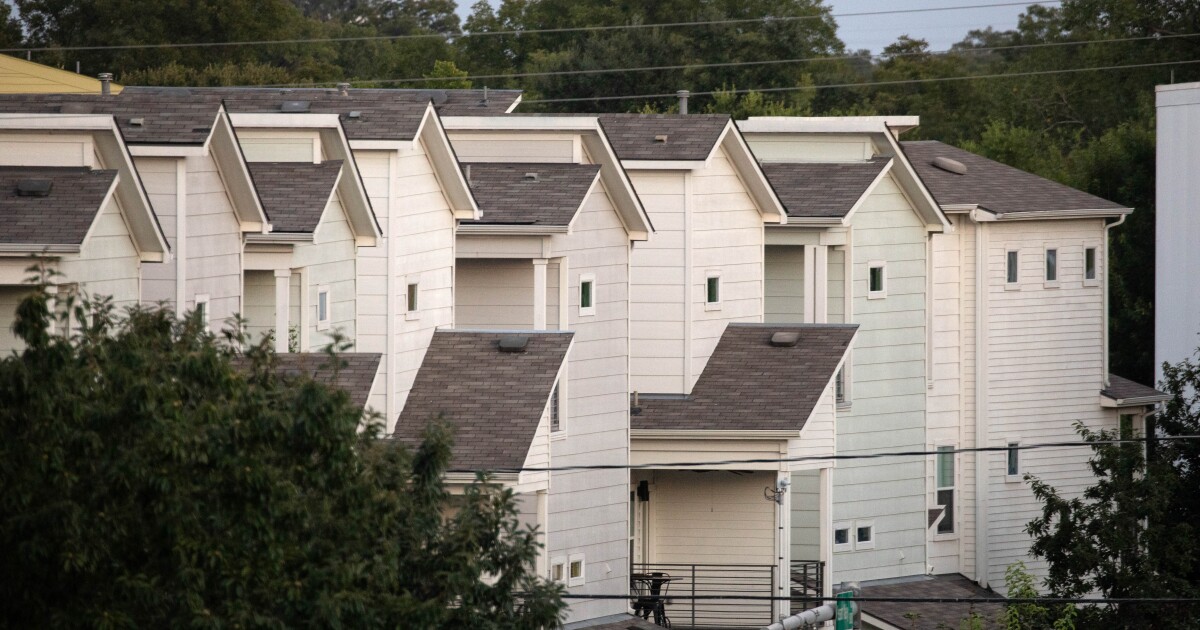
City of Austin staff will spend the next year exploring how the creation of new zoning districts could add more affordable housing to the market.
The resolution approved by Austin City Council on Thursday asks staff to research the zoning districts that would allow for smaller housing options like townhomes, cottage courts and smale-scale, multi-unit buildings. This is sometimes referred to as “missing middle housing.”
The resolution also includes direction to research more mixed-use developments, which combine housing and commercial opportunities.
Council Member Paige Ellis, who authored the resolution, said this builds on the city’s past efforts to expand home-building options in ways that create walkable and transit-focused areas.
“Over the past 40 years, less than 1% of the housing built in Austin has been ‘missing middle,’ and I think they are really good uses of property,” Ellis said. “I think they create walkable neighborhoods and are more environmentally sustainable than some of the other options.”
Ellis is drawing from a January study that found Austin’s current housing stock is limited outside of single-family homes or large apartment complexes.
That is because the city’s 1984 land development code — the rule book for what and where things can be built — largely supports those two housing types.
The new zoning districts would allow developers to build housing to accommodate different space needs, like multi-generational homes or people looking to downsize, and potentially make owning a home more attainable for families who can’t afford a single-family home. A change in zoning could also increase access to parks, schools and jobs, according to the study.
Many residents were supportive of diversifying home-buying options.
Judah Rice, who lives in District 3, said allowing this type of diverse housing allows people to live closer to where they work and play, and commute via walking and biking. He said it enhances neighborhoods, not destroys them.
“Because neighborhoods are more than a sum of their buildings,” Rice said. “A neighborhood is made up of people and of families, and right now those people and those families cannot afford to live in our single-family exclusive housing.”
But others, including Austin resident Bruce Greiner, who lives in Northwest Austin, opposed the changes. Greiner called the potential zoning change a “direct attack on the character and nature” of single-family neighborhoods.
“Affordable housing can be encouraged without destroying single-family neighborhoods,” Greiner said. “These policies are contrary to what many hold dear — residing in neighborhoods designed for single-family homes with safe streets, yards to play in, low traffic, vehicles parked in garages and driveways and no businesses.”
Strong community opposition is why updates to the land development code have come piecemeal over the last few years. In 2018, the city tried to do a major overhaul of the 1984 land code but failed after residents sued the city and won.
In 2023, the city changed the rules to allow more than one home on a plot of land. Then in 2024, the city reduced the amount of land required to build a house on. The city has also passed new rules that removed parking mandates for residential builds and allowed denser and taller apartments in exchange for affordable-rated apartments.
Council Member José Velásquez said this is another tool the city could use to help move that goal along.
“This is a great opportunity to highlight how duplexes, quadruplexes, townhomes and row homes all give people a more affordable, transit-oriented part of Austin,” Velásquez said. “No single zoning change will solve Austin’s housing and affordability issues, but our goal as a city is to add more tools to the toolbox to create more housing options.”
City staff are expected to come back with code update recommendations next March. There will be public input before the city implements changes.