
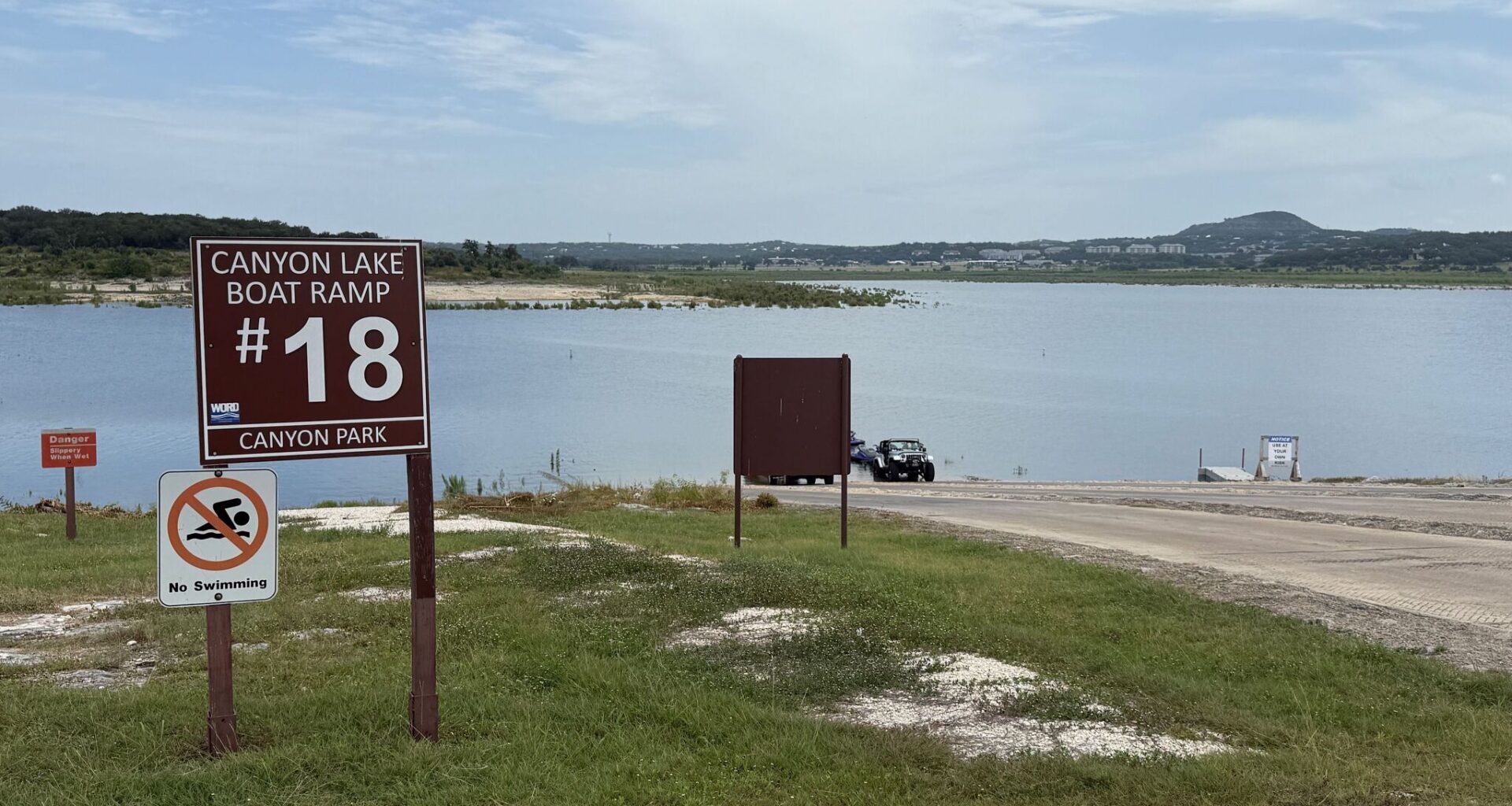
As New Braunfels heads into a contentious election cycle, candidates for mayor are pointing fingers over water levels at one of Texas’ most vital reservoirs. The debate has sparked concern among residents about the sustainability of the region’s water supply amid growth and drought.
Former White House staffer and Army veteran Michael French, one of three candidates running for New Braunfels mayor, raised the alarm on Facebook, linking a video to highlight what he called a crisis. French said Canyon Lake is “quickly disappearing” and losing “34 million gallons of water per day from evaporation and consumption.” He added that ongoing development across the Hill Country is “sucking up Canyon Lake much faster than it can be replenished” and called the lake “unsustainable.”
MySA reached out to French for further comment but did not hear back before publication.
Current data from the Water Data for Texas and the U.S. Army Corps of Engineers show a slow, manageable decline in the lake. As of Friday, March 27, Canyon Lake is 59.2% full, with a surface elevation of 886.88 feet and storage at 224,243 acre-feet, reflecting slight day-to-day decreases. Canyon Lake is still well above its 47% total from March 27, 2025, but has dropped from the Fourth of July floodwaters that filled the lake over 70% at one time.
With inflow at 24 cfs and outflow at 63 cfs, the lake is losing more water than it is gaining, leading to a gradual drop in both elevation and storage. No recent rainfall or floodgate releases have offset the decline, which has been consistent over the past week and month. While levels are down slightly, the lake remains in better shape than it was this time last year.
New Braunfels Mayor Neal Linnartz pushed back on French’s claims, pointing to historic drought rather than local growth as the driver of low water levels.
“We are in the worst drought in recorded history in New Braunfels and Comal County, which has caused our rivers and lakes to be much lower than normal,” Linnartz told MySA in a statement. He emphasized that the city and New Braunfels Utilities monitor water conditions closely, including Canyon Lake and Edwards Aquifer levels, and that “it is the drought that we are in that has caused the low river and lake levels, not growth within the city.”
Linnartz also highlighted the city’s long-term planning and diversified water portfolio, noting that “independent engineering analysis confirms that these supplies are sufficient to meet the needs of our community through full buildout and well beyond our long-term planning horizon of 2075.” He added that responsible management is key, with conservation programs, public education, and strategic drought response helping to ensure reliability while supporting growth.
Even as Canyon Lake slowly declines, Linnartz said New Braunfels is prepared. “As our region grows, the focus is not on stopping growth, but on managing it responsibly,” he said in a statement.