
Harris County has committed to more projects than it currently can afford to do under the $2.5 billion flood control bond approved by voters in 2018, Commissioners Court heard Tuesday. The bond was passed a year after Hurricane Harvey ravaged the Houston area. ( Melissa Phillip / Houston Chronicle)
Melissa Phillip, Staff / Melissa Phillip
Looming deadlines could put as much as $660 million in federal funding for flood control projects in vulnerable areas in jeopardy, according to a February report by the Harris County Flood Control District.
Of the 28 projects the district is pursuing using disaster recovery grants Congress approved after Hurricane Harvey, all but one have yet to break ground. Eleven of the projects, earmarked for areas directly impacted by Harvey, must be finished by late February. The other 17, designed to mitigate future flooding elsewhere in the county, face a March 2028 deadline.
Both deadlines are set by the Texas General Land Office, through which U.S. Department of Housing and Urban Development disaster recovery grants are routed. GLO then reimburses local governments as they complete qualifying projects.
Article continues below this ad
HUD’s deadlines are later than the state’s, particularly for the 17 mitigation projects. But the 11 recovery projects face a August 2028 cutoff, and the consequences could be dire if the county fails to meet any of the deadlines.
RISK: FEMA releases draft flood maps for Harris County after years of delays. Here’s what happens next.
HUD, in particular, can extend its dates only for “good cause,” said Robert Paterson, a University of Texas professor with expertise in disaster resilience.
“The county will apply for an extension; without one, HUD could treat unexpended funds as subject to recapture or de-obligation,” Paterson said. “That’s a possibility. Disaster recovery funds might be more at risk because that deadline is much nearer.”
Article continues below this ad
Flood control officials said they are focused on meeting all applicable deadlines and have made improvements to their internal processes that have sped up project timelines.
‘Equity problems compounded’
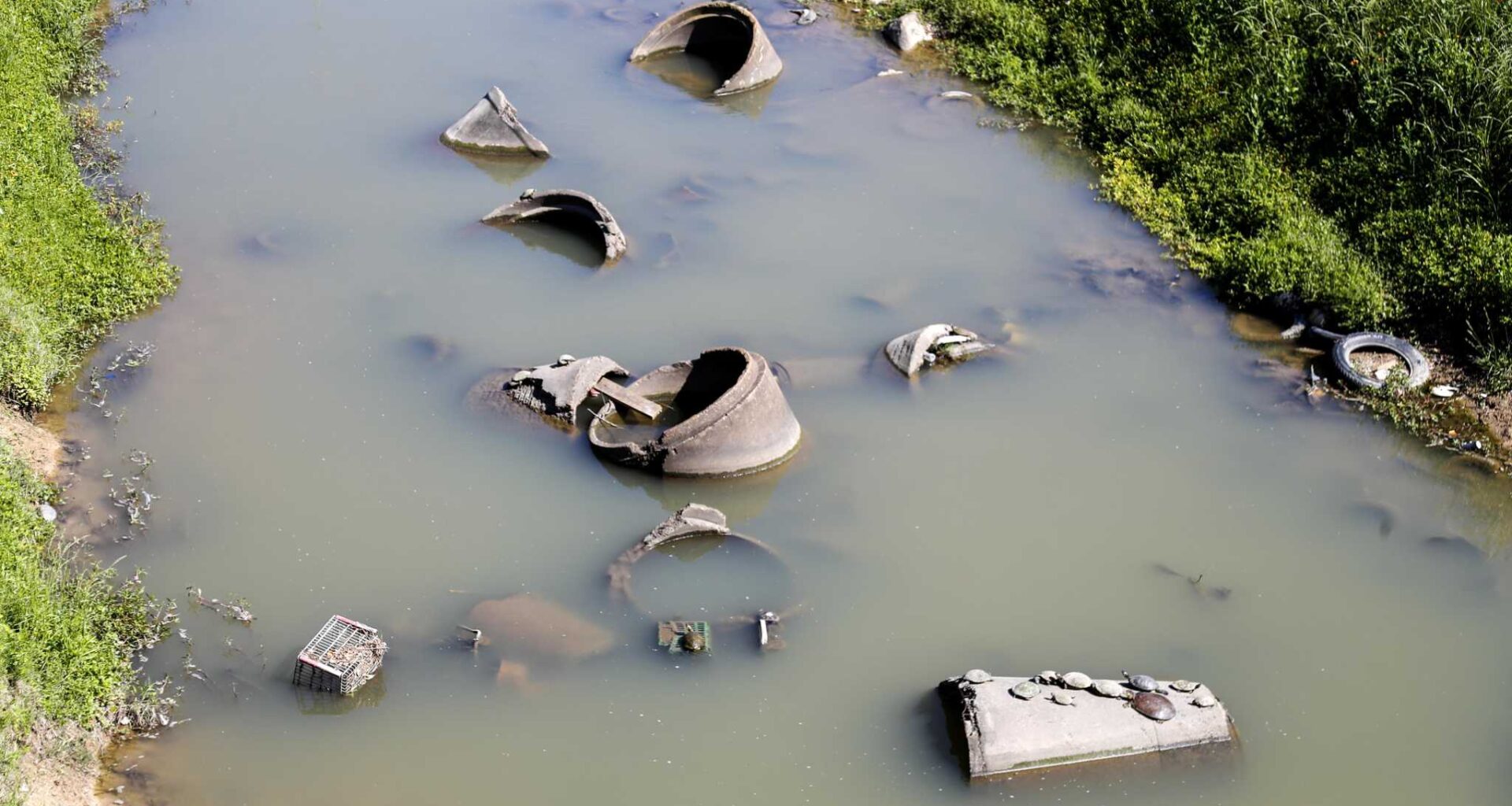
Turtles sit on a concrete pipe in a section of Halls Bayou near Wayside Drive and the Northeast Family YMCA, Wednesday, April 21, 2021, in Houston. Unlike other bayous in Harris County that have concrete channels and earthen berms, Halls Bayou is mostly natural, which contributes to a high flood risk for nearby neighborhoods.
Karen Warren / Staff photographer
The grants are designed to target low- to middle-income areas, which have historically been under-funded, a result of federal flood control policies that typically direct more money to areas with higher property values.
Article continues below this ad
Jim Blackburn, an attorney and environmental law professor at Rice University, said the funding is critical for Harris County’s ability to deliver on the language of the $2.5 billion flood mitigation bond passed by county voters in 2018.
FLOOD POWER: Gov. Greg Abbott would pick new leadership for Harris County flood-control district under Texas bill
A provision of the 2018 bond mandated that commissioners provide a process for determining an equity-based approach to allocating bond dollars. Commissioners later implemented a prioritization framework that has since been adjusted several times to steer funds to low-income areas.
One such area is northeast Houston, a low-income area that was particularly hard-hit during Hurricane Harvey. Ten of flood control’s pending projects are located in northeast Houston, according to a map included in its February report.
“That was sort of the promise of the bond election — that it would be equitable. But first thing they did was obligate federal dollars to lower-income areas instead of bond dollars,” Blackburn said. “Then the GLO held it up for quite some time, and now they may be looking at losing the money. Again, equity problems compounded on top of equity problems.”
Article continues below this ad
Ben Hirsch of West Street Recovery, a nonprofit working to improve resiliency in northeast Houston, said communities in the area have been concerned by what they see as slow progress on critical infrastructure projects.
“We haven’t seen as much as we thought we were going to see in our communities,” Hirsch said. “It’s not the issue that they’re discriminating against communities — they just aren’t getting the projects done on the timeline that people thought they were going to get it done.”
PREVIOUS: These 10 Houston-area neighborhoods may be most affected by FEMA’s new flood maps
It’s a problem Hirsch said is compounded by transparency issues at flood control. Staff do make efforts to engage with residents, he said, and often attend community meetings to answer residents’ questions. But their answers are a scattershot of explanations that evolve over time and do not explain the overarching issues slowing down projects.
“Maybe there’s a bit of truth telling that flood control needs to do to the public, or make efforts to manage expectations,” Hirsch said. “People feel like they’re getting the run-around — like they’re getting partial answers, but they don’t really understand what they’re being told. What’s going to restore trust in flood control is when people see cement going into detention ponds in their community.”
Article continues below this ad
The progress report, which was transmitted to Commissioners Court as part of the Feb. 28 meeting agenda, was not made publicly available, unlike many similar reports submitted on the same agenda. Flood control did not answer why the report was not made public.
Cascading deadlines
The GLO denied Harris County’s request for mitigation funding in its initial Harvey distribution, sparking a years-long dispute between Houston-area officials and former Land Commissioner George P. Bush.
The county and GLO later reached a resolution, after which it also signed a contract granting the flood control district $542 million in mitigation funding and an additional $322 million in disaster recovery funds.
ACCOUNTABILITY: Lina Hidalgo calls on public to demand change after flood control audit: ‘You can make a difference’
The buffer between the GLO’s 2027 and 2028 deadlines and HUD’s 2028 to 2033 dates is intended to let the state address administrative needs as part of the grant close-out process, said Emily Woodell, a spokesperson for Harris County Flood Control.
“It makes sense that when you’re administering a grant, there needs to be some cascading deadlines so that different entities can close out their portions,” Woodell said. “We have a deadline to GLO. GLO has a deadline to HUD, and there’s a buffer built in between.”
Flood control appears to be banking on a state extension for the county’s 17 mitigation projects.
Projects must be advertised before flood control can select a vendor for construction. The February report listed four projects scheduled for advertisement in 2028, with some not expected to be advertised until the second half of that year — well after the GLO’s current deadline of March 31, 2028.
With five years between the GLO mitigation deadline and the one set by HUD, an extension is not out of the question. A GLO spokesperson said the agency “will work with HUD and Harris County as the subrecipient to determine what options will be allowed by HUD and comply with federal grant requirements.”
As for flood control’s 11 projects facing a tighter timeframe, the GLO has previously twice extended its disaster recovery deadline, and secured a federal extension in 2024, the spokesperson said. But the GLO spokesperson said HUD has since said it will not grant any additional funding extensions for Harvey disaster recovery projects.
If neither the state nor feds issue an extension on these projects, flood control has roughly 11 months to complete construction, but has broken ground on only one of the projects, according to the February report.
That’s not entirely unusual for projects of this scale, Paterson said. Federally funded infrastructure projects often come with added requirements that compound already time-consuming processes like acquiring land through eminent domain and conducting environmental reviews, he said.
“For very large flood-control projects, it is common to still be in design, environmental review, authorization and procurement years after allocation, especially under layered federal, state and local administration check-offs,” Paterson said.
BLOWBACK: Flood victims demand Harris County prioritize overdue protection projects. They may get their wish.