
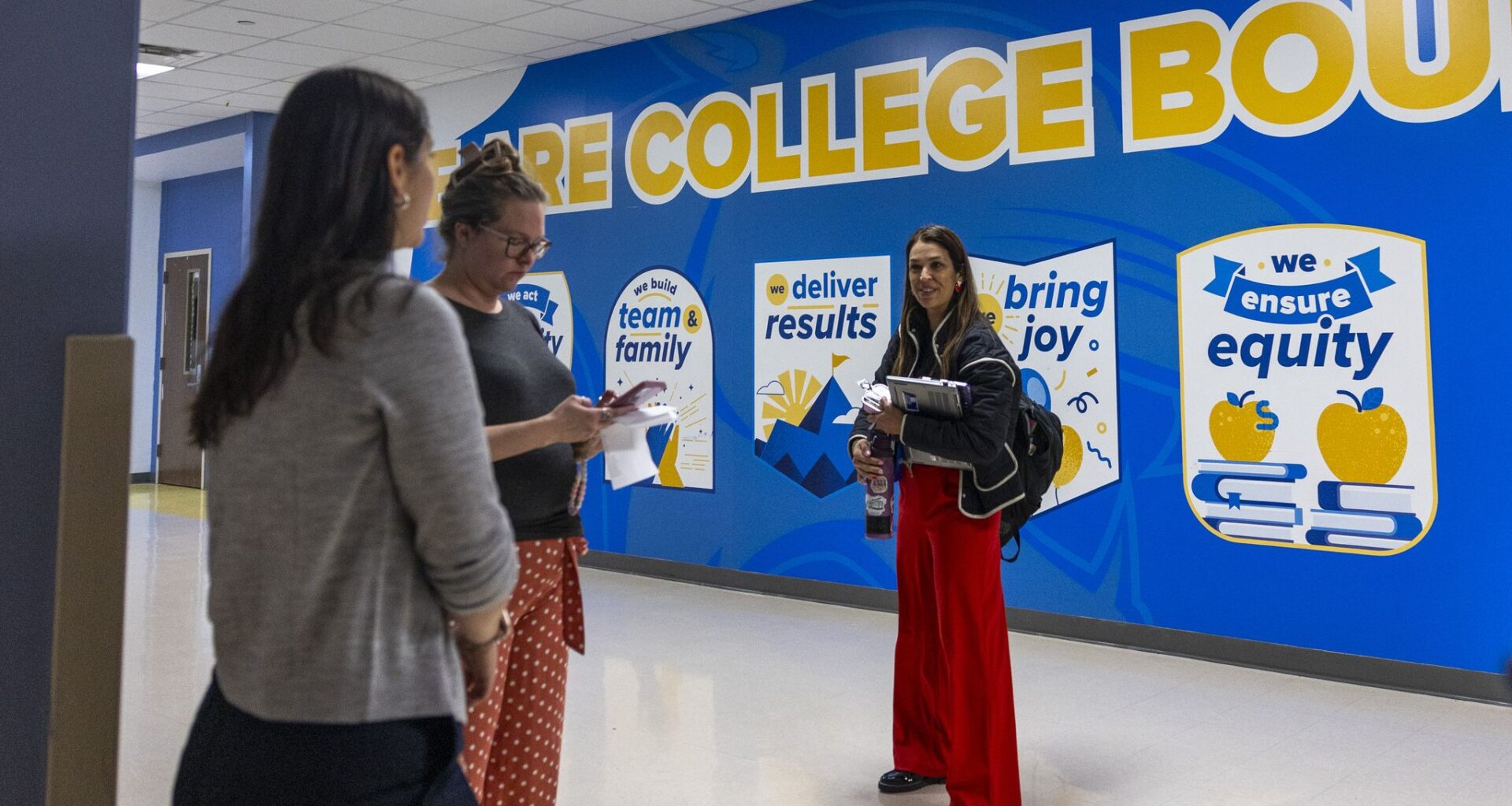
IDEA Carver Academy teachers pass by in the hallway on Tuesday, Feb. 10, 2026, in San Antonio’s East Side.
Andrew J. Whitaker/San Antonio Express-News
A 2025 statewide survey of Texas public school teachers found fewer than half of responding educators felt adequately prepared to enter the classroom when their careers began.

About two-thirds of the nearly 1,200 teachers who responded to the Charles Butt Foundation’s 2025 Texas Teacher Poll said they had considered leaving the profession — down from nearly 80% the year prior. Almost all reported a salary increase would be necessary to stay in the field.
Article continues below this ad
Gov. Greg Abbott has focused on addressing these challenges to the teaching profession in recent years, establishing a Teacher Vacancy Task Force in 2022, and declaring boosted teacher compensation a priority item in 2025. Last year, he signed House Bill 2 into law, allocating $8.5 billion in funding for public education.
But recently, a new challenge to the teaching profession has emerged: the growing number of uncertified teachers in the classroom.
In 2024-25, 12% — more than 42,000 teachers total — were uncertified, according to the Texas Education Agency. That same year, more than half of first-year teachers entered the profession without being certified.
Why are there so many uncertified teachers in Texas?
The number of uncertified new teachers hired by Texas districts spiked through the COVID-19 pandemic as staffing demands and national hiring shortages rose, said Jacob Kirksey, an associate professor of educational leadership and policy at Texas Tech University.
Article continues below this ad
Districts could hire uncertified teachers if they voted to become a “District of Innovation,” or DOI, which allowed them special exemptions from education laws. The innovation status was intended to provide districts with more local control and gives Texas districts greater flexibility in hiring options, curriculum choices and class sizes.
Through the 2022-23 school year, Texas districts hired 15,000 new teachers without a certification — a 650% increase from 2010, according to the Texas Association of School Boards. Students in the classroom with a new uncertified teacher lose about four months of learning in reading and three months in math, according to Kirksey’s research.
The certification exemption, originally geared toward hiring teachers needed urgently in short-term situations or for career and technical instructor roles, meant the demographics of those entering the profession began to rapidly change, Kirksey said.
Article continues below this ad
What have lawmakers done to address the uncertified teacher problem?
Looking forward, Kirksey said Texas has done a lot of work to solve some problems that emerged as the state moved to deregulate teaching in the early 2000s.
Over twenty years later, HB2 established the PREP (Preparing and Retaining Educators through Partnerships) pre-service residency program, which provides a minimum of $20,000 to each teacher in training. The program also supports funding for mentorship, pre-service residences and more.
Districts approved to participate in the PREP program can also receive funding for “Grow Your Own” programming, which helps uncertified school employees become certified teachers and supports high school students who aspire to become educators.
Article continues below this ad
Funding from HB2 also gives districts a $1,000 payment for each uncertified teacher who earns a certificate. It also boosted compensation programs, like the Teacher Incentive Allotment (TIA), which pays the highest-performing teachers extra money in a bid to retain talented educators.
Described as an accessible pathway to a six-figure salary for teachers, the TIA program recognizes top teachers with both a distinction, which is valid for five years, and a salary boost according to their level of designation. Texas allocated more than $481 million in TIA funds during the 2024-25 school year.
“The teacher pipeline starts at preparation, but it doesn’t end until you can confidently say that you are actually retaining the effective teachers who are in your state,” Kirksey said.
While school districts were able to hire uncertified teachers based on their existing exemptions for the 2025-26 academic year, they will no longer be able to do so for foundational subjects, including English, math, science and social studies. New guidelines from HB2 phase those exemptions out.
Article continues below this ad
This will put a halt on hiring uncertified teachers by 2030, per the legislation.
Have a question for one of our education reporters? Submit it below, and we’ll get back to you in our “Ask an Education Reporter” series.