
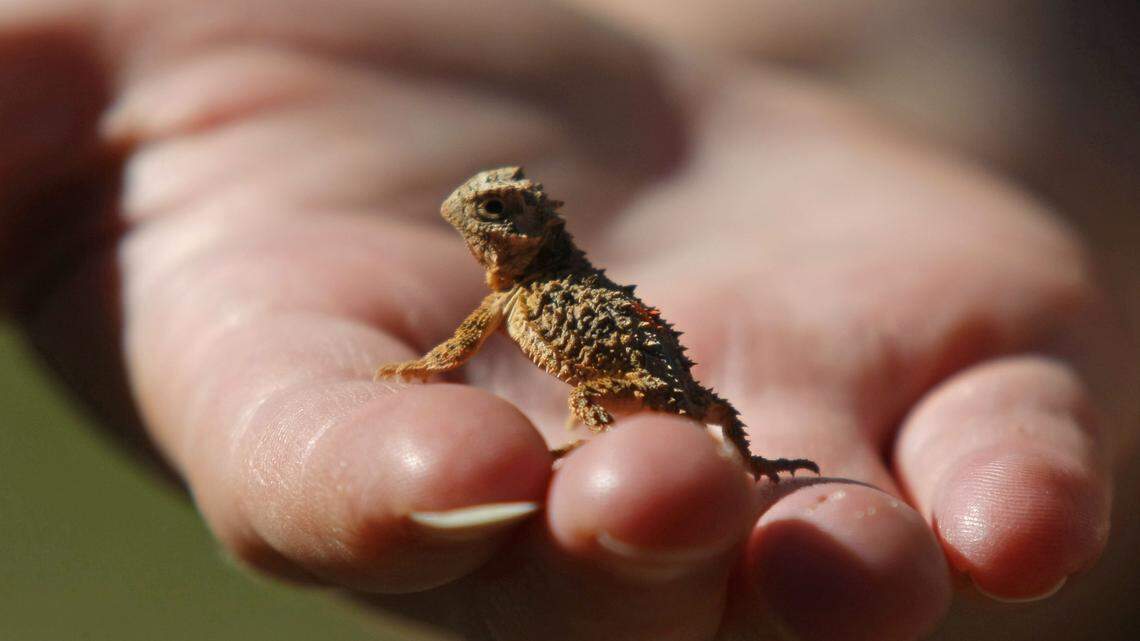
Once again, the little horned frog of Texas will bask in the national TV spotlight on Monday as the university that adopted it makes a run for a national basketball championship.
The No. 3-seeded TCU women’s basketball Horned Frogs go for the first Final Four in program history against No. 1 South Carolina at 8 p.m. in Sacramento, California, on ESPN.
At times like this, we see a rise in Google searches across the country for things like, “What is a horned frog?” or “Why is TCU the horned frogs?”
Here’s what you should know about our favorite little lizard.
History of the Horned Frogs and TCU
The horned frog has been TCU’s mascot since 1897, and it has been the Texas state reptile since 1992.
And although the funky, fierce-looking brown critter’s crown of horns can look intimidating — not to mention the fact that when agitated, it can shoot blood from its eyes — we Texans are rather fond of them.
The critter was adopted as the official TCU mascot because of it being a typical Texas sight back in the day. People even had them as pets (though that’s a no-no today).
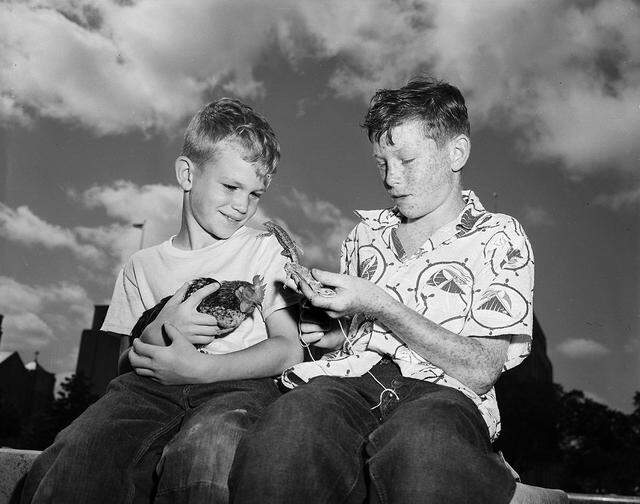 In this Star-Telegram photo from June 21, 1952, Aaron Ashbrook, right, shows off his pet horned frog and a tree frog to E.G. Simmons, who is holding his pet rooster. It was during the first citywide pet show sponsored by the Fort Worth recreation department in Burk Burnett Park. Fort Worth Star-Telegram Collection/UT Arlington Libraries Special Collections
But the name Frogs almost wasn’t selected, the Star-Telegram reported in 2000. It was one of two final choices, the other being the TCU Cactus. At that time, however, the University of Texas was known as the Cactus, so TCU opted for Horned Frogs.
David Stein, director of full-time graduate recruiting and admissions at TCU, wrote in a 2019 blog post that the 1897 yearbook staff was looking to name its annual. “Football began at the university the year before, and legend has it that the football field was covered in the small-but-mighty horned lizards. It seemed a perfect match.”
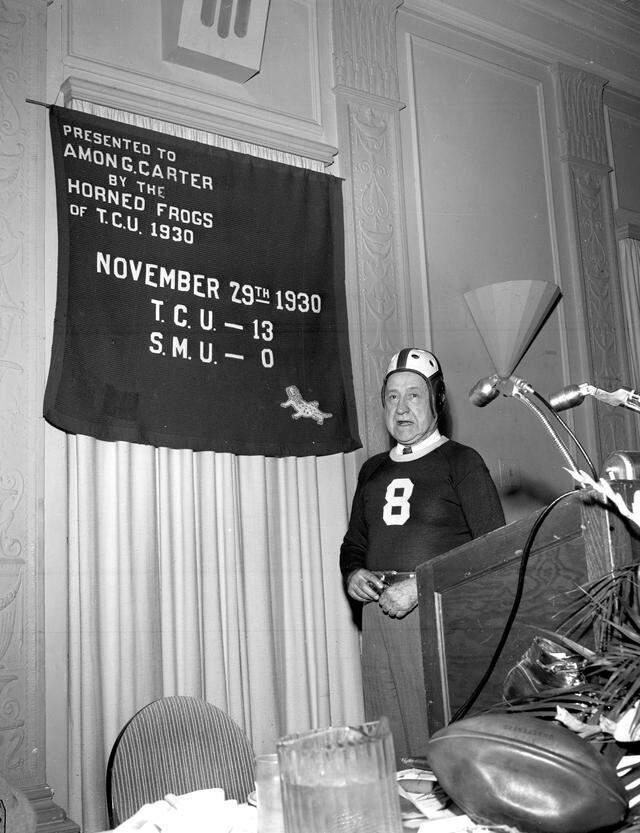 Amon Carter, the creator and publisher of the Fort Worth Star-Telegram, wearing a TCU jersey and helmet given to him by Horned Frogs football player Davey O’Brien, on April 13, 1950. Fort Worth Star-Telegram Collection/UT Arlington Libraries Special Collections
Technically, the TCU mascot is the Texas horned lizard, or Phrynosoma cornutum, and is a reptile.
The common name comes from the horns on their heads, which can vary among species. People also call them horned toads and horny toads, but they’re actually not amphibians like other toads. The reptiles have scales and claws, and they raise their young on land, according to Texas Parks and Wildlife. They grow to 3.5 to 6 inches.
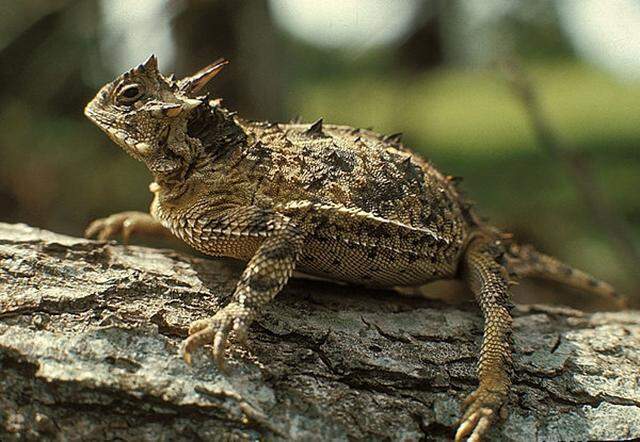 Meet the official Texas reptile, the horned lizard, which is the TCU mascot. Texas Parks and Wildlife TPW Where do horned frogs live?
The species can be found throughout the West, including Texas, Oklahoma, Kansas and New Mexico, but your chances of encountering them in the wild aren’t super high.
That’s because they are considered a threatened species in Texas. Lawmakers first mandated the protection of the species in 1967, citing population depletion. The population is still threatened by urbanization, insecticides and non-native fire ants that feast on the eggs and babies.
But you can get a look at the critters at the Fort Worth Zoo, which is one of the only zoos in the country to successfully breed them. The program that began in 2001 is a partnership with Texas Parks and Wildlife and TCU.
The Fort Worth Zoo releases the horned frogs it raises into the Mason Mountain Wildlife Management Area. The team uses transmitter tags to monitor their success in the wild to determine the feasibility of reintroducing the lizards where they once were plentiful.
A few more facts about horned frogs
The Fort Worth Zoo says:
Nature gives the lizard a special adaptation for running. It can fold its ribs back, making itself more streamlined for dashing through grasses.The horned lizard burrows underground in September or October and stays there — hibernating — until April or May. When warmer weather sets in, it turns to the task of eating its diet of harvester ants, crickets and beetles, and begins egg-laying.It buries its eggs, up to 30 at a time, in sandy areas.Babies hatch in about 50 days and grow to an adult length up to 6 inches
This story was originally published March 30, 2026 at 5:31 PM.

Fort Worth Star-Telegram
Matt Leclercq is senior managing editor at the Fort Worth Star-Telegram. He previously was an editor at USA Today in Washington, national news editor at Gatehouse Media in Austin, and executive editor of The Fayetteville (NC) Observer. He’s a New Orleans native.