

Developers behind a planned Muslim-centric neighborhood in the northern suburbs have hit several roadblocks in recent weeks.
Most recently, a North Texas judge issued a temporary injunction blocking an effort to support the project.
Collin County’s 493rd Judicial District issued an injunction tied to development of The Meadow, a project planned to feature more than 1,000 homes, a K-12 faith-based school, a mosque, elderly and assisted living, apartments, clinics, retail shops, a community college and sports fields on 402 acres in Collin and Hunt counties, roughly 40 miles northeast of downtown Dallas. The project was previously called EPIC City.
The injunction was issued against the Double R Municipal Utility District No. 2A of Hunt and Collin counties, as well as purported members of its board.
D-FW Real Estate News
The ruling temporarily prevents the new board leaders from taking any action to support the development. The utility district was expected to provide sewer services to the planned residential development.
Monday’s ruling calls for the district to “cease service to any lands” recently annexed by the board, including The Meadow development site.
The injunction marks the latest development in a lawsuit filed by Attorney General Ken Paxton, who accused the district of attempting to “evade state oversight and support the illegal East Plano Islamic Center (‘EPIC’) real estate development” through improper appointments and unlawful expansion of the district.
Attempts to contact representatives for developer Community Capital Partners Tuesday were not immediately returned.
Municipal utility districts are authorized by the Texas Commission on Environmental Quality to support infrastructure such as water, sanitary sewer, drainage and flood control for planned residential developments within a certain area. Developers often initiate the creation of the districts.
Developers front the cost, and the district may issue bonds to repay the developer for the investment. Districts raise revenue through ad valorem taxes on properties within the district and fees to repay bonds, cover maintenance and other related costs.
Community Capital Partners had not received utility district approval or other necessary permits to begin construction. Paxton accused the firm of skirting state law by improperly expanding an existing district.
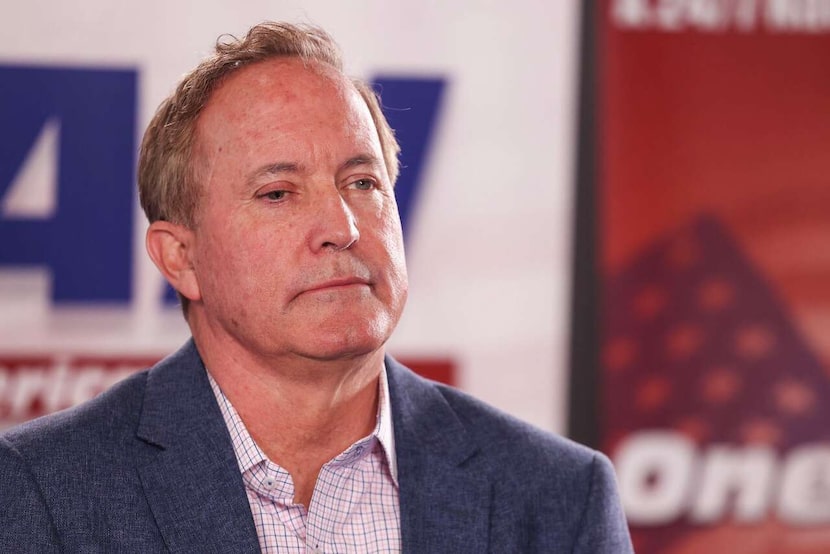
Texas Attorney General Ken Paxton has accused the Double R Municipal Utility District No. 2A of Hunt and Collin counties of trying to “evade state oversight and support the illegal East Plano Islamic Center (‘EPIC’) real estate development” through improper appointments and unlawful expansion of the district.
Shafkat Anowar/Staff Photographer
Paxton alleged that original board members for the Double R district resigned in favor of new leaders in September. The new members then annexed roughly 400 acres where The Meadow would be built.
The lawsuit alleged new board members didn’t meet state qualifications to serve, meaning they could not legally expand the district. Paxton’s office is contesting the district’s boundaries and wants the land tied to The Meadow removed.
Board members must own land or be registered to vote within the district. Documents returned to the Texas Commission on Environmental Quality showed that the five members lived outside the district and did not appear to have a valid deed for property within the district, Paxton’s lawsuit alleged.
A trial for the lawsuit is currently set for November.
The developer and its attorney, Eric Hudson, have previously pushed back against the lawsuit, calling The Meadow a “lawful residential development.”
The judge’s ruling comes roughly a week after Hunt County officials rejected a preliminary plat application. Daniel Ray, the county’s general counsel, cited “technical, regulatory and legal deficiencies” in the application.
“It is not based on race or religion or any of the other things that have caused concern in the community because those cannot form the basis of any decision that the commissioners court makes,” Ray said during the meeting.
Paxton has filed two lawsuits related to the project, and Gov. Greg Abbott has directed multiple state agencies to investigate EPIC and its affiliated entities. Abbott said in a December social media post that four agencies continue to investigate the planned development.