
Working Life is a monthly column in which Texans talk about their jobs.
I was born in Germany. My dad was in the U.S. Army, so we moved around a lot, including to McAllen, briefly, when I was six years old. I came back to Texas when I was eighteen. I joined the Army and ended up stationed at Fort Hood, where I worked as a combat engineer. That was my first time operating a crane, moving C-4 here and there, swapping out tank motors.
I grew up playing video games and skateboarding—I was a sponsored boarder as a teenager. You need finesse for those hobbies, and they helped improve my focus. In my twenties and thirties I played in a heavy metal band. We toured with Rob Zombie for a bit, but I ran out of money and had to go back to running cranes.
Later I went to work with subcontractors and general contractors on different projects around Texas but also in other places, like San Francisco. Today I work for an operator-rental company. I’ll get hired by a construction company as a package with a crane owner.
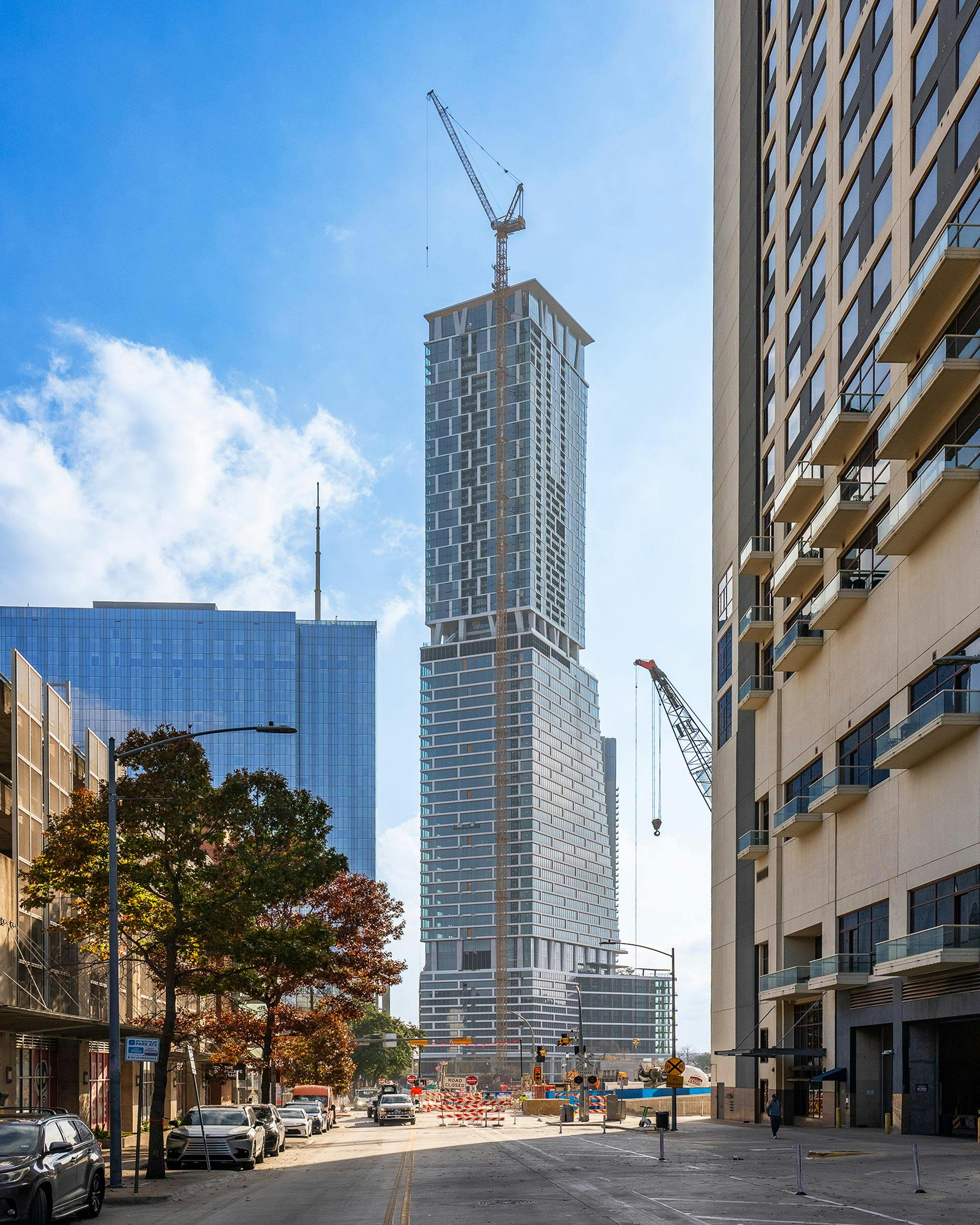 The Waterline building in downtown Austin.Photograph by Jeff Wilson
The Waterline building took over three years to construct. It’s by far the longest project I’ve done, typically working seven days a week, around twelve hours a day. We got Christmas, Thanksgiving, and the Fourth of July off. With that schedule, if you don’t take care of yourself—if you’re not eating or sleeping right—it can be a huge safety risk. I pretty much only drink water and coffee and eat home-cooked meals. The only thing I keep in the crane cabin is my phone, which I play music from at a very low volume.
Working a crane is more a craft than a science. You need a feel for it. In the cab there’s a swing handle and a boom-down or trolley handle, depending on what model you’re on. There’s a few-second delay from when I move the levers to when the hook starts to swing. But we have to be exact, sometimes to the inch.
The weather can be a problem. We can’t operate if there’s lightning within ten miles. I’ve been in a crane when it got struck. The cab is grounded, like a car or an airplane, but the lightning sounds like a 12-gauge shotgun going off right next to you. We also have to closely monitor wind speeds. Depending on the conditions, an object that’s broad and flat can act like a sail.
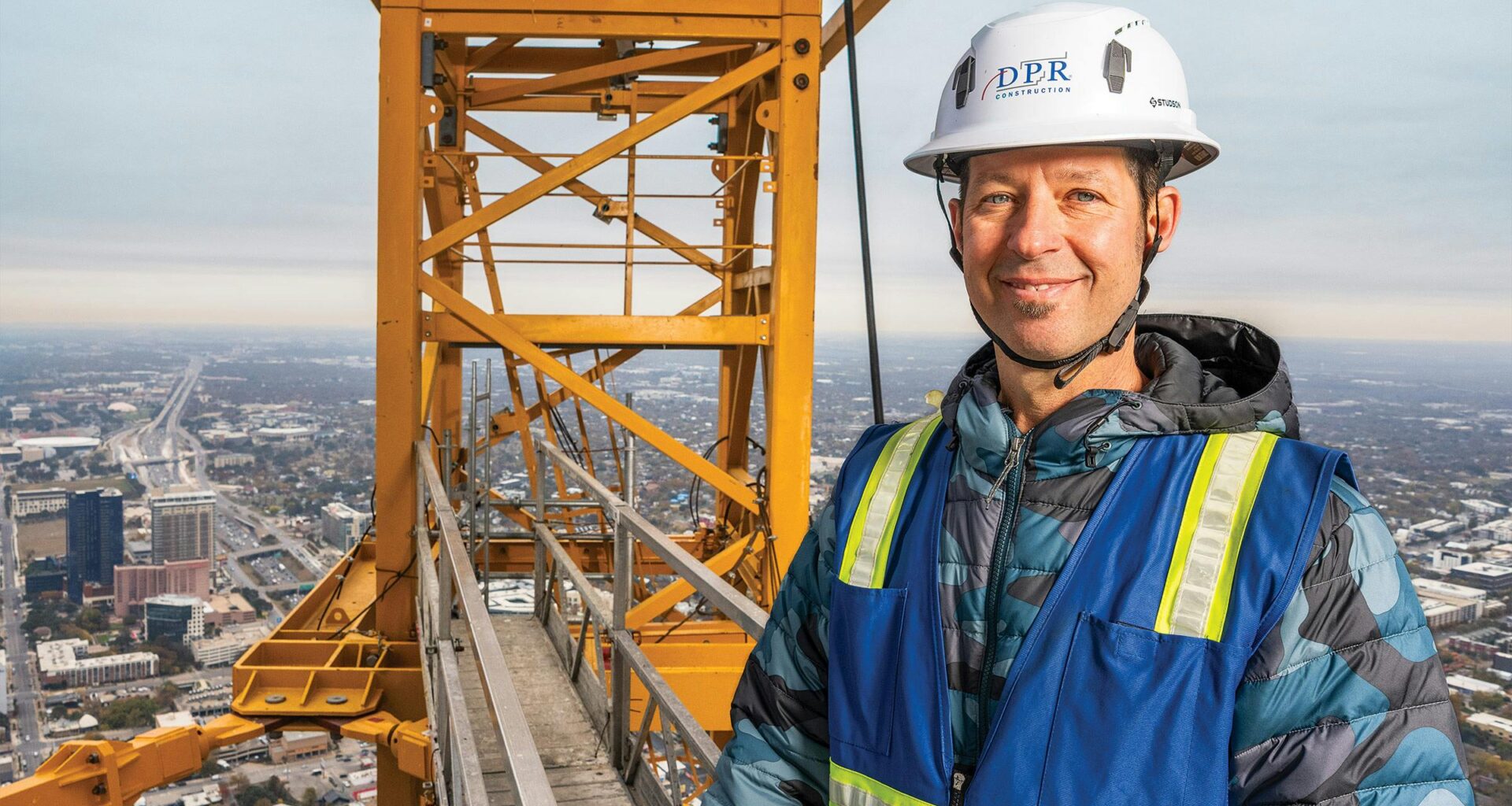
I get a unique perspective from the top of a tower. There are some beautiful views. Being over the fog, seeing the sun rise and set, seeing the different colors that come over the city—the oranges and reds reflected onto the windows of the buildings around me, which all become the same hue. I love that more than anything.
This article originally appeared in the April 2026 issue of Texas Monthly with the headline “Matt Francis, Crane Operator.” Subscribe today.
Read Next