
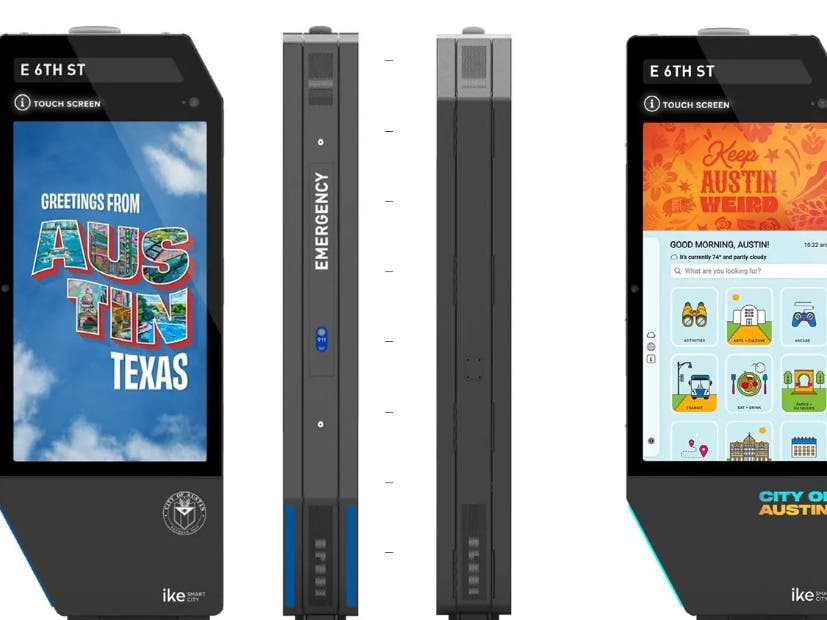
After earning approval at last week’s City Council meeting, the City of Austin is moving forward with implementation of a network of digital kiosks in the public right-of-way.
The city discussed the development in a Friday press release. According to the release, the city will amend Chapter 25-10 of City Code to enable it to deploy the kiosks in high-activity areas of the city.
The kiosks are designed to provide real-time public information, support local businesses, and enhance the pedestrian experience. Austin Economic Development is leading the project, in collaboration with Transportation, Public Works, and other city departments.
Key features of the new kiosks include:
Real-time public transit routes and schedulesWayfinding and navigation toolsLocal event and cultural listingsCivic information and emergency messagingWi-Fi accessMobile “handoff” capability allowing users to send directions and information directly to their phones
According to the press release, the kiosks are intended to provide meaningful public benefit, enhance transit access, and contribute to Austin’s smart city infrastructure.
Additionally, each kiosk will be fully compliant with the Americans With Disabilities Act and are designed to meet federal accessibility standards, including adjustable screen height, high-contrast mode, large text options, and forward-reach compliance.
Designers worked to ensure safe placement, appropriate lighting, and compatibility with surrounding environments to support the city’s overall quality of life.
IKE Smart City, LLC was selected through a competitive process to be responsible for manufacturing, installing, operating, and maintaining the kiosks.
The program will operate under a zero-cost model to the city. That’s possible because the kiosks will feature ads that will generate revenue shared with the city, which can in turn use it to support public priorities, services, and other community initiatives.
Austin Economic Development Deputy Director Anthony Segura said, “This program represents an important step in Austin’s continued evolution as a connected and innovative city. Interactive kiosks will make it easier for residents and visitors to navigate downtown, discover local businesses, and stay informed about city services, all at no cost to taxpayers.”