
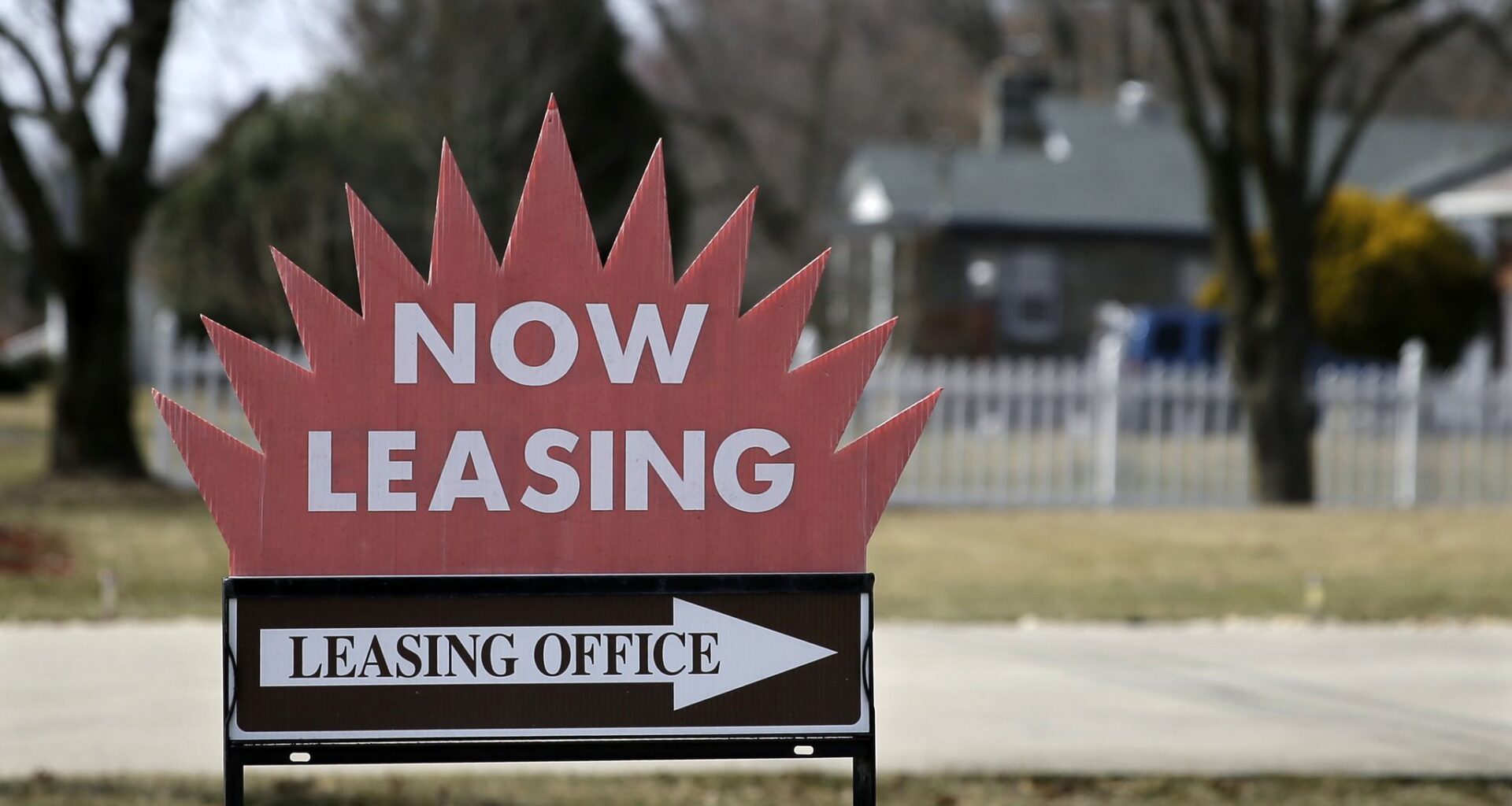
San Antonio’s multifamily market has a vacancy rate of 15.7%, the highest among the 50 largest multifamily markets in the U.S. according to a recent report from commercial real estate data firm CoStar.
Mel Evans/AP
San Antonio has the highest apartment vacancy rate among the nation’s major markets, according to a recent report from commercial real estate data firm CoStar.

The Alamo City took the top spot from Austin, which dipped down to No. 3 on the list ranking the 50 largest multifamily markets in the U.S. after holding the title for several quarters.
Article continues below this ad
San Antonio’s multifamily market has a vacancy rate of 15.7%, while Austin’s is at 14%.
MORE APARTMENT NEWS: San Antonio apartment construction plunges as occupancy slips, rents soften
Houston and Dallas-Fort Worth trailed closely behind, at No. 4 and No. 6, with vacancy rates of 12.7% and 12.4%, respectively.
In the early 2020s, both San Antonio and Austin experienced an influx of new apartment developments that outpaced demand. But then construction tapered off, helping stabilize rent prices and occupancy rates.
Article continues below this ad
With elevated construction and labor costs, skittish investors, higher interest rates and operating expenses, and inventory remaining high, developers and investors are having a hard time justifying committing to multifamily housing of all kinds, including income-restricted units.
In 2025, the San Antonio market added 6,877 new apartment units to the area, down 36% compared with 2024, according to data firm Austin Investor Interests, a data firm focused on the Austin and San Antonio multifamily housing markets. It’s expected to drop again by as much as 40% to 50% in 2026.
Construction workers work on a San Antonio apartment building in 2024. Since then, the number of new apartments added to the San Antonio market has fallen and is expected to continue declining this year.
Josie Norris/San Antonio Express-News file photo
In Austin, 19,596 new apartment units were added to the market in 2025, down 30% from 2024. They’re expected to decline sharply in 2026.
Article continues below this ad
While Austin’s vacancy rate finally began to shrink early last year, San Antonio’s continued rising despite the slowdown, surpassing both Austin and Memphis, which ranks No. 2 on the list.
READ MORE: Fewer apartments, shops, offices being built in San Antonio. Here’s why.
The San Antonio market is still working through its excess inventory, and the recent slow winter months only exacerbated the number of vacancies.
Last year, San Antonio’s multifamily market hit its lowest occupancy rate of the last two years — 88% in the third quarter of 2025. It ended the year at 88.2%. On an annual basis, occupancy dipped 0.3%, but it’s been steadily declining for the past few years.
Article continues below this ad
In Austin, overall occupancy ranged between 87% and 89% for a two-year period. Year over year, occupancy improved nearly 1 percentage point, rising to 88.5% in the fourth quarter of 2025, suggesting “stabilization, but not yet recovery,” according to Austin Investor Interests.
After the pandemic, landlords made an exception for residents who couldn’t afford their rent, even after the moratorium on evictions lifted, in hopes that they would return to their usual payment schedule once things calmed down. By 2025, their patience wore thin, and many began to clean house and vacate units.
On top of that, single renters have started bunking with friends and family to save on monthly expenses, and the return-to-office movement has some would-be renters in a holding pattern while they figure out their commute.
Article continues below this ad