
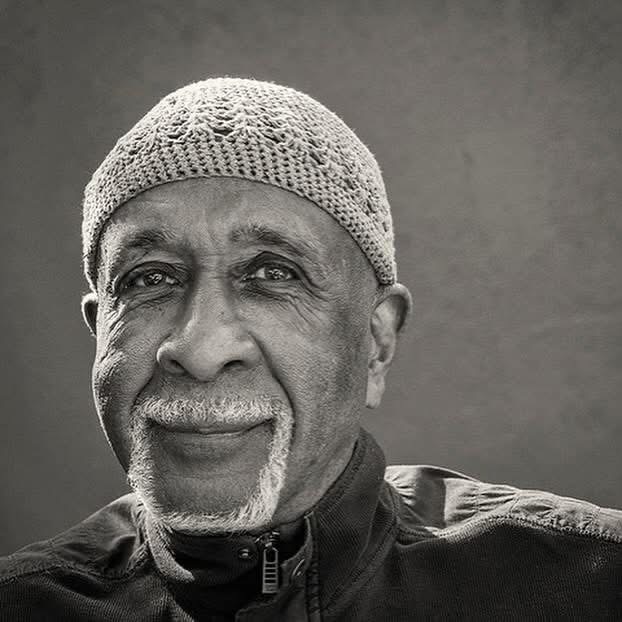
Ernest McMillan, a Dallas civil rights activist and former local leader of the Student Nonviolent Coordinating Committee, is remembered for decades of advocacy and mentorship across generations. He dies at 81.
Toni Beatty
Ernest McMillan, a Dallas-born civil rights activist during the 1960s and later mentor to generations of community leaders, has died at 81. According to his niece, Anynika McMillan-Herod, he died Friday morning.

McMillan, raised in Dallas’ Freedman’s Town neighborhood, now known as Uptown just outside downtown Dallas, became involved in civil rights work as a young organizer, registering voters and working across the South. He later served as chairman of the Dallas chapter of the Student Nonviolent Coordinating Committee, one of the key grassroots organizations of the Civil Rights Movement, founded in 1960. He remained active in human rights efforts throughout his life.
Article continues below this ad
He attended Morehouse College, a historically Black university in Atlanta, during the height of the movement and traveled throughout the region as part of organizing campaigns. His work included demonstrations that led to time in prison, experiences that shaped his long-term commitment to activism and community engagement.
McMillan also came from a family deeply rooted in Dallas history. His grandfather, Dr. Walter Ree McMillan, founded the city’s first Black hospital, the McMillan Sanitarium in 1921. In the decades that followed, McMillan remained engaged in advocacy and community-building efforts, including work with national and regional organizations focused on justice and empowerment. He also spent years in Houston, where he founded and led the Fifth Ward Enrichment Program, a nonprofit focused on youth development and community-building.
He also published two books in 2023, Standing: One Man’s Odyssey Through the Turbulent ’60s, a memoir detailing his path from segregated Dallas to civil rights organizing, and Kneeling: Poems and Verses Transcending the Turbulent ’60s, a collection of poetry and writings, many developed during his time in prison.
A mentor whose influence extended beyond activism
Those who knew him say his greatest impact was on the people he shaped, Judah Agbonkhina, a Dallas filmmaker, community activist and founder of “Word on Da Street with Judah,” told The Dallas Morning News.
Article continues below this ad
Make Dallas News a preferred source so your search results prioritize writing by actual people, not AI.
Add Preferred Source
He said McMillan took a direct role in shaping his work after the two met at a community event at the Pan-African Connection Bookstore, Art Gallery and Resource Center.
“He started to impart his knowledge,” Agbonkhina said. “Just being able to tap into that direct knowledge and really sit down and talk with him — it was invaluable.”
Agbonkhina said McMillan quickly became a mentor, offering insight drawn from decades of activism and helping shape his approach to organizing and storytelling.
Article continues below this ad
“The English language is not complex enough for me to really describe how important that was,” he said.
That mentorship extended into collaboration. In June 2024, Agbonkhina worked with McMillan to organize and record a Juneteenth event known as “Courageous Conversations,” a panel that brought together local activists, artists and community leaders to engage directly with McMillan’s experiences and lessons from the civil rights movement.
“We were able to sit down and really pick his brain,” Agbonkhina said. “Learning direct knowledge of how to move in any movement, the real consequences that happened to him and how to do things better.”
McMillan continued that work even as his health declined.
Article continues below this ad
Passing the torch to the next generation
In February, during a visit to Dallas, he met with a group of younger organizers, artists and educators, listening to their challenges and offering guidance drawn from his decades of experience.
“He absolutely passed the torch,” said his niece, McMillan-Herod, co-founder and executive director of Soul Rep Theatre Company in Dallas. “He was engaged consistently, constantly with young people.”
McMillan had been living in Albuquerque, N.M., for about six years, where he moved to be closer to his youngest daughter, Dafina McMillan, and became part of the community there. Over the past year, as his health declined, his three children — Dafina McMillan, Ernest Oheni McMillan and Angela Fikes — helped care for him.
Article continues below this ad
Last April, he suffered a stroke, followed by a stage 2 bladder cancer diagnosis in August, according to a GoFundMe campaign created by his children.
The fundraiser, which sought support for medical treatment, caregiving and other expenses, described an intensive course of care that included chemotherapy, radiation and immunotherapy.
McMillan returned to Dallas in February to celebrate his grandson’s birthday and reconnect with family and community members. As his condition worsened, he made the decision to come home. With support from family and loved ones, he relocated to Dallas in early March, where he spent his final weeks surrounded by those closest to him.
Agbonkhina said many who worked with McMillan believed he would return to rekindle his mission, unaware of how little time remained.
Article continues below this ad
“We thought he was coming back so we could continue the work,” he said. “The family knew more than we did.”
A life rooted in family, legacy and purpose
McMillan-Herod said her uncle remained committed to his values until the end. She said he played a central role in her life, naming her as a child and later walking her down the aisle at her wedding.
“He was the template for what a decent, good human being looks like,” McMillan-Herod said. “I will absolutely be taking my cues from him.”
Article continues below this ad
She described him as a “warrior poet” who balanced a lifelong fight for justice with a deep commitment to building relationships and community.

By signing up, you agree to our Terms Of Use and acknowledge that your information will be used as described in our Privacy Policy.
“He never met a stranger,” she said.
For those he mentored, his passing has brought a renewed sense of responsibility.
Article continues below this ad
“It’s a heavy honor,” Agbonkhina said. “I am one of those people he chose to invest in. I don’t take that lightly.”