
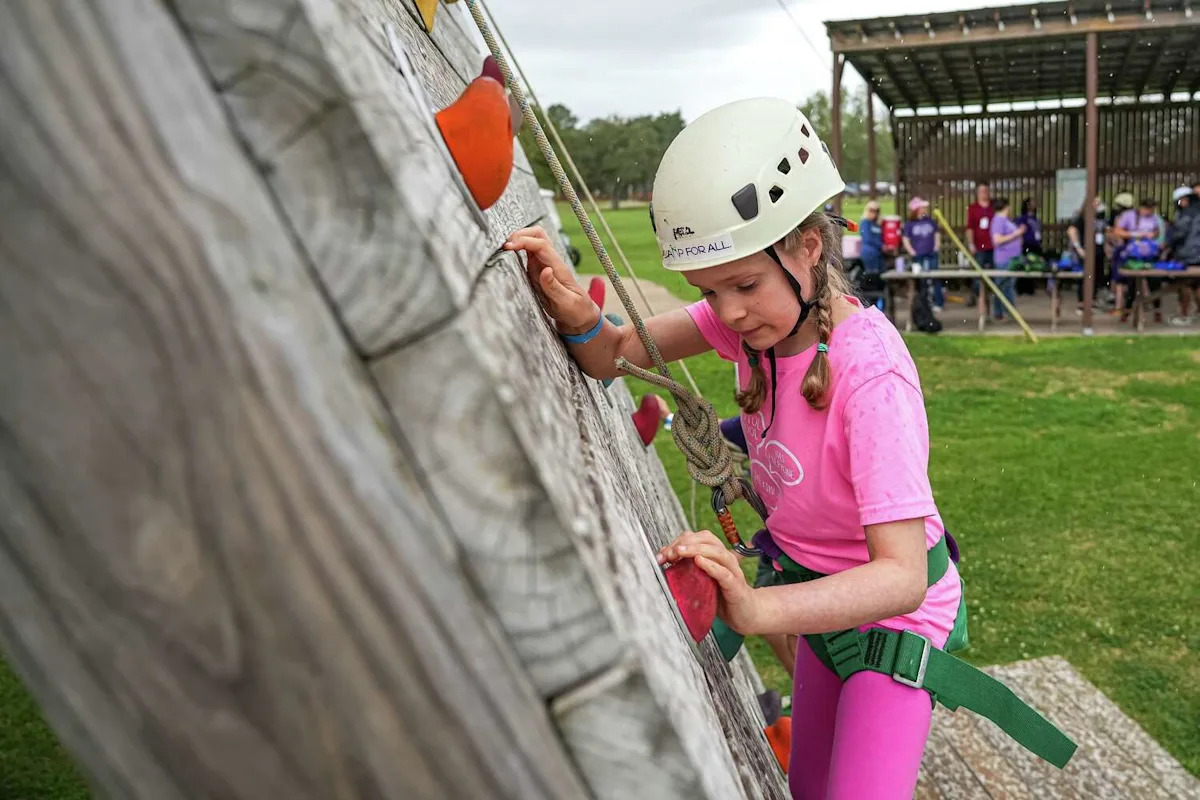
BURTON — Hazel Bledsoe, 11, cannot wait to climb the tall tower on the ropes course at Camp For All in Burton, west of Brenham.
“I’ll go really high!” she said with a big smile on her face.
James Mattiza, 7, isn’t sure he wants to do the ropes course or the giant swing. His sister Claire, 3, has no fear, giggling as she swings through the air.
Though James doesn’t try the swing on this trip to Camp For All, earlier that morning he not only pet a horse, he climbed on and rode around the arena.
“They call it challenge by choice,” said his dad, Dustin Mattiza. “It’s all up to you. We’re going to take it step by step.”
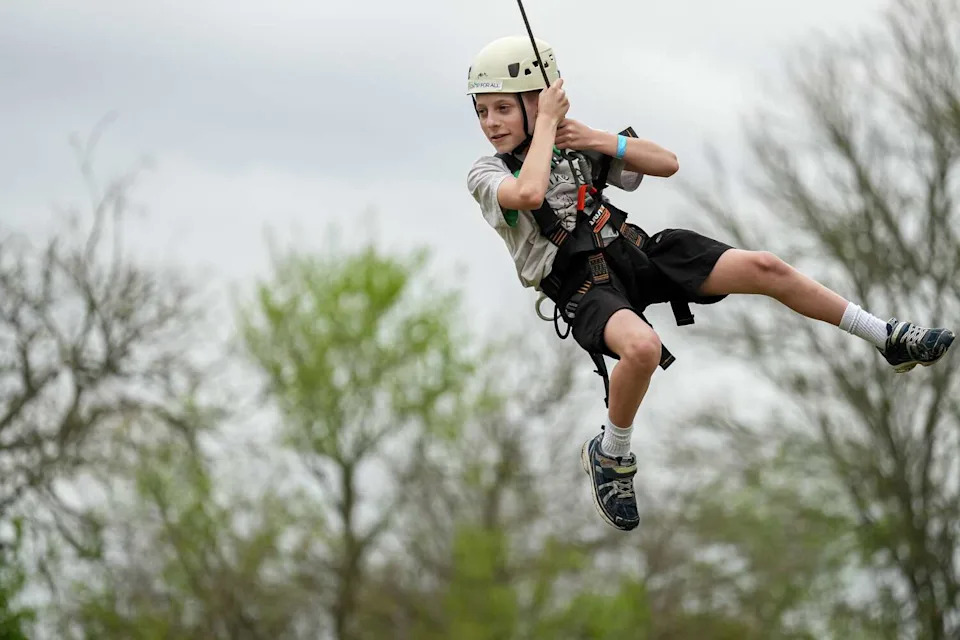
Niko Zuzek swings on a rope swing at Camp For All. Niko jokes that he’s afraid of heights, but his friends and family know better. (Aaron E. Martinez/Austin American-Statesman)
Camp For All hosts family and individual camps for 65 nonprofits from Houston and Austin. Those groups serve children and adults with physical challenges, difficult illnesses like cancer or epilepsy, and intellectual differences.
The camp also brings activities to local children’s hospitals during the summer to reach kids who can’t leave. They’ve been known to put a canoe on wheels to paddle through the hallway or practice archery in common rooms.
More groups would like to be able to bring their students or patients to camp, but the slots are full all year. A second Camp For All will open in summer 2027 in Chappell Hill, just east of Brenham.
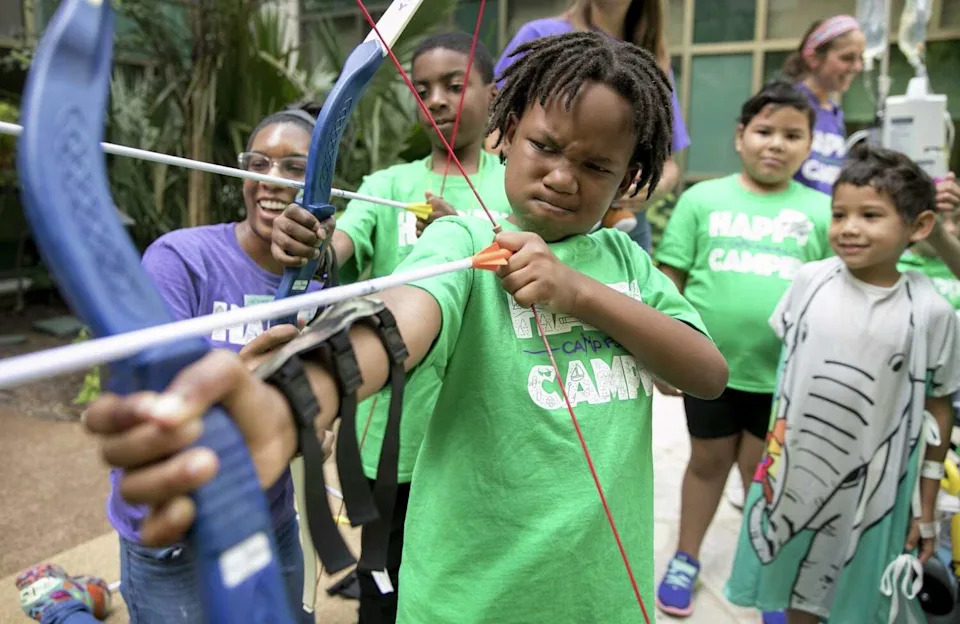
Trent Mbowe, 9, practices archery during the Camp For All 2U at the Dell Children’s Medical Center in 2019. Camp For All brings camp activities to kids in hospitals if they can’t get to the camp in Burton. (Austin American-Statesman)
Building an accessible camp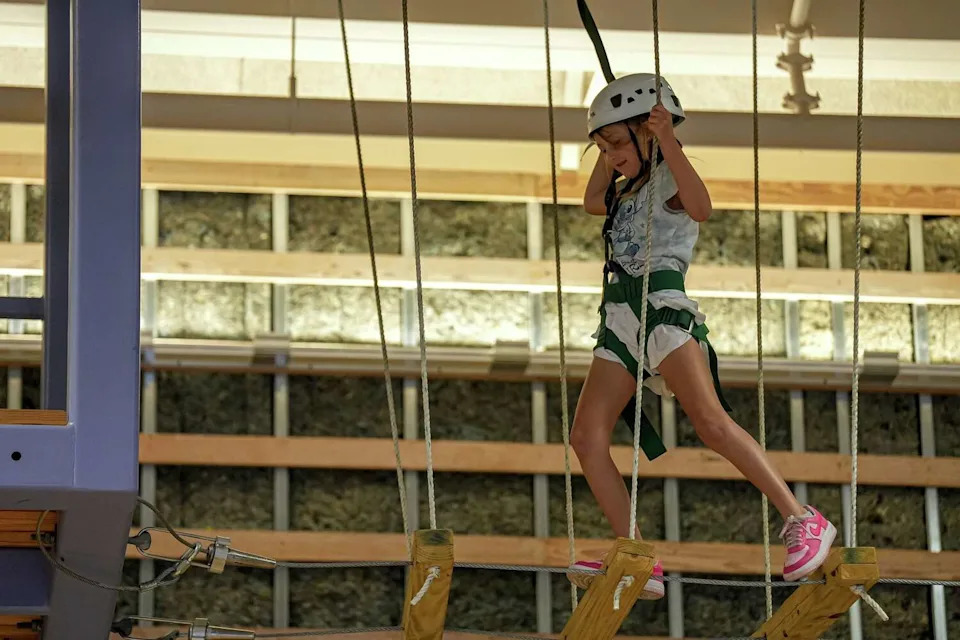
Abigail Maah walks an elevated indoor obstacle course at Camp For All. Staff can help people of all abilities be able to do the course. (Aaron E. Martinez/Austin American-Statesman)
In 1993, two Houston pediatric doctors — one in oncology and one in neurology — noticed their patients were miserable and not living their lives. They, along with a parent of a child who had died from cancer, began planning to develop a camp that could host children of all abilities as well as those with medical conditions that would make going to a typical camp difficult.
In 1998, they bought a 206-acre property in Washington County, halfway between Houston and Austin, and began designing a camp that would meet a variety of needs. Architect Peter Boudreaux met with groups of families of future campers to design a camp to ensure accessibility throughout.
That translates to extra wide cement paths where two wheelchairs can move side by side. Every bathroom stall is accessible and some have hoses for people who need assistance using the bathroom and cleaning up afterward. Showers are large, accessible and equipped with chairs for a camper and an aide. The bunks have extra electrical outlets for medical equipment and a separate fuse box for wheelchair charging. All doors are extra wide.
The kitchen is set up to handle any food allergy, and the camp can adapt any activity.
“If you are in a wheelchair, we’ll get you up the climbing wall,” said Pat Prior Sorrells, the president and CEO of Camp For All. “You’ll be flying down the zip line.”
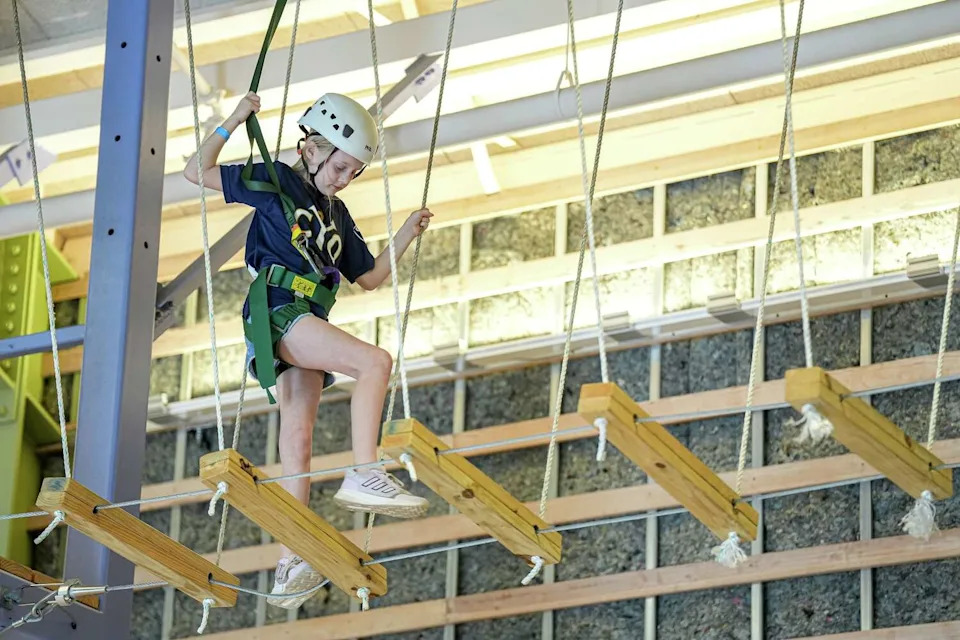
Emeline Kelly walks an elevated indoor obstacle course at Camp For All. The obstacle courses are a favorite of campers. (Aaron E. Martinez/Austin American-Statesman)
The pool has multiple ways to enter it, including a lift or a graduated slope.
Camp For All provides the staff to run the programs, the cafeteria and housekeeping services. The partner groups bring their medical staff, if needed, and aides. Half of the cost of camp is covered by donations, half by the partner groups. Most groups ask their families to pay little or nothing.
The camp operates January through November. Some stay a week, some a couple of days. Each year, it serves about 9,000 campers.
The new site in Chapel Hill will double Camp For All’s capacity. It will have many of the same features, but with 20 cabins instead of 18. The cabins will be split in half with one shared bathroom in the middle, allowing for a family on each side or smaller groups. The new camp’s pool will have a lazy river. The indoor climbing course will be in the dining hall.
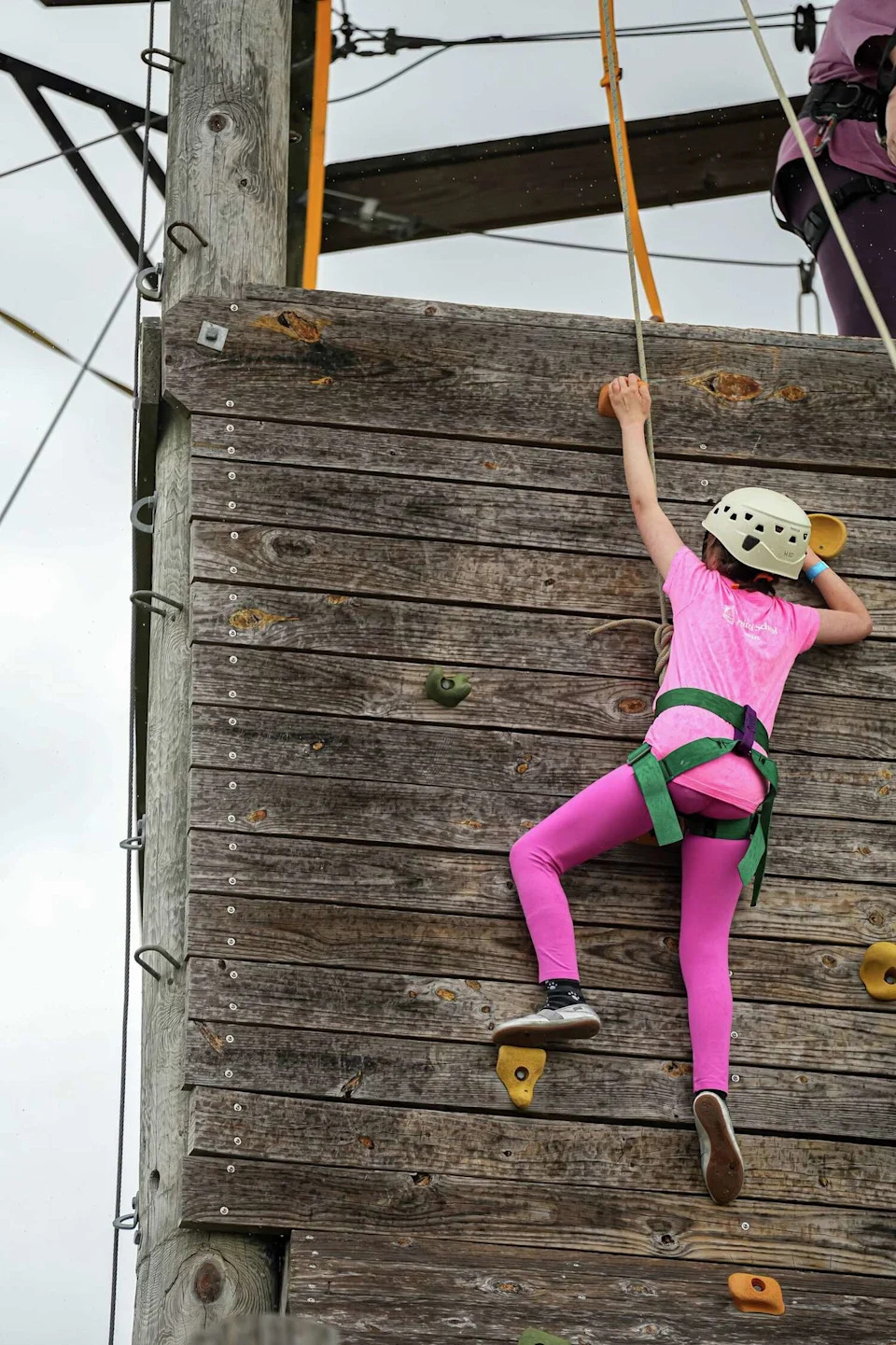
Hazel Bledsoe pulls herself up to the top of the climbing tower at Camp For All. The camp practices “challenge by choice.” Each kid gets to decide what they want to do but staff encourages them to push themselves. (Aaron E. Martinez/Austin American-Statesman)
Building independence
Sorrells describes the camp as a place where people “can discover life.”
“They come here and they realize what they can do,” she said. “So often they are told, ‘you can’t do this,’ and ‘you can’t do that.'”
Coming to Camp For All with the Capital School of Austin, where James and Hazel are students, is an opportunity they and their families look forward to each year. The school also brings its second- through fifth-grade students in the fall without their families.
The school serves children with language challenges. James has Coffin-Siris syndrome, a rare genetic disorder that causes physical and developmental differences. Hazel is on the autism spectrum, as well as having gross motor skill delays, dyslexia and attention deficit hyperactivity disorder.
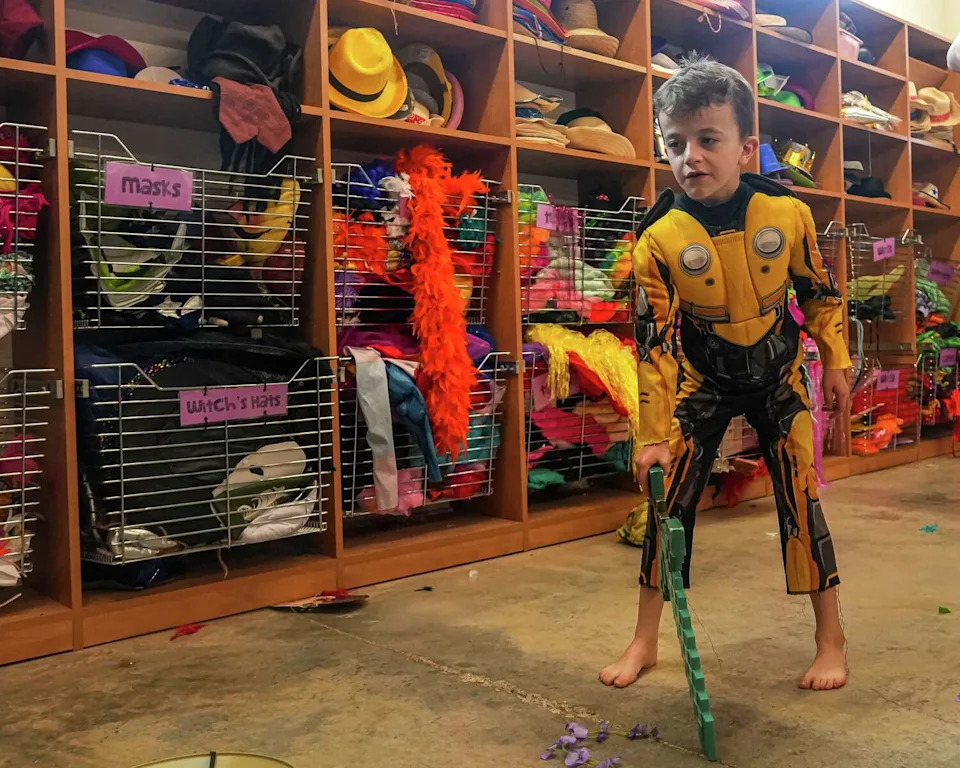
James Mattiza plays in a dressing room at Camp For All in Burton. Here he can be anything and run around with his friends. (Aaron E. Martinez/Austin American-Statesman)
“I love the fact it gives our kids a chance to develop independence,” said Janette Young, who has led the school for 34 years. Bringing the students and families to camp has been the highlight of her career, she said.
For the Mattizas, watching James progress from touching a horse to riding one is huge, said his mom, Alyssa Mattiza.
The families get to see their children happy as well as meet other families who share similar experiences. “This is a place where we can chill and relax,” said Lauren Douglas, Hazel’s mom. “She loves being independent.”
Douglas’ other child, Maxwell, 13, also enjoys coming to camp and doing the activities.
“Hanging out with other families, I feel like they understand what it feels likes,” he said. Without the family camp, “it can feel like we’re all alone.”
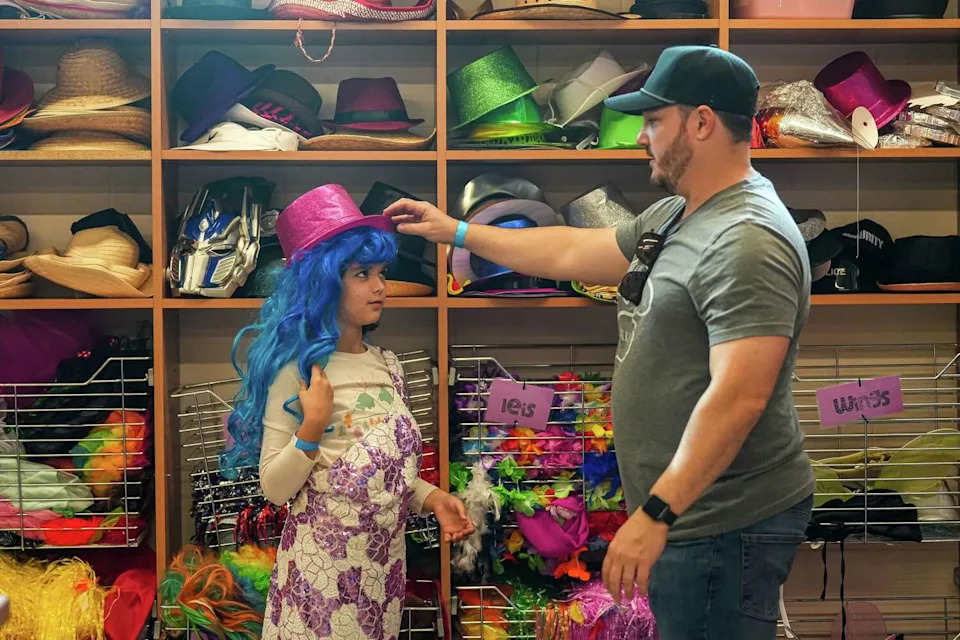
Dustin Mattiza puts a hat on his daughter, Ava, in a dressing room at Camp For All. The camp offers camps for families who have children with developmental differences or have a chronic illness. (Aaron E. Martinez/Austin American-Statesman)
James, who can be very shy, finds his pack of friends to run around with while he’s at camp. He’s not constantly by his parents’ side as he would be at home or in another setting.
“The kids have a lot of fun,” Dustin Mattiza said. “It helps get them out of their shell.”