
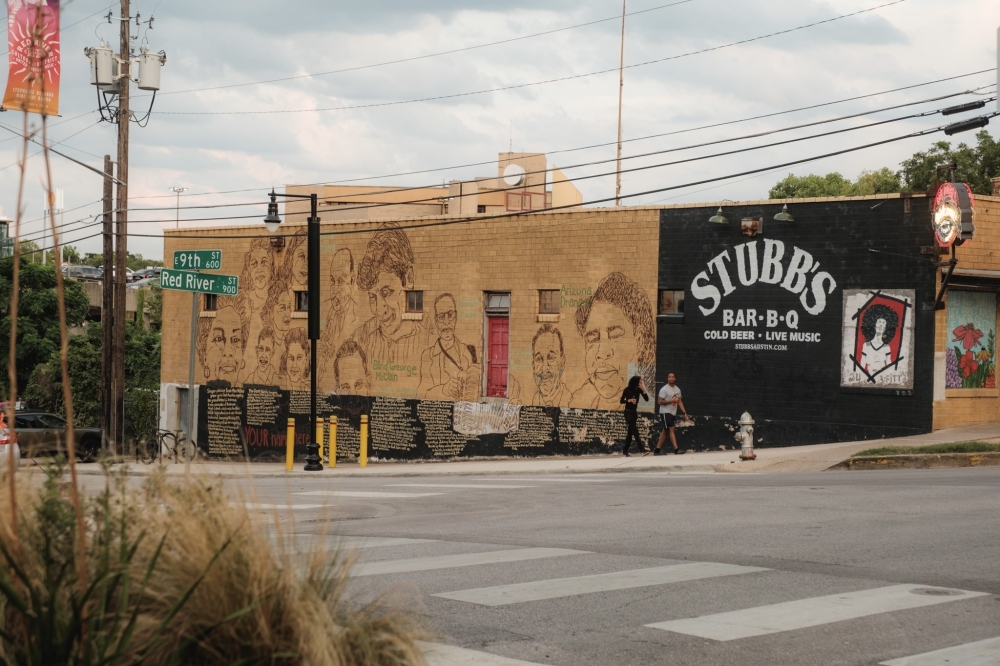
From Fifth to 15th Street, locals and visitors alike can find an array of venues, live music, restaurants and entertainment at Austin’s Red River Cultural District. The district released its first ever economic impact report with AngelouEconomics on April 2, detailing more than $2.3 billion in economic impact over the last five years from over 12 live music venues.
Red River is home to over 40 local businesses, including hotels and retail stores. It’s also known for its annual festivals, such as Free Week and Hot Summer Nights, which generated nearly $5 million in economic impact last year.
“The reality is that [Red River] is absolutely integral to the larger music and creative ecosystem here in Austin,” said Nicole Klepadlo, Red River Cultural District executive director.
By the numbers
Between 2021 and 2025, the cultural district’s annual impact surged from an estimated $380 million to nearly $530 million, pointing to a post-pandemic resilience, the release details.
Many venues in the district closed during the pandemic for 14-18 months. The report, funded in part by the city of Austin, takes a snapshot of how the district has performed since then, Klepadlo said.
Zooming in
The report outlined the district’s output in 2025, revealing an estimated $529.9 million in total economic impact.
The district also supported around 3,715 full-time equivalent jobs in the Austin area, with an approximate $174 million in labor income paid to workers, according to AngelouEconomics.
Other economic contributions for 2025 include:
$130.8 million in food and beverage$64.1 million in transportation$61.3 million in ticket salesThe background
Red River was first recognized by the city as a locally designated cultural district in 2013, and in 2016, local businesses formed a nonprofit organization, Red River Merchants Association, to establish a united front.
“We very much are a voice for musicians and music venues on policy and programmatic issues at the local or state level, and we are very much rooted in music-based tourism and the cultural identity of Austin,” Klepadlo said.
Another detail
The report also shows how interconnected the district is to the live music ecosystem and tourism in Austin, Klepadlo explained.
“We’re a tourism driver,” Klepadlo said. “We are driving heads and beds from a hotel standpoint. We are bringing people here to not only experience music, but also to experience our local flavor and culture of the city.”
Check it out
Following the economic report, the Red River Cultural District will release a five-year strategic plan April 14, detailing upcoming enhancements and vision for the space.
“There truly is something for everyone,” Klepadlo said. “It is simply a place where all are welcome, and if you’re down there to come see a show or grab a bite to eat, we really encourage you to explore the space.”