
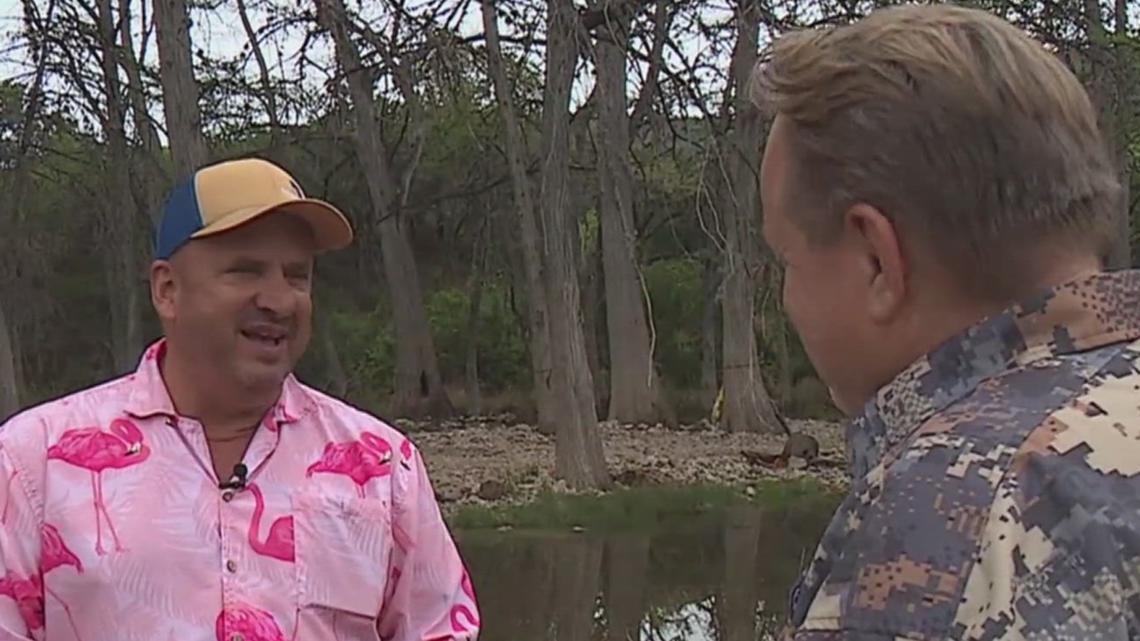
3NEWS traces the Nueces and Frio Rivers from their headwaters, showing how spring-fed water feeds the Coastal Bend as drought tightens its grip.
CORPUS CHRISTI, Texas — The Nueces and Frio rivers serve as the lifeline of the Coastal Bend, feeding the reservoirs that supply water to hundreds of thousands of people.
RELATED: Energy companies respond to Corpus Christi water crisis
As drought conditions persist, a 3NEWS team traveled upstream to better understand where that water begins — and how it reaches South Texas.
Chief Meteorologist Carly Smith, reporter Michael Gibson and chief photographer Preston West traced the region’s watershed from the headwaters of both rivers.
“We’ve been at the headwaters or the area where the headwaters start of both the Nueces and now the Frio River,” Smith said. “Our two main rivers in our region that fill up our lakes.”
Those rivers supply Lake Corpus Christi and Choke Canyon Reservoir — the primary water sources for the Coastal Bend.
The Frio River plays a key role in that system.
“It’s the only major river that flows into Choke Canyon,” Smith said.
Near Leakey, the Frio River begins as spring-fed water flowing from the Edwards Aquifer.
“It comes out of springs, actually,” said Rob Goebel, who owns property along the Frio River. “You’re at the headwaters of the Frio… it’s created by nine big springs… and it comes out of the Edwards Aquifer deep underground.”
At its source, the water is clear, cold and flowing steadily — a contrast to conditions seen downstream.

Download the 3NEWS app


“This is just a little bit of water compared to what we need throughout the entire river,” Smith said.
Despite heavier rainfall in the Hill Country, that water does not always make its way to the Coastal Bend.
“It breaks my heart and I really don’t understand it,” Goebel said. “I just don’t understand why y’all don’t have the water.”
Even periods of heavy rain don’t always provide lasting relief.
Smith pointed to flooding along the Frio River last summer as an example of how quickly conditions can change.
“This spot on the Frio River was 15 feet above where,” she said.
She said the contrast highlights both the power and unpredictability of the region’s water system.
“It can go from being so calm to so strong just by some heavy rainfall,” Smith said.
As South Texas heads into warmer months, Smith said both drought and flooding remain concerns.
“Turn around, don’t drown,” she said. “Those low water crossings can quickly turn dangerous.”
For the 3NEWS team, the trip upstream offered a clearer look at how the region’s water system works — and what’s at stake as drought continues.
“We’ve learned from stories along the river,” Smith said, “and it really shows how important this entire watershed is.”