
For Richard Meek, the opportunity to be a part of the university community for so
long has always been a direct result of the people.
CREATORS
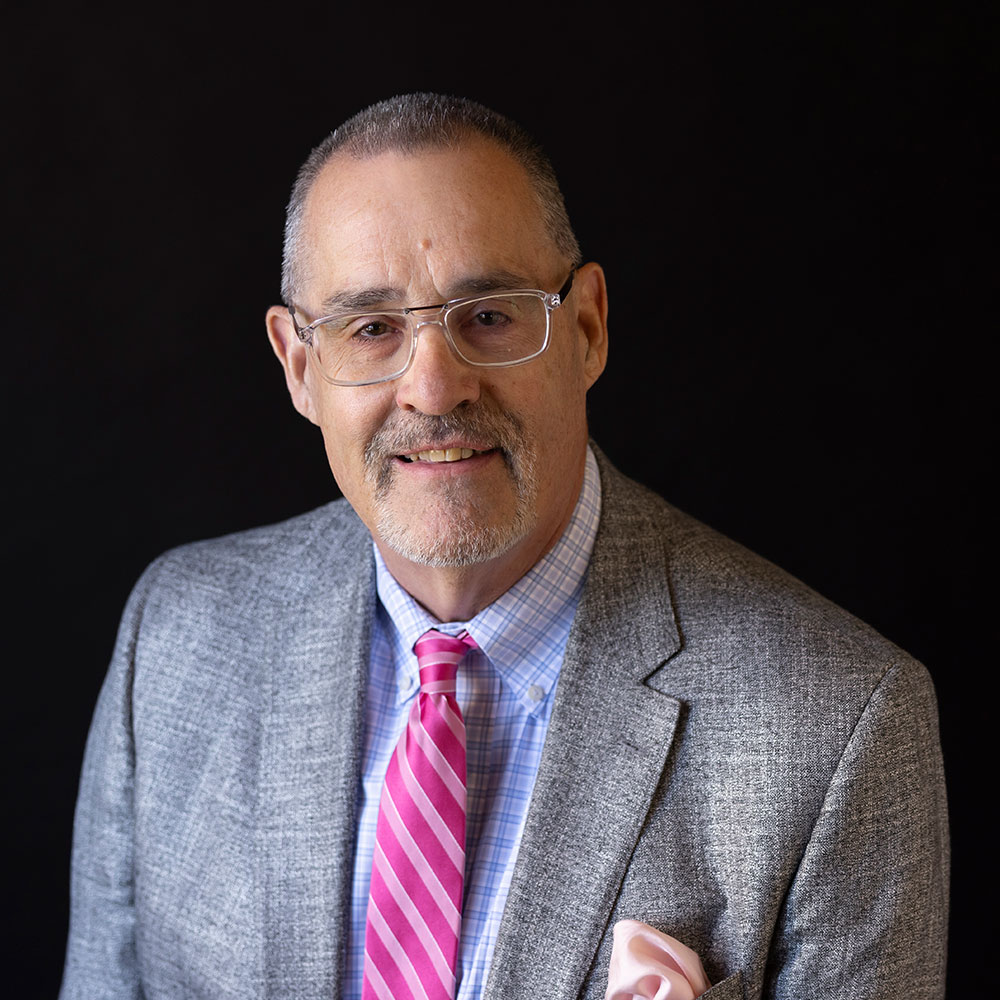

It was people as much as music that brought Richard Meek to Texas Tech University just over 60 years ago, and both have kept him here throughout those six decades.
Texas Tech legend Gene Hemmle and longtime faculty member Robert Deahl were the primary reasons Richard gravitated to West Texas shortly after completing
his master’s degree work at the Eastman School of Music in Rochester, New York.
“I knew from a young age that I wanted to be involved in music,” Richard said. “I
grew up in a family of six kids, and we were all required to play an instrument. It
seemed logical to me.”
More like inevitable.
There were musical influences all around him. His mother was an accomplished band
director and cornet player, his father a violinist, composer and conductor. One grandfather
was a physician whose hobby was crafting violins, and he made an instrument for each
family member.
No wonder Richard grew up performing on the bassoon, violin and viola.
Richard earned his bachelor’s degree from the Oberlin Conservatory of Music. Then,
once he finished his master’s, Richard had plenty of options, including opportunities
to play with the U.S. Marine Corps Band or the Dallas Symphony, but he chose the chance
to teach.
Hemmle, who chaired the Music Department in what is now part of the J.T. & Margaret Talkington School of Visual & Performing Arts from 1949-73, invited Richard to join the small cadre of faculty members in 1965.
It wasn’t long after that when he connected with Deahl, who had two stints with Texas
Tech, culminating as professor of trombone from 1966-94 and who also had earned two
degrees from Oberlin. In fact, the two men originally met when Richard was studying
at the Mozarteum in Salzburg, Austria.
Richard was sold on Texas Tech’s commitment to him as a faculty member, and he’s never
looked back.
Somehow, 61 years have rocketed past during the interim. In addition to his teaching
responsibilities, he has played with all symphonies across west Texas and northern
New Mexico, including more than 40 years as principal bassoonist with the Lubbock
Symphony Orchestra (1970-2014).
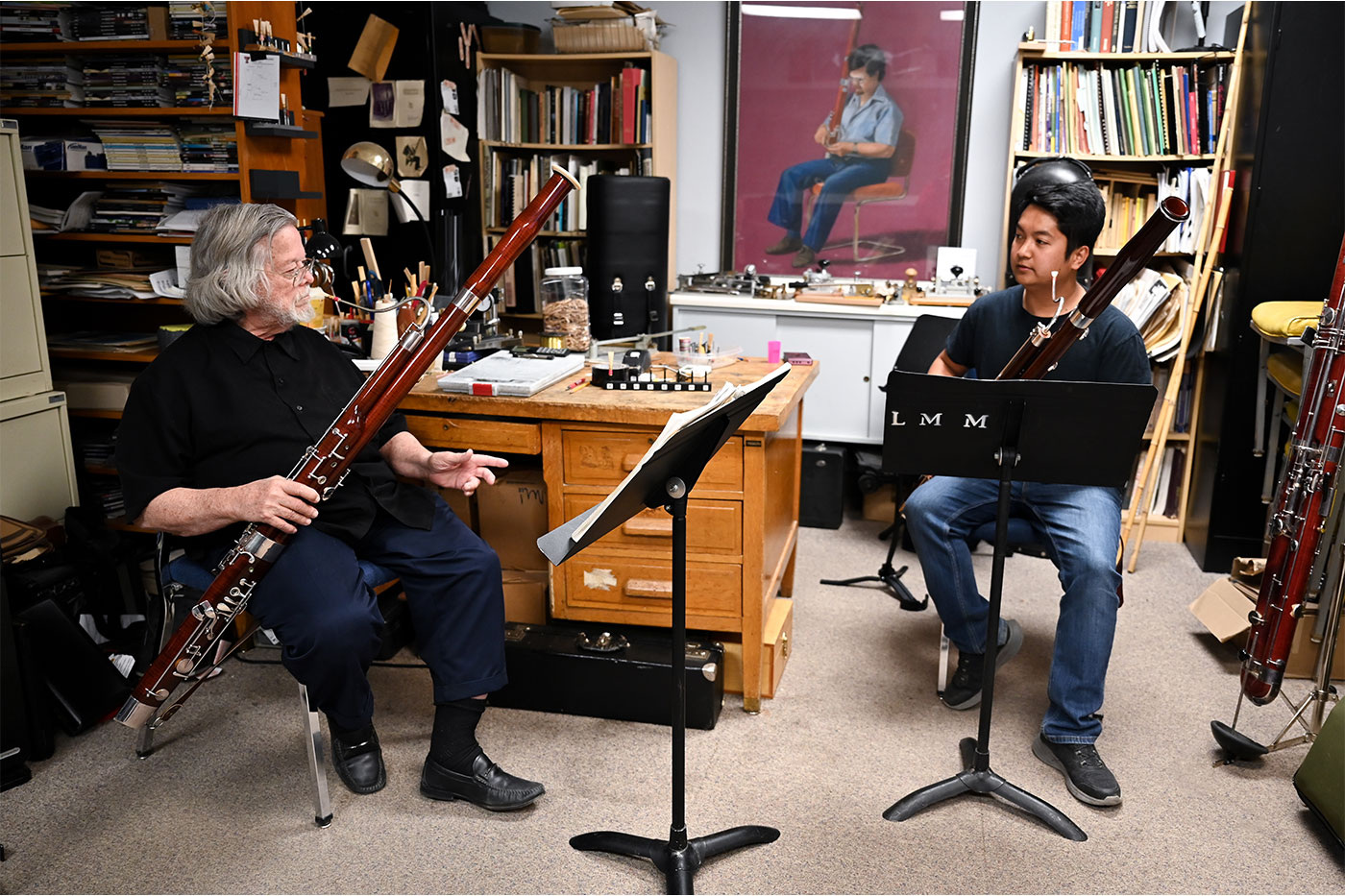
“For me, one of the things I love about music is you are working with people who,
by nature and decision, are cooperating,” he said. “You’re making music together.
You listen, and you help each other.”
Richard has enjoyed teaching and performing. He is a professor of bassoon and music
theory. He regularly travels to New Mexico to play with the Roswell Symphony Orchestra,
of which he has been a member since 1968.
“I have never wanted to play the game as far as going to another university or something
like that,” he said. “I had an opportunity once to leave, but ultimately, I decided
to stay here, and later the provost wrote me a letter that said, ‘You made a wise
decision.’”
Texas Tech has long felt like home to Richard, partly because of the way he has been
treated by the university, partly because of colleagues and partly because of the
students with whom he interacts.
“Texas Tech has been so agreeable,” he said. “The (students) are great, and there
is an amazing family feel here.”
After accepting the job, Richard remembers attending his first faculty meeting, where
he looked around and saw about a dozen people. The number has increased over the years
to more than 70 at his most recent faculty meeting.
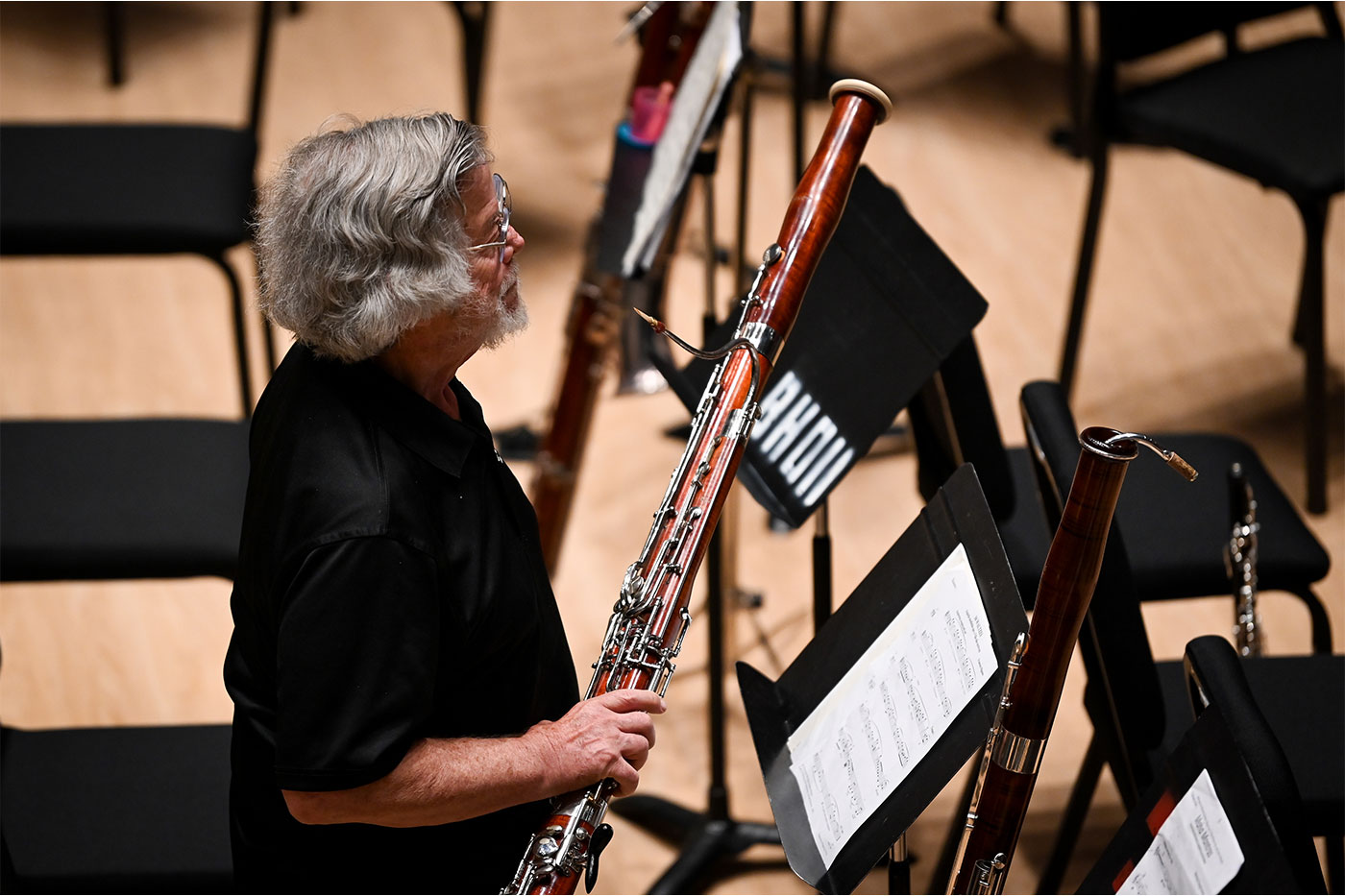
Richard still teaches several classes each semester, including a double reeds course
and counterpoint one on Renaissance vocal style and one on Baroque style. His classes
challenge students to think critically and emerge as more accomplished musicians with
a deeper appreciation for the craft.
“I have several really lovely kids right now,” he said. “One of them is working on
her doctorate, and she is scheduled to graduate in May 2027, so in my mind, I’d like
to stick around another year to help her finish.”
He remains grateful to Texas Tech for the opportunity it provided and the continuing
doors it opened for him while his teaching and musicianship reputation steadily grew.
Richard has consistently given back to Texas Tech, serving as president of the Faculty
Senate for two years, and the Lubbock community.
He helped found the International Double Reed Society, which meets every summer. He
was also host for the 1981 meeting at Texas Tech and for the inaugural International
Gillet Double Reed Competition that continues to this day. He has served 60 years
as an adjudicator/clinician for the Texas Music Educators Association.
For several years, Richard also organized the new music symposium, inviting contemporary
composers like Lukas Foss to rehearse and conduct his works in performance with the
orchestra, band and choir. When the founding conductor of the Youth Orchestra retired,
Richard stepped in to continue the organization and ensure young people had an opportunity
to perform and learn orchestral repertoire.
“Texas Tech put me in a position where I could stay active with my community,” he
said. “I got the chance to attend a number of conferences through the years and travel
around the world.”