
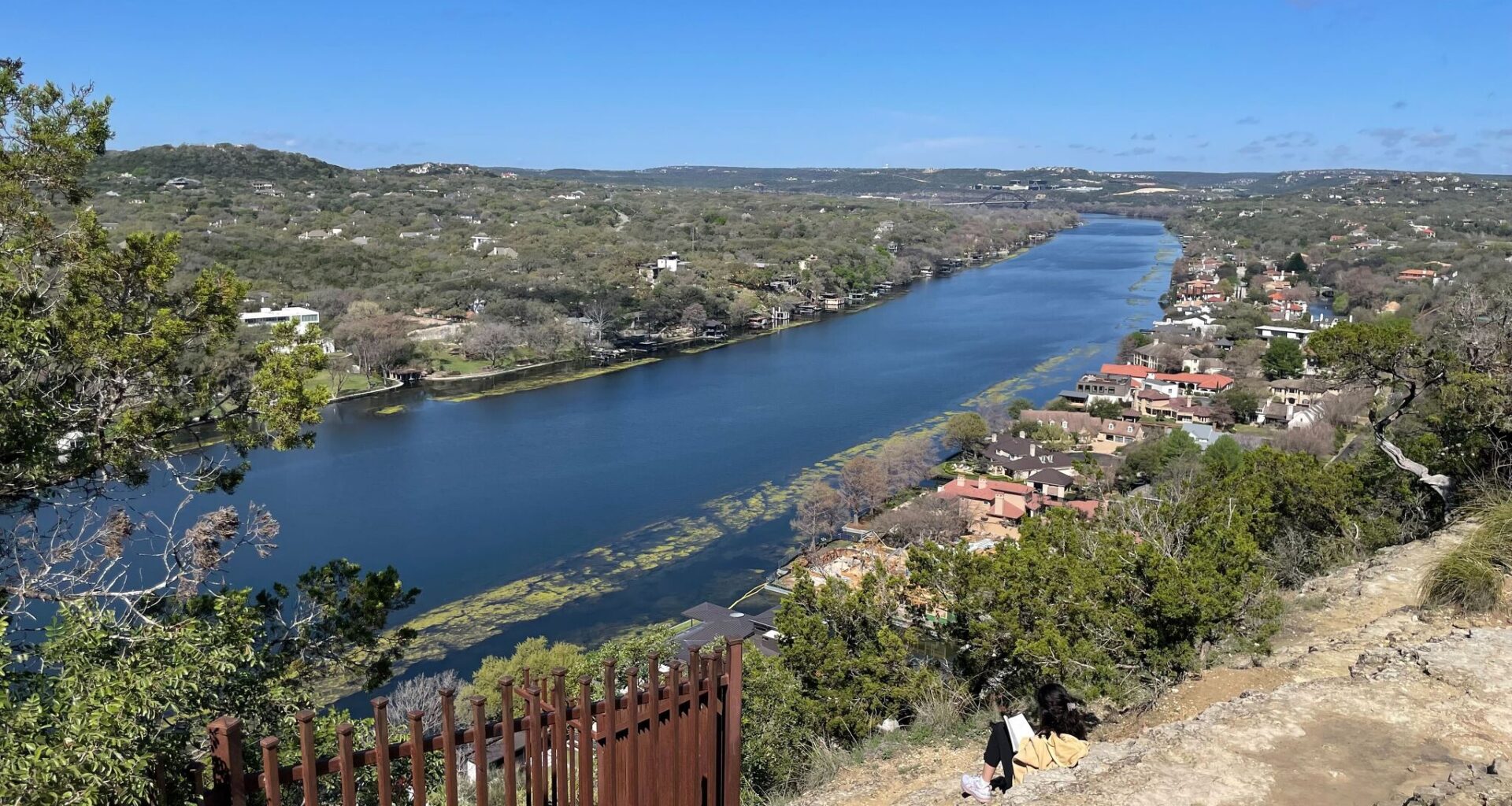
Water Data for Texas, an online database tracking Texas reservoirs and their water supplies, monitors lake levels and outlines comparative current and historic data to see how those water sources are faring. Data compiled on Friday, April 3, found the majority of lakes in and around the Austin area are reporting stronger lake levels now compared to this time last spring, a moment of reprieve amid ongoing water supply concerns and drought impacts statewide.
Within Austin proper, Lake Austin was 97.6% full as of Friday morning, up from 95% full six months ago on October 3, 2025 and 96.2% full one year ago on April 3, 2025. Further north, Lake Travis — which has historically been a concern for Texas’ capital city due to extreme drought impacts — landed at 73.7% full as of Friday morning. While substantially lower than its fellow Austin counterpart and a downturn from October 3, 2025’s 84.3% full reading, it was a marked improvement from this time last year, when Lake Travis was recorded as 42.4% full.
Other lakes within the greater Austin area include Lake Marble Falls, Lake Lyndon B. Johnson, Lake Georgetown and Granger Lake. Lake Marble Falls was the one lake within the region to mark a slight upturn in lake levels compared to last April. On Thursday, Lake Marble Falls was 96.2% full, marking slight declines form 95.4% full on October 3, 2025 and 95.1% full on April 3, 2025.
Over at Lake Lyndon B. Johnson, that waterway was 98.5% full on Friday, representing uptakes from October 3, 2025’s 98.3% reading and the lake being 98% full on April 3, 2025.
While not as large of an improvement as Lake Travis, Lake Georgetown is also reporting a substantial uptick in lake levels. On this day last April, Lake Georgetown was 67.3% full; on Friday, that figure rose to 76% full. Granger Lake — a manmade lake owned and operated by the U.S. Army Corps of Engineer for flood control, water supply and recreational offerings — remained steady between this year and last April with its 100% full status.