
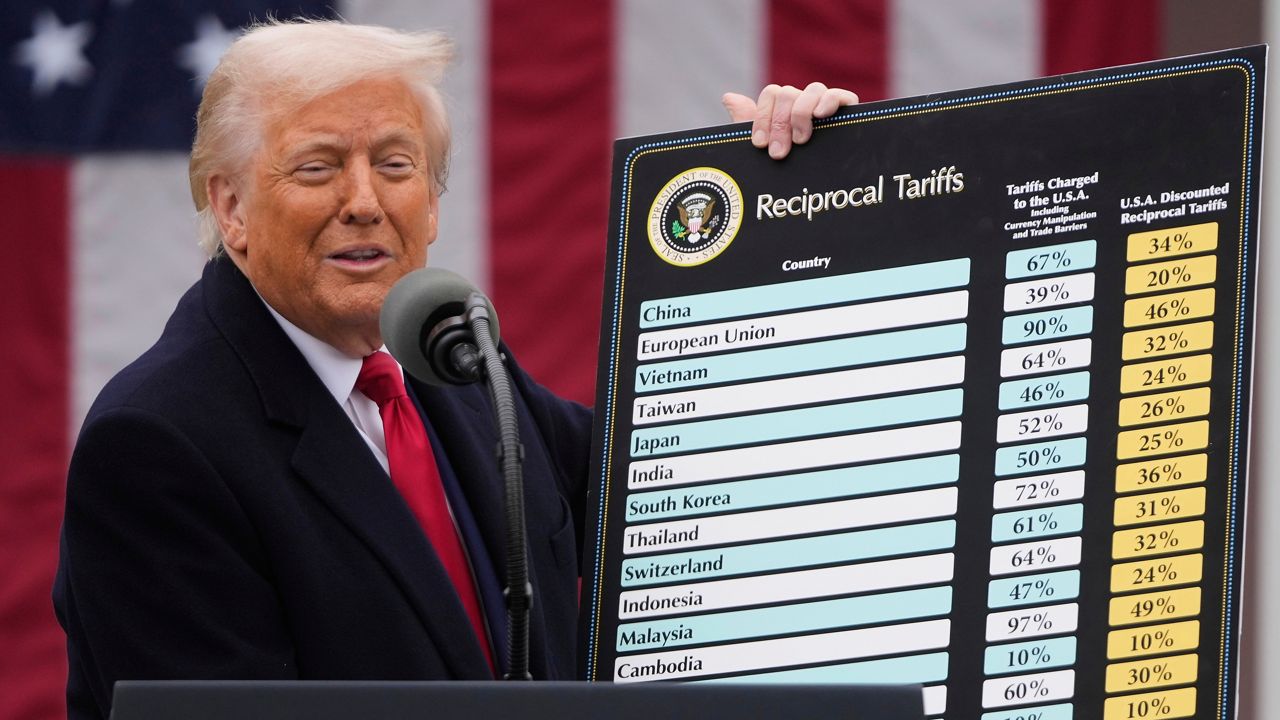
TEXAS — President Donald Trump called it “Liberation Day” a year ago on April 2, 2025, as he ordered massive increases in tariffs for almost everything imported into the U.S. Those tariffs were used as an ongoing administration diplomatic tool, with some rolled back and some hiked up higher through the year.
Then, in February 2026, the Supreme Court ruled that the president doesn’t have the authority to tax some of those imports, and the court required the administration to issue refunds. Now, businesses in Texas are awaiting those checks.
World Interiors in South Austin has been open for 20 years. The owner, Hank Cravey, said the tariffs have made it challenging to be a furniture store owner. He imports items from all over the country, including places like China and India. One of the tables he sells, which came from India, cost him 50% more to get to Texas than in previous years.
“That chair is from China. They do absolutely beautiful work. If you look at the quality of the stitching and the material is just so high quality. I mean, nobody really does a better job on upholstery than the Chinese,” said Cravey.
One chair from his store cost him nearly 90% more because of tariffs, and data shows he’s not alone.
According to a Washington-based lobby, We Pay the Tariffs, $28 billion in tariffs were paid by Texas-based importers from March 2025 to February 2026.
“A lot of companies didn’t make it through as a result of these tariffs,” said Cravey.
Despite the push against them, the tariffs are generating billions of dollars for the federal government. It generated $264 billion in the 2025 calendar year, according to research from the Tax Foundation.
The White House and some economists argue that raising the cost of imports motivates manufacturing to reshore in the United States and, in the long run, will lower prices for Americans to buy locally made goods.
But in February, the U.S. Supreme Court struck down Trump’s executive order imposing the nearly double-digit increases on many countries wanting to send goods into the U.S. The court argued that the executive branch doesn’t have the authority International Emergency Economic Powers Act and much of that revenue needs to be returned—at least $175 billion worth.
Cravey said he is still patiently awaiting his refund.
“We’ve talked to the lawyer. Basically, they’re setting up a portal where we’re going to submit all these tariffs that were collected illegally,” said Cravey.