
San Antonio, Texas, ranked in the lower tier of a recent Geography of Prosperity study, based on factors representing a city’s readiness for a prosperous life. Now, locals are offering suggestions for raising the city’s score.
Emma Weidmann/MySA
New recreation and road initiatives are some of the few major projects underway in San Antonio aimed at enhancing the resident experience. However, a new study suggests the city has a ways to go before it can offer locals a thriving future.

Consulting company Human Change and advising agency Motivf recently released their Geography of Prosperity Index, a report described as ranking 250 of the largest cities in the U.S. on “their structural readiness to thrive in the decades ahead.” It evaluates several Texas metros, scoring them on core indicators such as climate resilience, population renewal, and governance & foresight. It also considered more modern metrics: social cohesion and automation & AI readiness.
Article continues below this ad
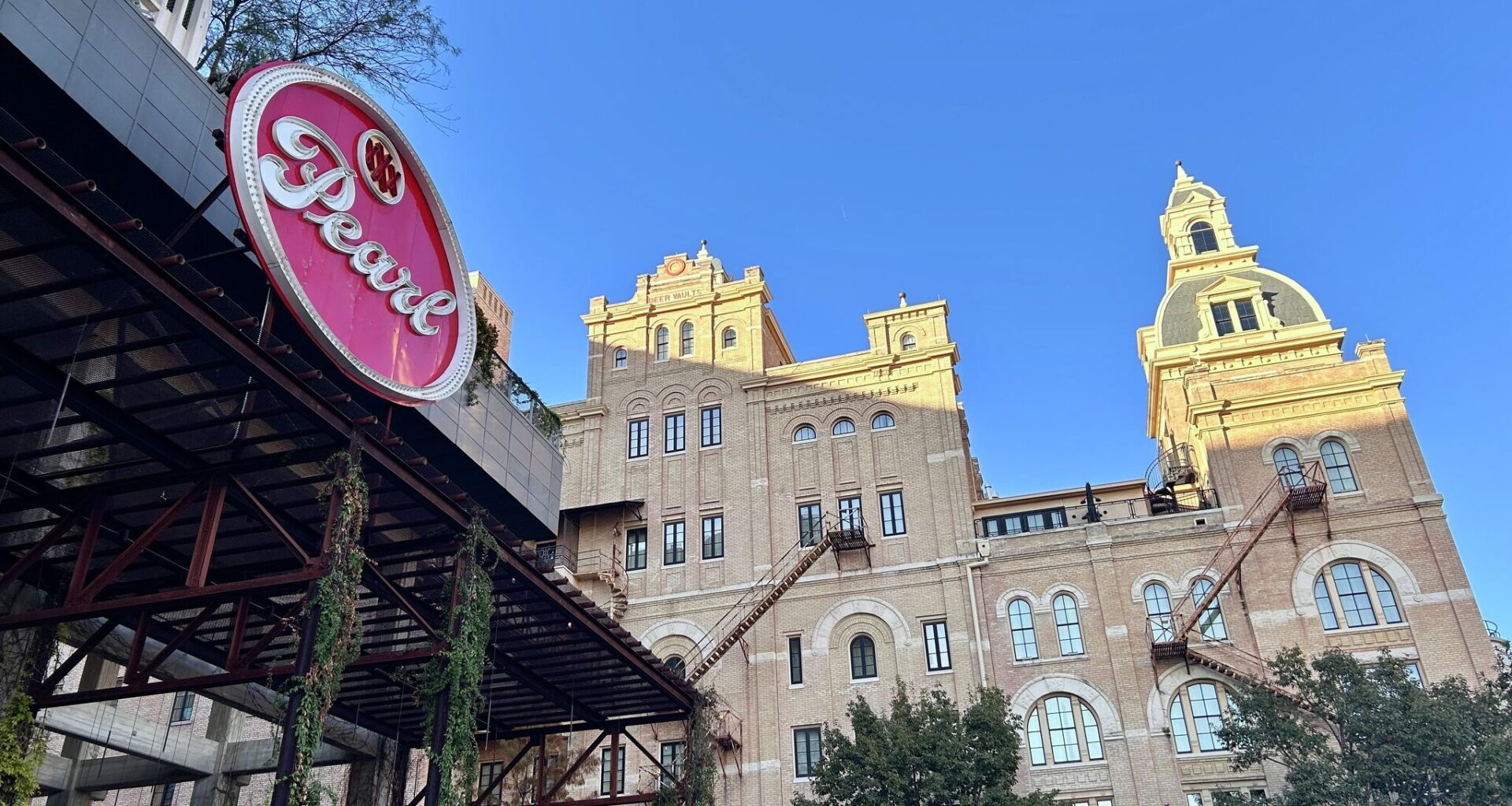
Hotel Emma anchors Pearl just north of downtown San Antonio.
Polly Anna Rocha/MySA
The Alamo City ranked at No. 151, the worst among the state’s included major metros, and in the lowest 40 percent of cities nationwide.
“While we do monitor a variety of different reports, rankings and indexes, our focus remains on our longer term goals that are outlined in the Economic Development Strategic Framework,” Celeste Garcia of the City of San Antonio, Economic Development Department, told MySA over email.
Article continues below this ad
Some locals reacted to the results on social media, with many offering suggestions for improvement.
“I say this as a somewhat recent transplant — and I live in a great neighborhood, comparatively,” one user wrote. “WTF is up with the roads? Why are they not painted? We talk about the bad traffic and the accidents…well, the inability literally to see where the lanes are, across torn-up asphalt, is probably a factor.”
This issue would likely fall under the study’s governance and foresight category, in which it performed the weakest, with a 33.4 out of 100. The category is described as “the quality of local leadership, institutional capacity, and long-term planning,” according to the index website, taking into account “the capacity to plan, invest, and execute at the scale of long-term community need.”
Article continues below this ad
Another user pointed to education, claiming that the state’s urban areas do not appear to prioritize it.
“I think we need to invest in our universities and into infrastructure that make the city more livable,” they wrote. “Maybe it starts with attracting good companies that actively recruit people from our own universities and invest in the city?”
Garcia tells MySA that a successful economic development framework includes “investments in equitable strategies to provide fair access to resources and opportunities, create a local economy in which every individual and group is valued, and eliminate systemic barriers to allow for full contribution to the community’s economic vitality.” This can improve “educational attainment and income levels, engender economic healing across San Antonio’s neighborhoods, and promote opportunities for advancement for residents,” she adds.
San Antonio’s second-lowest score (48 out of 100) was in social cohesion, which considers the strength of community bonds and the level of trust between diverse social groups. It measures “the depth of civic infrastructure, the integration of diverse populations, the breadth of community participation, and the housing tenure diversity that keeps different kinds of households in proximity across economic cycles,” per the index website.
Article continues below this ad
On the other hand, it scored highest (61 out of 100) in its climate resilience, defined as its ability to adapt to environmental shifts and extreme weather. MySA also reached out to the City of San Antonio’s Public Works Department for comment, but did not immediately hear back in time for publication.
How did other Texas metros do overall? Austin ranked No. 30, Dallas No. 87, and Houston No. 124. Human Change founder Bradley Schurman wrote on his LinkedIn that while the findings may seem grim, he believes every place can improve.
“Minor, sustained changes can produce outsized results over time. San Antonio has assets,” he wrote. “The question is whether its leaders are willing to make 20- and 30-year bets instead of ribbon-cutting plays.”
Article continues below this ad
The study assesses “the underlying conditions that determine whether a city is building long-term resilience – or quietly accumulating risk,” the report states. Findings will support Schurman’s forthcoming book, “The Geography of Prosperity: A New Map of the American Dream.”