
The LBJ TEXpress Lanes run below I-635 near Preston Rd in Dallas, February 8, 2024.
Tom Fox/Staff Photographer
Daily North Texas commuters are familiar with the fluctuating prices on TEXpress lanes, courtesy of the Texas Department of Transportation’s dynamic pricing structure. But how will an influx of an estimated 1 million World Cup visitors affect pricing for locals?

Since TEXpress lanes opened in 2015, TxDOT has implemented dynamic pricing across all of its managed lanes. That means, the more traffic in a general lane, the more expensive a managed lane will be. Managed lanes are selective lanes, using operational strategies such as tolling and vehicle requirements, and run parallel to general highway lanes. With specific TEXpress and HOV signage, motorists can determine whether or not they would like to take advantage of the toll roads.
Article continues below this ad
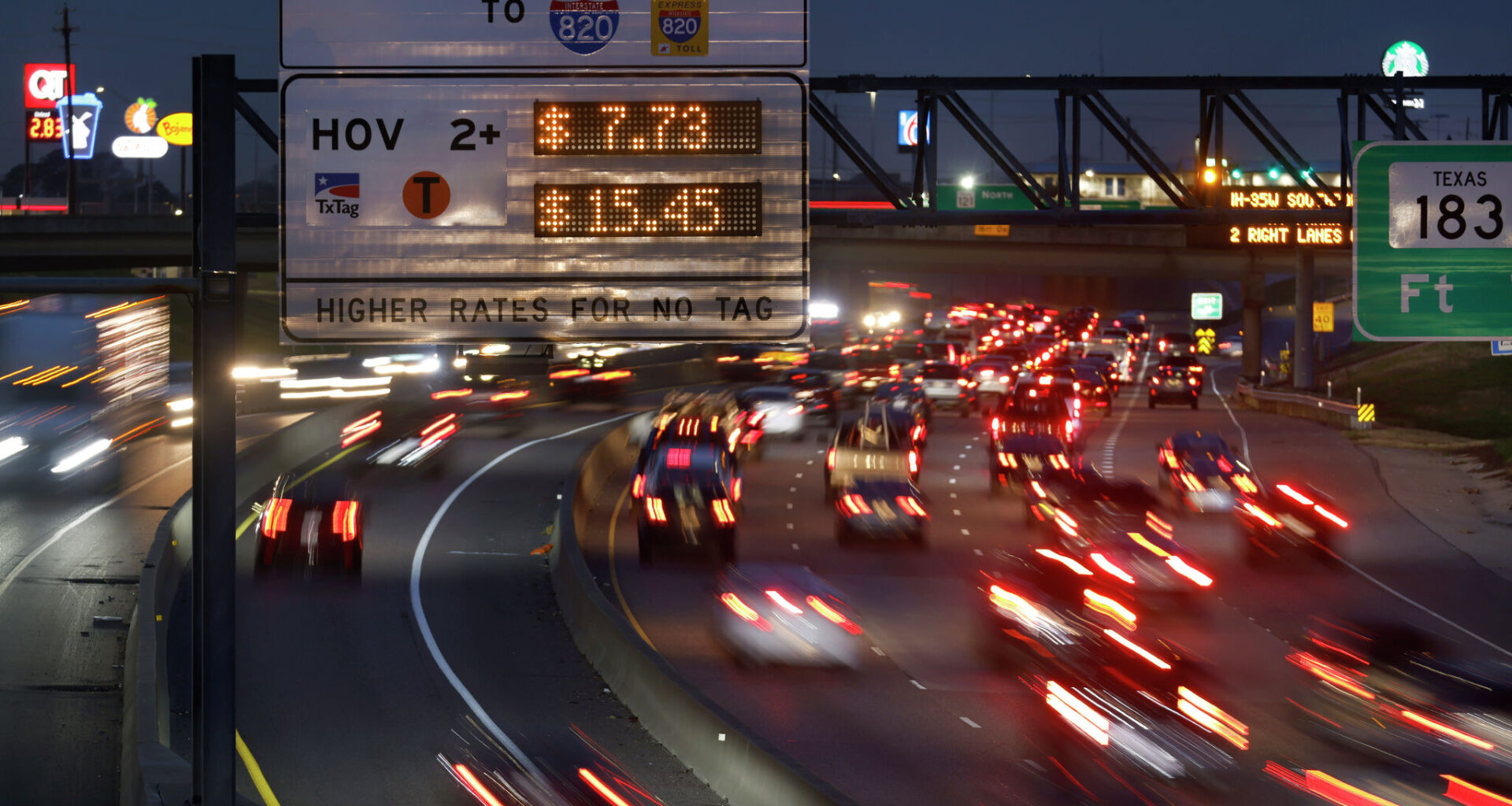
At dusk, traffic flows on the TEXpress Lanes along westbound SH 183 at American Blvd in Euless, Texas, February 6, 2024. The price was $15.45 for those entering at Industrial Blvd to I-820.
Tom Fox/Dallas Morning NewsTom Fox/Dallas Morning News
Other toll roads, such as those operated by the North Texas Toll Authority, have fixed rates.
“As rates go up, fewer people get into managed lanes,” TxDOT officials said. “As traffic slows down, there is less congestion in the managed lanes.”
Last week during a news conference announcing World Cup traffic plans, the North Central Texas Council of Governments stated they expect at least an additional one million people in the Dallas-Fort Worth area over the course of the nine match days.
Article continues below this ad
Make Dallas News a preferred source so your search results prioritize writing by actual people, not AI.
Add Preferred Source
“For every event, we’re probably going to move somewhere around 75,000 to 100,000 people. Over nine events, that’s about a million people,” Michael Morris, director of North Central Texas Council of Governments, said. “I think it [will be] a lot bigger than that. There will be a whole bunch of people just in the area who will come and are not going to the games. It probably could be closer to two million.”
The managed lanes use equipment that senses reduced speeds and recalculates rates every five minutes. Variable prices for these roads are demand-based and fluctuate according to real-time traffic in order to adjust and reflect the new price. The increased rates are intended to encourage traffic to keep flowing at a minimum of 50 mph.
“On those nine match days, the managed lanes will always go in the direction of the [Dallas] stadium,” Morris said.
Article continues below this ad
This is due to the expected increased capacity on major roadways and North Central Texas Council of Governments will direct traffic to the managed lanes to prevent congestion.
According to TxDOT, daily light-to-average traffic on TEXpress lanes can cost between 15 to 35 cents per mile on a toll segment. Heavier traffic can see prices between 45 and 90 cents per mile. TxDOT states, however, a maximum toll price does not exist and 90 cents is an estimate, meaning drivers could pay more. Motorists can see an increase of 200% per mile during rush hour, three times more compared with average traffic.
“People have the option to stay in the congested lanes or pay a managed lane price to have a reliable trip time,” TxDOT officials said. “It’s all about choice.”
The region received a $10.03 million grant from the Federal Transit Administration to help improve public transportation in the region last month. The money will be distributed to local transit agencies such as DART, Trinity Railway Express and the city of Arlington for the use of shuttle services. Final numbers for the budget are due June 1, just ten days before the World Cup is scheduled to begin. Morris expects to present the budget at the Regional Transportation Council monthly meeting in May.
Article continues below this ad

By signing up, you agree to our Terms Of Use and acknowledge that your information will be used as described in our Privacy Policy.
Despite the heavy investment, the council is urging locals attending the World Cup to drive to the matches and leave public transit for the international visitors. The council suggests match attendees leave for the games at least three hours before kickoff to assure on-time arrival.
Morris joked he was an engineer and not allowed to work on any marketing materials, but stated signage and billboards with the general message of “Hey, give our guests a break. Telecommute on match days,” could be coming as part of the travel demand management program along major roadways such as Interstate 30. The council recommends people who office in Arlington’s entertainment district work remotely, if possible, on match days to help with traffic congestion.
“We know we’re treating our regional commuters not as well on those days because those thousands of people narrowly get on the managed lanes,” Morris said. “They can shoehorn in, we hope, on those nine days.”