
As Iran’s conflict drives fuel prices sky-high, Southeast Texas truckers face rising costs, potentially impacting supply chains and consumer prices.
ORANGE, Texas — The ongoing war in Iran is having economic impacts at home, with gas prices rising more than 30% since the start of the conflict and diesel prices climbing above $5 per gallon, putting pressure on Southeast Texas truckers and the broader supply chain.
Despite Southeast Texas sitting below state and national averages at $7.76 per gallon for gasoline, diesel prices remain significantly higher — a concern for the local trucking industry that depends on fuel to keep goods moving.
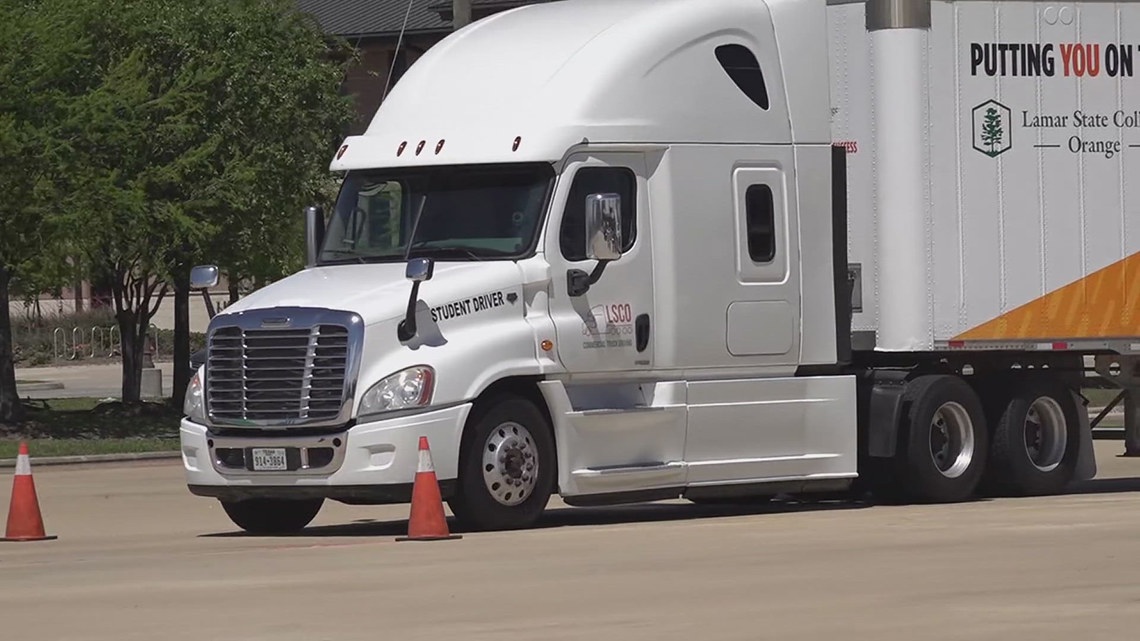
At Lamar State College Orange, instructors say the rising fuel costs are already creating challenges for the next generation of truck drivers and could soon impact consumers’ wallets.
The commercial driver’s license, or CDL, course at the college trains students using industry-standard trucks while preparing them for careers in transportation. But program leaders say rising diesel costs are pushing the industry into uncertain territory.
“I can remember buying diesel for 99 cents a gallon, and now we’re over five dollars a gallon,” said Carl Cormier, CDL program director at Lamar State College Orange, who has more than 30 years of experience in the trucking industry.
Cormier said higher fuel costs will likely drive up the price of everyday goods.
“Imagine these companies, or these independent owners and operators having to put fuel in their trucks and spending between $5 to $8 a gallon, so that entails it’s going to end up bringing the cost of our food, clothing and all these things are starting, the prices can start driving up,” Cormier said.
He added that trucking companies will have little choice but to pass the added costs on to consumers.
“They got to pass it on to somebody, for the fuel costs and stuff like that,” Cormier said.
Major delivery companies, including Amazon, UPS, FedEx and the U.S. Postal Service, have already implemented fuel surcharges to offset rising costs. Economists say food delivery apps may follow if prices remain elevated.
Cormier said independent drivers and large carriers alike are expected to feel the strain.
“Pay per mile is going to increase for a lot of independent drivers. A lot of these larger companies are going to feel the impact on the fuel costs and stuff, transporting stuff from one part to the other of the United States,” he said.
Students in the program say trucking remains essential, despite the rising costs.
“Goods come off of a ship, they come off of an airplane, but it has to be driven once it’s actually here on land so truck driving is actually a very essential part of everyday life,” said student Aria Barnes.
Cormier agreed, emphasizing the industry’s role in the economy.
“Everything’s transported on the ground by some kind of truck, some kind of way, so we’re gonna feel the effects,” he said.
Cormier said the CDL course at Lamar State College Orange can help students secure stable careers in trucking — an industry that continues to drive the economy forward even amid rising fuel costs.