
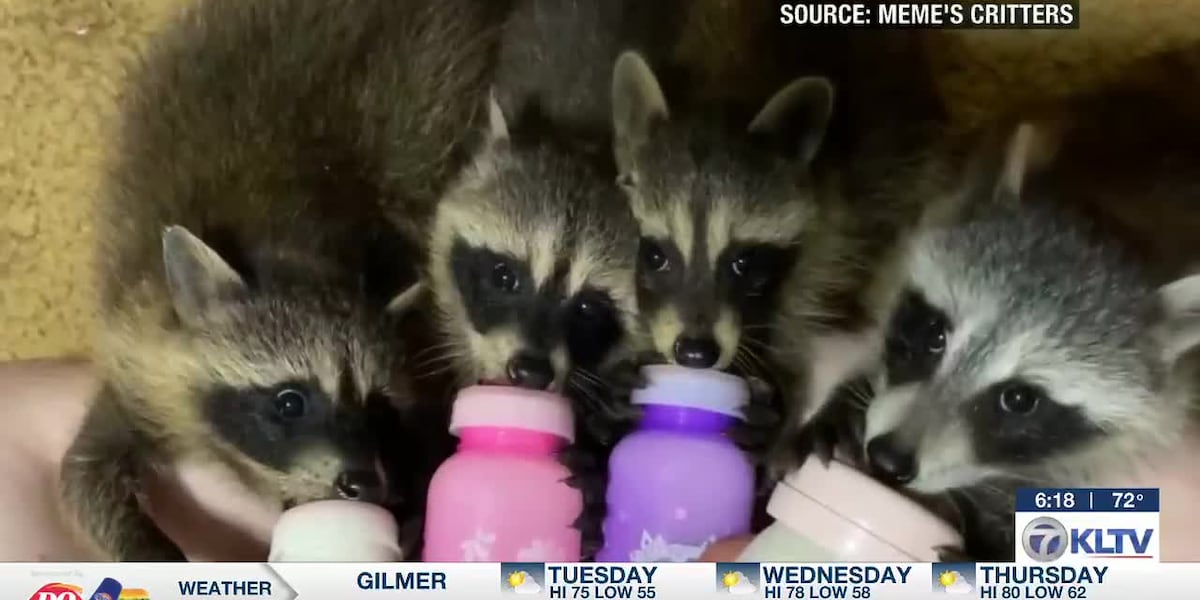
TYLER, Texas (KLTV) – Spring has brought a surge of calls to wildlife rescues across East Texas as hurt and abandoned animals arrive by the dozens.
Emily Brooks, executive director and wildlife rehabber at Tiger Creek Animal Sanctuary in Tyler, said the facility sometimes receives hundreds of calls a day.
“It can be quite difficult,” Brooks said, particularly after stormy days knock down trees and disturb brush.
But Brooks says those calls are the first and most critical step to saving a life.
She said those who rely on the internet for feeding and care advice can cause serious harm to the animals they’re trying to help.
Online advice can cause irreversible harm
“I know that people really want to help, and the first thing they want to do is go to Google and say, oh, what do I feed this opossum? What do I feed this squirrel?” Brooks said.
But wrong formulas can cause irreversible brain damage, stunted mobility, bone disease and other issues.
“They need to go somewhere where the staff are properly trained, where the people have the right skill set,” rehabber Kagan Maronde said. “Sometimes things go beyond a Google, beyond the internet. There are things that are learned behaviors, techniques that are needed and if done improperly, could result in harm to the animal. And no one wants that.”
Brooks said licensed rehabbers use specialized formulas designed for specific species. Anything else could even be fatal.
“It’s so important that they get them to a licensed rehabber. They have really special needs that can’t be managed at home,” she said.
Call first
Those who see a squirrel, bunny, possum or other wild animal that appears to need help should leave it alone and call a licensed rehabber first, Brooks said.
“A lot of times we run into scenarios where people have actually kidnapped that animal from the wild, and when it’s been removed, we can’t always reintroduce it. That’s our goal,” Brooks said.
If the animal has to be moved, Brooks said to protect yourself first by wearing gloves as wildlife can carry diseases without showing symptoms.
The animal should be placed in a ventilated box or carrier while you wait for further instruction.
Brooks also encourages callers to be patient as they do their best to take care of all the animals in their care and incoming calls.
“It’s our responsibility to protect this planet and protect this ecosystem,” Brooks said. “And even the smallest parts of this ecosystem are important for maintaining its health and making sure that the earth moves forward so that it’s still here for the next generation.”
For a list of rehabbers in your county, click here.
Copyright 2026 KLTV. All rights reserved.