
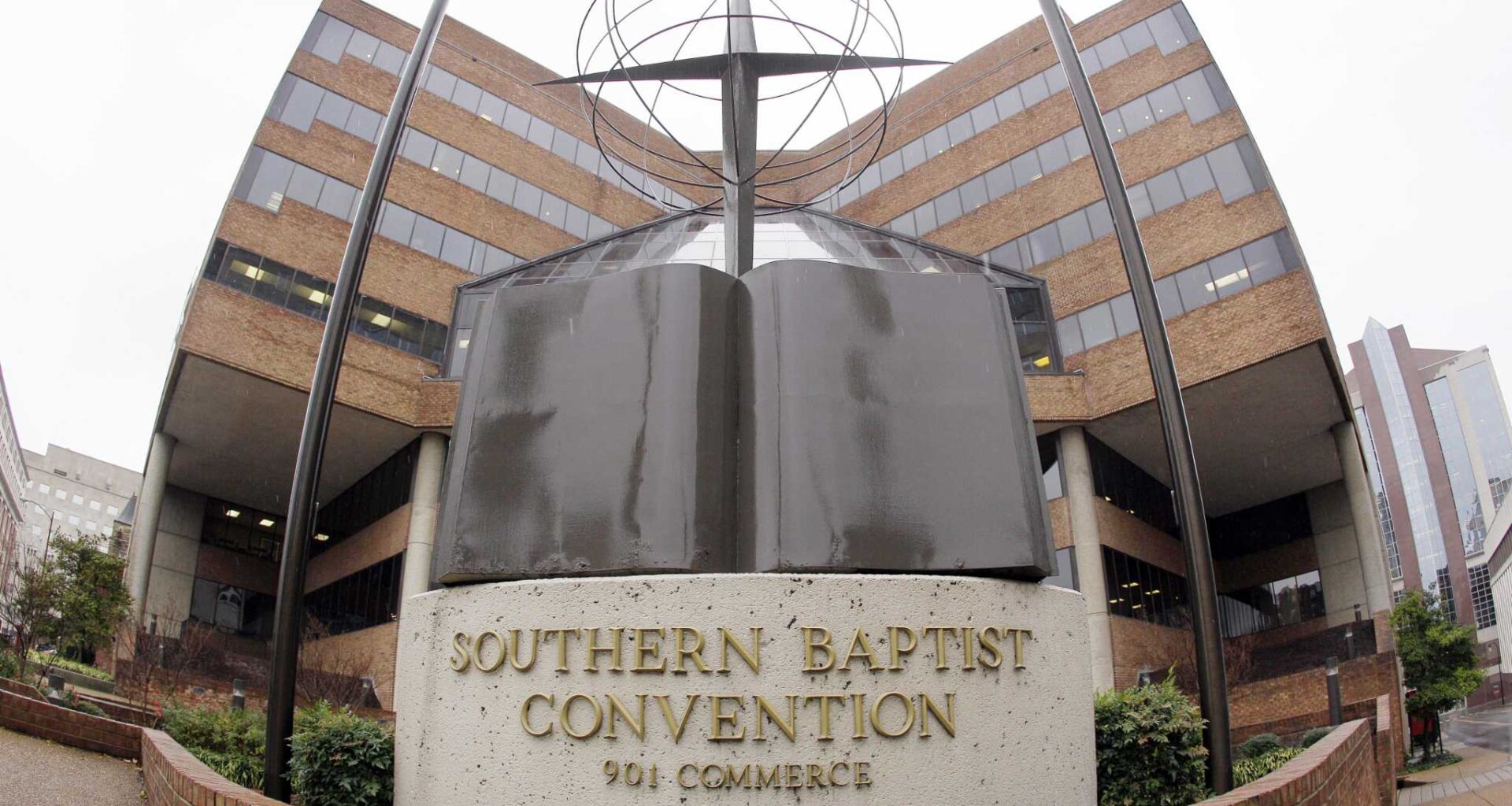
The Southern Baptist Convention has spent decades encouraging its participating churches to operate “through democratic processes” while touting the responsibility individuals have in shaping ministry.
But the SBC has remained silent as one of the convention’s largest megachurches — Houston’s Second Baptist — faces a crisis over its members’ loss of voting rights.
READ MORE: What to know about Second Baptist, a 98-year-old Houston megachurch being sued by its members
Current and former church members known as the Jeremiah Counsel say a group of members were misled by Second Baptist’s leaders into approving bylaws in 2023 that stripped them of their voice. The bylaws placed the church’s future in the hands of the new “ministry leadership team,” including the senior pastor and his appointees — not the church’s 94,000-member congregation.
Article continues below this ad
The Jeremiah Counsel accused Second Baptist of sacrificing its democratic values and filed a lawsuit that is scheduled for trial in Harris County in late July.
The dispute highlights a broader tension in the Southern Baptist Convention, the largest Protestant denomination in the U.S. with 47,000 churches. While the SBC prides itself on its commitment to democratic principles, it also values church autonomy as a core tenet, giving churches wide leeway in how they handle their internal affairs.
What happens when those two philosophies collide at a Southern Baptist megachurch?
Article continues below this ad
MORE COVERAGE: How Second Baptist Church sacrificed its democratic principles: ‘You can’t fire the king’
Second Baptist’s new bylaws might not disqualify the church from being part of the convention, but they do stray from centuries of Baptist tradition, said Doug Weaver, a professor of historical studies at Baylor University who teaches Baptist history and Pentecostalism.
“What can make the Baptist vision effective is that it allows everybody to have equal voice, equal responsibility,” Weaver said.
The new bylaws appear to abandon that tradition, Weaver said. But that doesn’t mean Second Baptist’s status as a longtime Southern Baptist church is in jeopardy.
Southern Baptists vote on a motion during the 2022 SBC Annual Meeting on Tuesday, June 14, 2022, at the Anaheim Convention Center in Anaheim, Calif.
Jon Shapley, Houston Chronicle / Staff photographer
SBC and ‘Democratic processes’
An individual can raise concerns about an SBC church by contacting a “Credentials Committee” whose members will look into whether the church is in “friendly cooperation” with the convention.
Article continues below this ad
The modern version of the committee was created in 2019 after an investigation by the Houston Chronicle and San Antonio Express-News revealed that 380 Southern Baptist church leaders or volunteers had abused at least 700 people — mostly children — over the previous two decades.
In response to that investigation, SBC leaders gave the Credentials Committee a new mandate: establish a system that allows Southern Baptists to file a complaint about an SBC church on a variety of issues.
The committee did not respond to questions about whether anyone had lodged any complaints pertaining to Second Baptist’s bylaws change. But even if someone did, experts say they’d be surprised if the SBC took any action.
Unlike other denominations, the Southern Baptist Convention isn’t led by popes or bishops. The main authority rests with each church and its congregation. Brandon Porter, vice president for convention communications, said in a statement that the SBC doesn’t exercise authority over any other Baptist body, including “local churches in friendly cooperation” with the convention.
The Credentials Committee isn’t allowed to formally investigate any Southern Baptist church. It can make “inquiries,” and the committee can submit its findings to the SBC’s top Executive Committee.
Article continues below this ad
“If a church is deemed not to be in friendly cooperation with the convention’s adopted statement of faith and practice, the convention has the autonomous authority to declare it will no longer recognize the church as a cooperating church with the convention and to sever its relationship with the church,” the Credentials Committee states on the SBC website.
Bill Golden, and thousands of others, hold up copies of a training handbook related to sexual abuse within Southern Baptist churches during a speech by SBC President J. D. Greear on the second day of the SBC’s annual meeting on Wednesday, June 12, 2019, in Birmingham.
Jon Shapley/Staff photographer
In the past, SBC leaders have deemed churches as not being in friendly cooperation for having female pastors and for not assisting with an inquiry regarding sexual abuse allegations.
What happens when an SBC church takes decision-making abilities from its congregation? Albert Mohler Jr., president of the SBC’s flagship school, the Southern Baptist Theological Seminary, said he couldn’t discuss details about specific SBC churches. But in general, the phrase “democratic processes” in the Baptist Faith and Message is intended to affirm that congregations are the highest deciding body.
How that democratic process should function, he says, is not defined.
Article continues below this ad
“Ultimately, Southern Baptist conviction is that the congregation must assume responsibility for the totality of the ministry,” he said.
Second Baptist did not respond to questions from the Chronicle.
STAY OR LEAVE: At Second Baptist Church, members face a choice: Stay and fight — or leave — as lawsuit divides church
The SBC’s silence on the turmoil at Second Baptist reveals a discrepancy in how the convention handles church autonomy, Weaver said.
On the one hand, a church like Second Baptist can weaken the voice of its congregation yet remain in the SBC. On other issues, such as hiring a female pastor, autonomy doesn’t protect churches from being disaffiliated from the SBC.
“Any Baptist church can hire a male or female pastor, that’s autonomy at the local level,” Weaver said. “But the SBC says that they can express their own autonomy, and they can kick them out. So, they don’t honor the autonomy of local churches when they find that the dissent threatens who they want to be.”
Second Baptist Church’s main campus in Houston photographed on Sunday, Sept. 14, 2025.
Elizabeth Conley/Houston Chronicle
What happened at Second Baptist?
The Jeremiah Counsel’s lawsuit is playing out in Texas’ 11th Division Business Court, where a mediation was ordered on April 1. If it’s unsuccessful, the case will proceed to a jury trial, which is currently scheduled on July 27.
The group’s members want the old bylaws back, restoring voting authority to the congregation.
Before May 31, 2023, Second Baptist members had voting power on almost all church matters, including selecting a new pastor. But on that day, court documents show 317 members voted on new bylaws.
Rob Hungate, an executive on the Jeremiah Counsel board, said church leaders summarized the bylaws verbally, but there was no reading of them out loud or copies handed out for review. Ultimately, the vote came down to a show of hands, and the new bylaws passed by a clear majority.
The counsel said its members didn’t realize what they were giving away at the time. It wasn’t until a year later, when the Rev. Ed Young, who transformed Second Baptist into a megachurch after coming into power in 1978, announced he was retiring. Young had also served as SBC president after his election in 1992 and 1993.
KEY FACTS: What to know about Second Baptist, a 98-year-old Houston megachurch being sued by its members
When he named his son, Ben Young, as his successor, many members accepted the transition despite the lack of a congregation-wide vote. Some said they grew concerned when the new senior pastor ordered his father to “vacate his office and cease his involvement in the church” hours after accepting his new position, according to the lawsuit.
That’s when some church members learned their voting rights had been taken away, sparking a nearly year-long effort pleading with both Youngs to reinstate the old bylaws. When that didn’t happen, the Jeremiah Counsel filed its lawsuit in April 2025, claiming Second Baptist committed fraud by misrepresenting what the May 31 meeting was about.
The new Second Baptist bylaws resemble those of Fellowship Church in Grapevine, led by Ed Young Jr., brother of Ben Young. In a document attached to Fellowship’s bylaws, Ed Young Jr. called democracy a societal invention that causes unnecessary bureaucracy in churches.
“Did Moses have to wait for a 51% majority before pulling out of Egypt?” he wrote. “If he did, they’d still be there! Did Solomon submit his temple plans to a building committee? Did Elijah have a little committee of Israelites following him around Mount Carmel, looking over his shoulder and insisting that he explain why he was dousing the altar with so much water?”
Last year, Ben Young told members that neither he nor the new leadership team hold total control of the church and that the bylaw changes were handled responsibly, according to an email obtained by the Chronicle.
“They were prayed through and worked through biblically and legally,” Young told the congregation. “The members who were trustees at the time unanimously approved and recommended them to the church. These bylaws were voted on by the church to a virtual unanimous decision nearly two years ago.”
Doug Bech, one of Jeremiah Counsel’s leaders, says the ongoing lawsuit between the Jeremiah Counsel and Second Baptist is primarily focused on the new bylaws and unrelated to the SBC.
“This only has to do with, ‘Did they follow the statute on governance matters?’” Bech said. “It has nothing to do with what we refer to as ecclesiastical doctrine matters.”
He thinks it would be too early for the SBC to intervene right now, and the litigation should play out first.
The Second Baptist Church Katy Campus is shown Wednesday, March 18, 2026.
Melissa Phillip/Houston Chronicle
The new bylaws at Second Baptist don‘t appear to change the church’s continued support of the SBC’s mission — both spiritually and financially.
Second Baptist is one of the country’s biggest megachurches. A court record filed by the Jeremiah Counsel in 2024 said the annual budget was $84 million, and the group says Second Baptist has $1 billion in assets.
The convention doesn’t specify how much money individual churches must provide annually to the SBC, but it encourages giving “generously” and advises against “minimalist” contributions.
Most churches in the convention pay through the Cooperative Program, which entails a church donating an amount of its choosing to the state convention. Part of that funding is forwarded to SBC entities.
Second Baptist’s 2023 bylaws say the church still participates in the Cooperative Program. The Southern Baptists of Texas Convention says its total Cooperative Program budget is more than $27 million — with more than $15 million of that going to the SBC.
David Gushee, professor of Christian ethics at Mercer University and a former Southern Baptist minister, said after reviewing Second Baptist’s 2005 and 2023 bylaws that the two are “radically different” in how the church is governed. Still, he has seen more churches within the convention recently begin to embrace a more “authoritarian” way of governance.
Gushee says the role of democracy within Second Baptist was already complicated once Young established a megachurch. Accountability becomes harder when a church reaches Second Baptist’s size, he said.
“What Ed Young managed to achieve at Second Baptist would have given him enormous influence and power anyway,” Gushee said. “And one would have to really be committed to democracy, to democratic congregational polity, to even come up with a way to do traditional Baptist polity in a church that had grown to that size.”
He added: “But it can be done if you’re committed to it.”
Congregational polity is one belief all Baptists tend to share, said Christopher Schelin, dean of students and assistant professor at the Starr King School for the Ministry. Schelin was raised in a Southern Baptist church in Louisiana, though he says he is now more associated with the American Baptist Churches USA.
He said the new bylaws read like “an autocracy of the pastor and his handpicked leadership team.”
“It seems to me the new bylaws are a complete repudiation of congregational polity, which has been a hallmark of Baptists from the beginning,” Schelin said.
Any challenge to those changes is more likely to play out in a Houston courtroom than within the convention itself.