
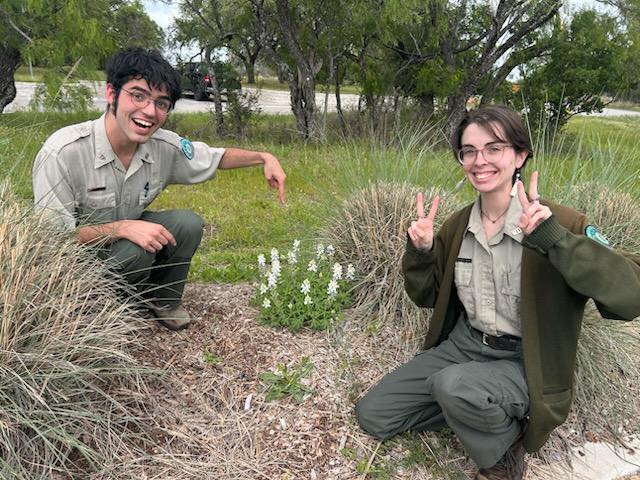
With Texas’ spring wildflower season underway, many Texans have been on the hunt for patches of bluebonnet fields for picturesque photoshoots or a moment of reprieve with the flower beds. Last week, two rangers at the Texas Parks and Wildlife’s Inks Lake State Park in Burnet discovered some extra special beauties: “albino” bluebonnets.
Bluebonnets — officially referred to as Lupinus texensis — are, unsurprisingly, noted for their blue color. However, much rarer iterations of the state flower exist, including those devoid of color. That milky shade is caused by a recessive gene carried by both parent plants, officials noted online.
Bluebonnets are natively found from Louisiana westward through West Texas, with other natural sightings in Florida and Oklahoma, and northern Mexico. However, bluebonnets in general might be a rare find in Texas this season, with the Lady Bird Johnson Wildflower Center highlighting a “varied season for blooms” in its 2026 wildflower forecast last month.
“We may just have to look a little harder for bluebonnets on the side of the road this year in many locales,” said Andrea DeLong-Amaya, horticulture educator at the Lady Bird Johnson Wildflower Center, in a March forecast release. “We’re hopeful for more spring rain to bring out the later-blooming flowers. Bluebonnets are great, but the show gets even better as the spring season progresses.”
Those striking out on finding bluebonnets out in the wild can head to the wildflower center, where staff cultivates and maintains yearly displays.