
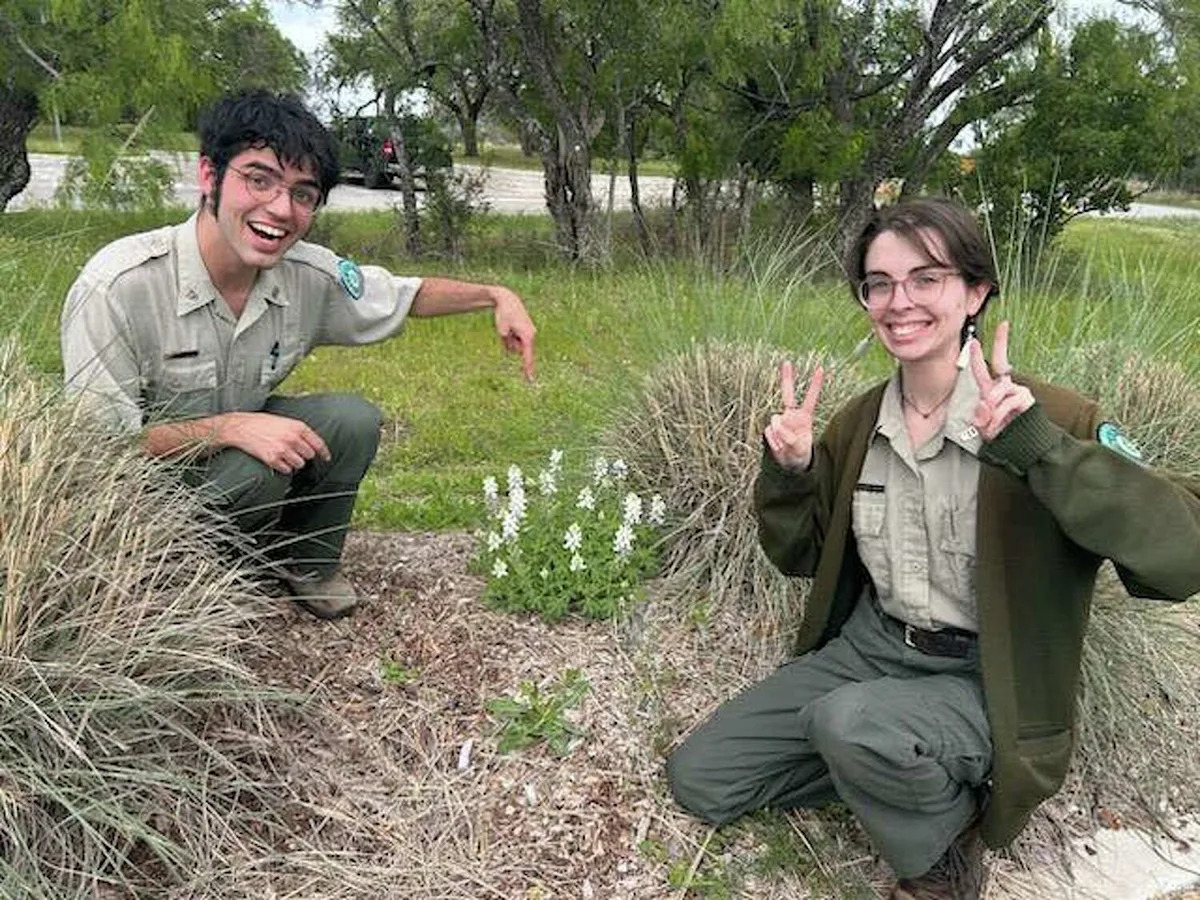
The patch of wildflowers first bloomed to little fanfare this spring.
That changed when park rangers at Inks Lake State Park realized what they were: rare albino bluebonnets. One albino bluebonnet is rare. A patch of a dozen is exceptionally so.
“It’s pretty special,” park superintendent Daniel Stauffer said by phone Wednesday. “We’ll see some color variation here and there, but nothing like this.”
Millions of bluebonnets are blooming across Texas, blanketing parks and highway shoulders, in that recognizable shade of blue, but the patch of snow-colored flowers in Hill Country has grabbed the spotlight.
The state park in Burnet shared photographs of the flowers this month on social media, drawing park visitors and anthophiles, also known as flower lovers. The flowers are conveniently growing just outside the park’s headquarters.
https://www.facebook.com/InksLakeStateParkTexasParksAndWildlife/posts/pfbid0sLH74n7eD94Xtoq8LiduHbAoEX8SsqadqrZtokQ4EsM7nYzeKYvtbLNTa8e7dUHGl
That particular shade is caused by a recessive gene carried by both parent plants, according to the Lady Bird Johnson Wildflower Center at the University of Texas at Austin.
Other color variations are possible. Pink bluebonnets have popped up in the spring, and Texas A&M has even managed to breed maroon bluebonnets, nicknamed Aggiebonnets.
Albino bluebonnets are not considered breeding flowers, so this particular patch is not likely to return, according to the Johnson wildflower center. Albino flowers typically receive pollen from regular blue flowers, masking the mutation of the next generation.
Bluebonnets were named the state flower in 1901, beating out the cotton boll and the cactus. More than a century later, they have become the emblem of the state. Texans flock to patches every spring to snap photos with the blooms in a rite of passage.
The flowers grow particularly well near roadways, which are home to gravelly soil with good drainage.
Contrary to popular belief, it’s not prohibited to pick bluebonnets, although trespassing in order to reach them is illegal. The flowers have a short period in which to leave seeds for next year, so it’s important not to disrupt their lifecycle.
If you want to catch a glimpse of the latest albino bluebonnets, you’ll need to hurry, Stauffer said. The wildflowers will return to seed in just a week or two.