
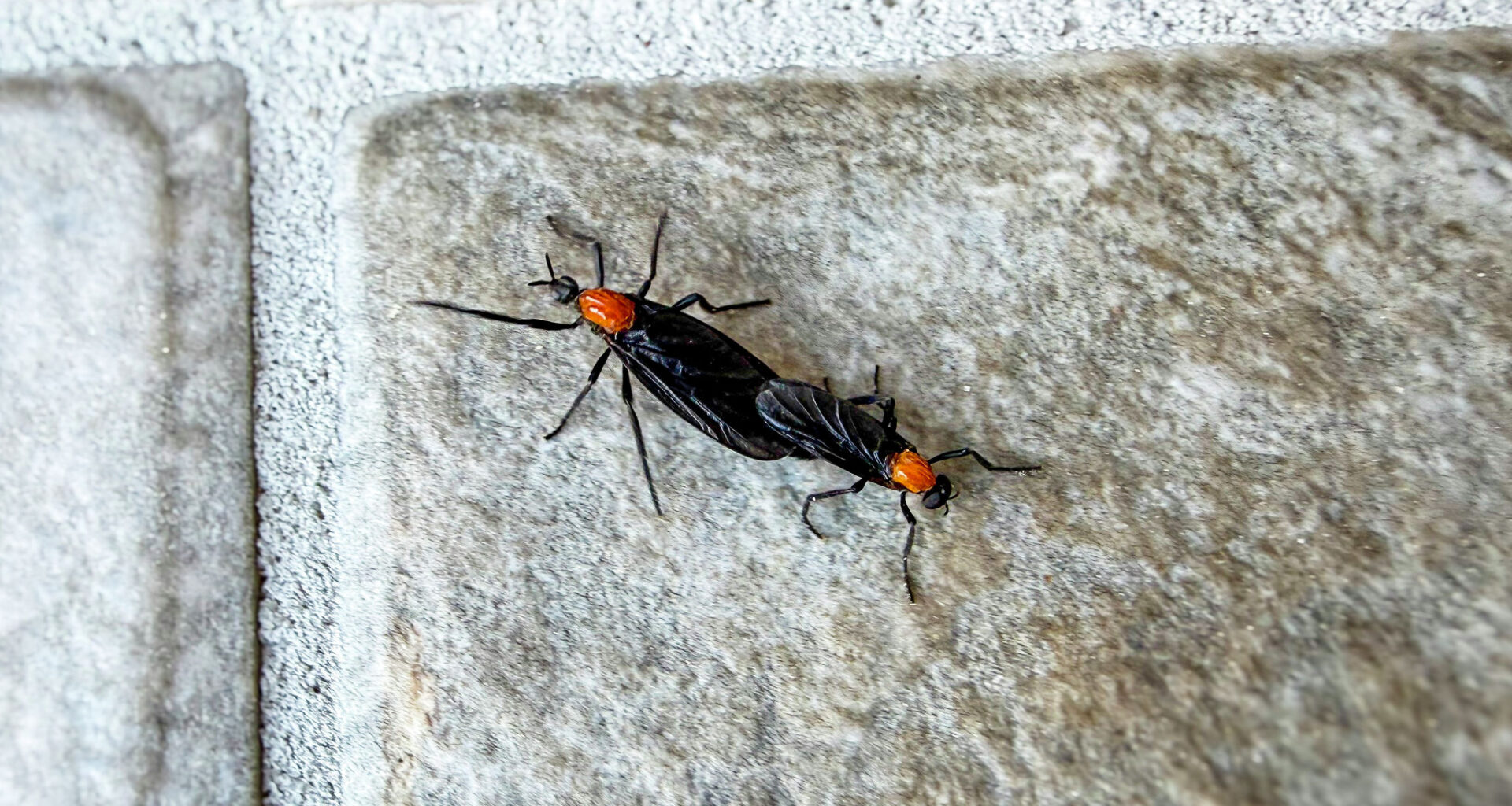
As the Jonas Brothers once sang, “I never thought that I’d catch this lovebug again.” Houston didn’t have much of a choice.
Across the city, tiny black-and-red pairs have been clinging to windshields, hovering over sidewalks and turning commutes into something closer to an obstacle course. For some drivers, it’s enough to leave them “over the edge” and a little “breathless.”
Online, Houstonians didn’t hold back.
“288 south of Pearland today was a war zone of them. My truck is basically a new color and the windshield wipers were useless,” one Reddit user wrote.
“Unwelcome to Houston,” another chimed in.
“You must be new here,” someone else added.
Scientifically known as Plecia nearctica, these insects aren’t actually bugs at all. They’re flies—more closely related to house flies—and part of the March fly family. Their nickname comes from their most noticeable trait: they pair up and stay that way.
That explains why they seem to be flying in tandem, like tiny couples that are, quite literally, stuck together—”hopeless,” “head over heels” and everywhere.
They show up like clockwork. Texas typically sees two generations each year, with adults emerging in May and again in September. The adults only stick around for a few days—three to five, according to Brown—but the surge can feel much longer. Populations ramp up quickly, peak around the two-week mark, then taper off just as fast.
Weather plays a role in just how intense it gets. Rain helps. Long stretches of dry heat can tamp things down.
If it feels like they’re targeting your car specifically, you’re not imagining it. Researchers say lovebugs are drawn to the smell of vehicle exhaust—especially after it’s been sitting in the sun—because it mimics the scent of decaying organic matter, where they lay their eggs. Light-colored surfaces don’t help either. White cars, shirts or anything bright can act like a beacon.
They’re most active during the day, especially between mid-morning and late afternoon, which lines up perfectly with commutes—and unfortunately, windshield splatter. Large swarms can make it hard to see, clog radiators and, if left alone, their slightly acidic remains can damage paint.
For all their persistence, lovebugs don’t bite or sting. And they’re not completely useless. Adults help with pollination, while their larvae break down decaying plant material, quietly doing some ecological cleanup work on the ground.