

Ahead of this year’s midterm elections, some Texas voters are hoping to see “new blood” in leadership. That’s translating into a preference for younger candidates with fresh energy — or even older ones who bulk the status quo.
This desire to replace long-time incumbents is part of a national trend, especially for Congress. Across the country, 57 U.S. House members and 14 U.S. Senators aren’t running again in 2026.
It’s significant to see 71 current members of Congress either chose to retire or simply not seek reelection: In the last century, only one election cycle has seen more turnover.
In Texas, 12 of our 38 U.S. House members won’t be coming back, leaving many fresher-faced politicians now fighting to win those coveted seats.
A new Generation of Voters
One of the reasons for this change is the rise of a new voting bloc.
“You’re looking at a whole generation of people coming of age that are looking for a different American dream than the one their parents are particularly their grandparents grew up with,” said Nancy Sims, a political analyst at the University of Houston.
We saw this in the Texas party primaries in March, when some longtime office-holders were forced into runoffs.
Others in the Texas congressional delegation saw the writing on the wall far earlier. Rather than risk losing their primary — or ending up in a potentially embarrassing runoff — they chose to end on a high note and retire.
One example comes from Austin, where retiring Democratic Congressman Lloyd Doggett chose not to seek a 17th term. The decision came after last year’s successful, GOP-led redistricting effort moved the 79-year-old into a solidly blue district with party-member, 36-year-old Rep.Greg Casar.
A Democratic primary between the two could have been rough for Doggett, according to Josh Blank with UT Austin Texas Politics Project.
Manoo Sirivelu / KUT News
/
KUT News
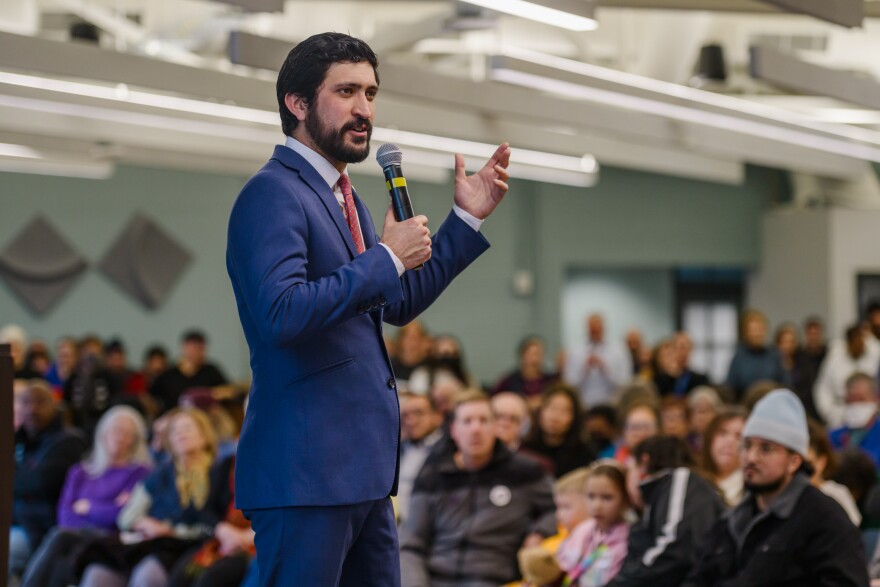
U.S. Rep. Greg Casar speaks during a town hall at Austin Community College’s Rio Grande Campus in February.
“As iconic of a figure in the area as he’s been, Greg Casar represents a new generation of politicians and likely would have given Lloyd Doggett a real run for his money, if not actually entered the race as the favorite,” Blank told The Texas Newsroom.
So Doggett handed off the baton instead.
But other incumbents are more stubborn. Sims points to a similar situation in Houston’s TX-18. Rep. Al Green, who has spent over 20 years in the U.S. House, didn’t win his Democratic primary outright. Now, Green will be fighting for his political future in a runoff against Congressman Christian Menefee in late May.
Menefee, who promises to “bring a new fight” to the nation’s Capitol, is turning 38 later this month.
These are some of the matchups this year — in Texas and nationally — that make Nancy Sims believe voters are taking candidates youth into consideration when casting votes.
“I think that we could call it an anti-age move, rather than anti-incumbent,” said Sims.
Voters don’t deny it either.
“I’m 67 years old, but, these old folks … they stuck in these old ways,” Harold Augbon II recently told Houston Public Media. “And it ain’t working.”
“If there is anything bipartisan in this election cycle, this age issue is it,” said Sims. “We’re seeing it happen on both sides of the aisle.”
A move away from one-time Republican ‘stalwarts’
Of course, when Texas voters say they want new leadership, age isn’t the whole story.
A call for a different kind of turnover was on display last month in Grapevine, Texas during the annual Conservative Political Action Conference.
“We need new blood,” said J.D. Enright of Frisco at the conference. “We need Ken Paxton.”
Mengwen Cao / KUT News
/
KUT News
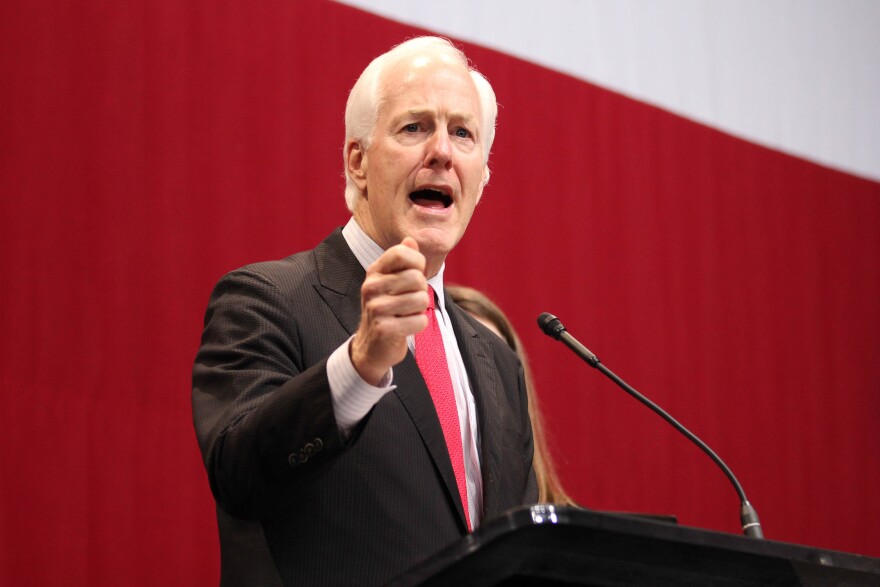
Incumbent Sen. John Cornyn is gearing up for a tough race to hang on to his seat versus Texas Attorney General Ken Paxton.
Enright was referring to the looming Republican runoff for U.S. Senate between incumbent Republican Sen. John Cornyn and Paxton, the current Texas Attorney General.
Age doesn’t play the same in this contest: Cornyn is 74 to Paxton’s 63. But the incumbent has represented Texas in the Senate since 2002 — a fact that’s currently working against him with some Republican voters.
“Cornyn is part of the establishment,” said CPAC attendee Nino Rata, also of Frisco. “We just need new blood.”
To UT’s Josh Blank, that “new” is actually code for “more MAGA” — as in, more aligned with President Donald Trump.
“Cornyn is, indeed, presented by Paxton as basically as a R.I.N.O. [Republican in name only],” Jeronimo Cortina, a University of Houston political analyst, told The Texas Newsroom.
Blank said that sentiment is part of the reason other Texas Republican “stalwarts” in Congress decided not to run again in 2026, including Rep. Michael McCaul and Rep. Morgan Luttrell. Had they not, they could have faced a fate like Rep. Dan Crenshaw, a Republican incumbent who faced similar criticism for not being as aligned with Trump. In March, Crenshaw lost his party’s primary. Instead, voters in his district chose state Rep. Steve Toth, a staunch conservative backed by politicians like Sen.Ted Cruz.
Copyright 2026 KUT News