
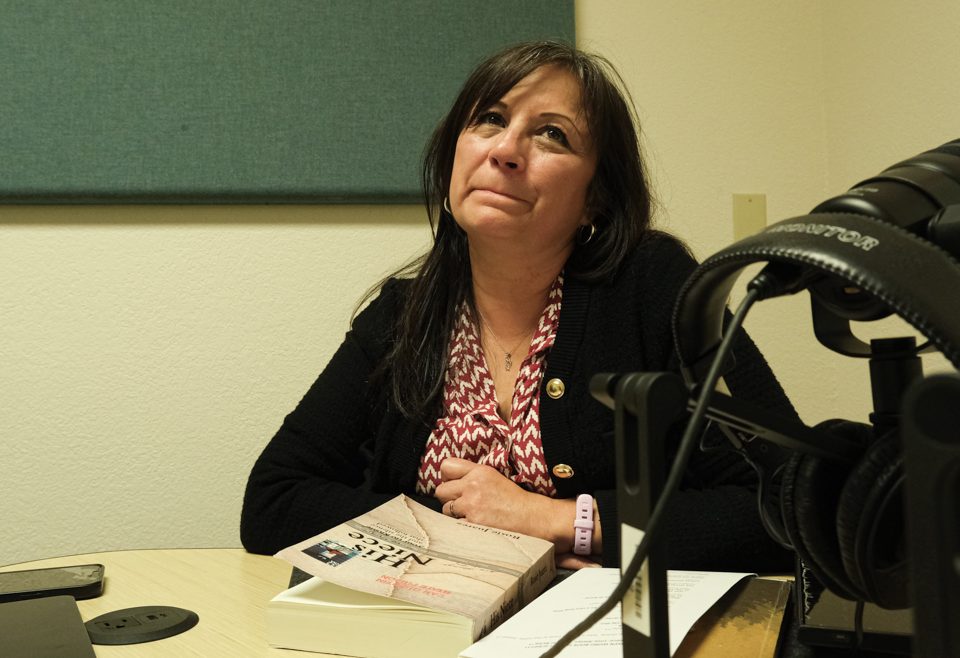
Rosie Juárez remembers the first time her uncle lifted her high enough to see the world clearly.
She was about 3 years old at Disneyland, surrounded by crowds pressed up against the parade route along the park’s famed Main Street USA, straining for a glimpse of the spectacle. Too small to see, she tugged at his hand.
“So, he picked me up and he put me on his shoulders,” Juárez said. “And I remember wrapping my arms around him. I could feel the peach fuzz, and I could feel the fluffy curls in his hair and the smell of the shampoo, the Flex shampoo. And I could see, you know what I mean? I could see. That was just one of my earliest memories of him.”
Years later, that same man — Richard Ramirez — would stand in a courtroom after being sentenced to death for a series of murders and assaults that terrorized California in the mid-1980s.
“Hey, big deal. Death always went with the territory,” he told reporters shortly after his sentencing Oct. 4, 1989. “See you in Disneyland.”
For Juárez, now 54, those two images — the uncle who lifted her onto his shoulders when she was a child and the man the world came to know as the “Night Stalker” — have long existed side by side.
Now, decades later, she is telling her story in full.
Her new book — “His Niece” — will be released Friday, April 10. The 466-page memoir is the debut book from El Paso publisher Redeemed Ink Press. In it, Juárez traces her childhood, the trauma she says she endured and the path that led her to speak about it for the first time.
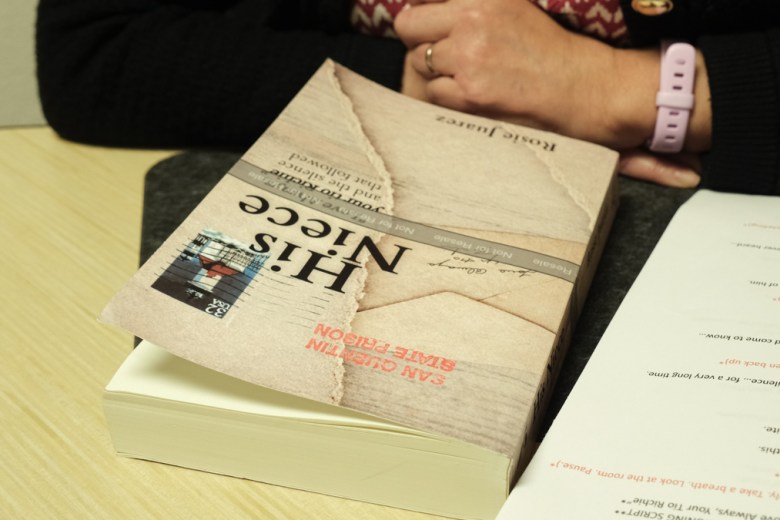 A copy of Rosie Juárez’s memoir, “His Niece,” sits on the table during an interview April 7, 2026, detailing her experiences, the abuse she says she endured and her process of healing. (Brandy Ruiz / El Paso Matters)
Juárez was born in El Paso, but lived her early years in Los Angeles. She returned to the city from California as a teenager to attend Riverside High School. She would leave the city again before coming back to study at El Paso Community College and the University of Texas at El Paso. She later built a career in education working in public schools before transitioning to teaching inmates within the Texas prison system — experiences she said helped shape her understanding of trauma, accountability and healing.
In the book, Juárez recounts years of sexual abuse she says she experienced at the hands of Ramirez during her childhood — allegations she first shared publicly during a March 10, 2021, appearance on the “Tamron Hall Show.”
For years, she said, those experiences were met with disbelief by members of her own family, leading her to remain silent well into adulthood.
That changed, in part, through her relationship with Gil Carrillo, a retired Los Angeles County Sheriff’s Department detective who helped lead the investigation into Ramirez. Carrillo encouraged her to speak publicly about her experience, eventually helping facilitate her appearance on national television.
“If this is some way, some small way, being able to assist Rosie and anybody else who’s listening — one of your viewers right now — then it’s well worthwhile,” Carrillo said during that interview.
Now, Juárez is bringing that story directly to readers, with a series of events planned across El Paso later this month as part of Independent Bookstore Day celebrated Saturday, April 25. Juárez is scheduled to appear from 10 a.m. to noon at the Nook Bookstore Café, 3260 N. Zaragoza Road, followed by an afternoon signing from 1 to 4:30 p.m. at Margin Notes Bookbar, 7460 Cimarron Market Ave. The Westside shop will also host an Indie Bookstore Day market later that evening.
Sarah Miller, owner of Margin Notes Bookbar, said hosting Juárez reflects the store’s mission to create space for community conversations and amplify women’s voices.
“It’s about creating a space where people feel seen and heard,” Miller said. “And I think her story is one that a lot of people will connect with, even if they haven’t experienced exactly what she has.”
Ramirez, who was born and raised in El Paso, would become known as the “Night Stalker.” He was convicted in 1989 of 13 murders, along with multiple counts of sexual assault, burglary and other crimes tied to a series of attacks across Southern California between 1984 and 1985. His crimes drew national attention for their brutality and the fear they instilled in communities across the region. He was sentenced to death and died of natural causes in San Quentin State Prison in 2013, when he was 53.
For Juárez, however, the story is not about the man whose crimes made headlines, but about what it meant to live with a reality she says few believed — and what it has taken to speak about it now.
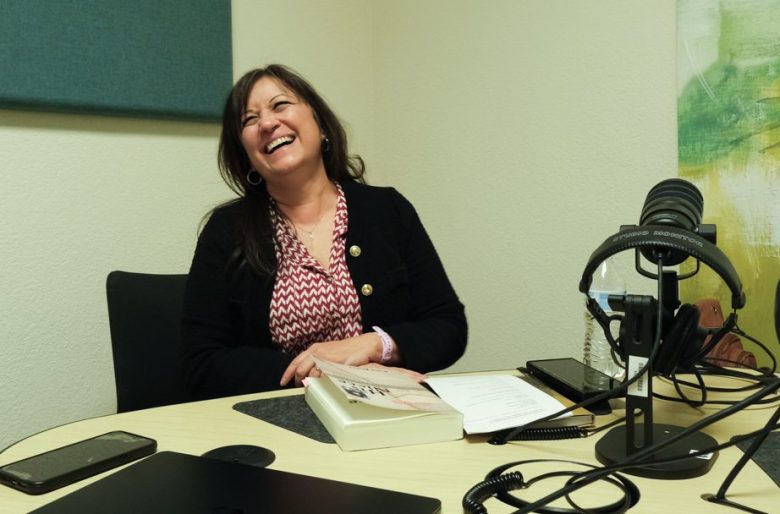 Rosie Juárez laughs during an interview April 7, 2026, as she recalls moments from her life and the journey that led her to share her story publicly in a new memoir. (Brandy Ruiz / El Paso Matters)
Below is a Q&A with Juárez about her book, her experiences and the path that led her to share her story publicly. Responses have been edited for brevity and clarity.
Q: Where were you born? Where did you grow up?
A: I was born here in El Paso. When I was 2 years old, my parents moved to Los Angeles. My mother has — or had, because she passed away — family in Los Angeles. So, that is why we moved over there. My father was seeking a different environment. He struggled with drug use and criminal activity.
Q: Can you walk me through your family tree and how you’re connected to Richard Ramirez?
My grandparents are Mercedes and Julian Ramirez. They had five children, my father being the oldest, Julian. And, then, there’s two brothers and a sister in between. And then it is the youngest, Richard Ramirez. I am the oldest of all the grandkids. And I am the oldest daughter of my father. There’s an 11-year age difference between myself and my uncle Richard.
Q: What was it like growing up in Los Angeles during that time?
A: We stayed in L.A. from the time I was 2 till I was 13. We lived in Compton, we lived in South Central, we lived in Watts and we lived in East L.A. When all the drive-bys and the shootings and the Bloods and the Crips. I went to predominantly black schools all the way up until fifth grade. Then I moved, it was sixth grade, I went to East L.A. and then it was the opposite. It was mostly Hispanics. It was the Ford Boulevard school.
Q: What were the circumstances that brought you back to El Paso?
A: At the age of 8, my brother and I would travel to El Paso every summer to visit our grandparents that lived here. So, my summers were spent here in El Paso. When everything happened with my uncle, we were supposed to go back at the end of the summer (before her freshman year). But, because of all the media frenzy, we ended up having to stay here. I started ninth grade at Riverside High School in 1986.
Q: What were your high school years like in El Paso?
A: I was struggling because the home I went to live in was with my aunt and uncle. In my book, (their pseudonyms are) Joseph and Sophia. They were very structured, very disciplined. They taught me a lot. My home back in L.A. was very chaotic. No structure, no discipline. So when I went into my dear Joseph and my dear Sophia’s house, there was structure. There was a routine, and I just wasn’t used to that. I wanted to go back home. I missed my mom and I missed my dad and I just wanted to go back home. I felt abandoned. I felt like everything that I had worked for, in keeping my brother, myself and my little sister together just went out the door because all three of us were separated when my uncle (Ramirez) got arrested.
Q: When did you first reveal the allegations against your uncle?
A: At 16, I first revealed that my uncle had molested me. I revealed it to a social worker in CPS (Child Protective Services), because I had run away (from home) and they questioned me. That was the first time I actually said it. Nothing was ever said or done about it. I didn’t hear anything, so I didn’t say anything again. Then, I wrote a letter to a friend. The letter was intercepted by my mother. And then my mother took it to my grandmother. That’s when my grandmother started asking me about it. I think that when I ran away, it was the bottom of the spiral. Because I had already been very rebellious, stealing, shoplifting, ditching school, lying, all of it. And it began shortly after I moved to El Paso.
Q: You were in El Paso when the verdict was read. What do you remember from that day?
A: The day in September they said that he was guilty, I was 18. I was working at Big 8 (grocery store). During that time, my dad came back from L.A., because my dad had stayed out there as a point of contact for whenever family went over there. So, I walked in one day, and my dad was, like, right there in front of the TV and he was cussing at the TV. I’m, like, “What is he watching?” And then that’s when I saw that they were escorting (Ramirez) out and he said, “It always came with the territory … See you in Disneyland.” Then I thought, “why did he say that?” I’ve always wondered, why would he say that?
Q: What was the feeling you had after he was sentenced?
A: I was, like, “Wow, my life has changed so much in four years.” Because by that time I already had a baby. I had already gone through a lot of other things. I had already been a runaway. I got raped during those four years by someone else. I lived the gang lifestyle during that time, too. I was 19 when I decided to change, to try to turn things around for me and my son. But, yeah, I thought to myself, “Wow, in those four years (between Ramirez’s arrest and sentencing), so much has happened.”
Q: You corresponded with your uncle while he was in prison. Can you describe that experience?
A: I was living in Germany when I really started, like, consistently writing to him. My husband at the time was in the military and we got stationed in Germany.
Before that, it was 1989. I had gone to a church and I prayed and I asked God that I was just tired of the way everything was going right now. I needed to change. So, then that’s when I decided that I no longer was gonna wear the black, heavy eyeliner, the Sharpie eyebrows. No more Dickies and no more chukka boots, none of that, I was going to change the way I looked. So, I went ahead and did that in 1990. I got married. And the Gulf War started. I got married to a soldier. He was in the Army. Somebody totally different.
I moved to Kentucky. When I was in Kentucky in ’91, it was the goodness of God. Because I had already been approached several times throughout my childhood and growing up about getting saved and serving God and this and that. But, it was the goodness of God in 1991. We were living in a trailer. We had enough food in our house. Me and my son were OK. It was quiet. It was stable. It was nice. And I told God, “God, you’ve been so good to me. I don’t deserve all this with everything that I’ve done.” I said, “You’ve been chasing me for a long time. And I’ve been running from you. So, I’m in a different state, in a different city. Wherever you want me to go to church, I’m gonna go.” The next day, in less than 24 hours, a little girl came and invited me to church. And I went. I went.
Then in ’92, I was still following that path of serving God, getting in his word and just, slowly, my healing began. And then I went to Germany, and then I started talking, writing to my uncle. He asked me what I do and what’s my life like now and everything. And I started sharing with him. I even started sharing about God and God’s forgiveness. I told him in one of my letters, I told him that I forgave him. I told him, “A lot of times the adults think that kids, because they’re asleep, they don’t remember. But sometimes during those times, those kids were just pretending to be asleep.” And he told me, “I know you were pretending. I’m sorry about those times.” Then, soon after that, I told him, I want to write a book one day. And he said that he’d be OK with me if I wrote a book. And, so, here I am doing a hard thing.
Q: When did the assaults occur?
A: I was 6. So, from when I was 6 till I was 12. There’s an 11-year difference between me and him. When he turned 18, that’s when he moved (to California). I was 7 years old. This all happened in L.A. So, that’s when his family was visiting out there because they would send him over there in the summers, too. He was sleeping in our bedroom. So, it was six years, whenever he was there.
Q: Do you recall the last letter you got from him and what it said?
A: We had a falling out between me, him and his mother. Because his mother continued to question me throughout the years. She wanted to know if it was true. No matter how many times, even after showing her the letter, she didn’t believe me. So, she would always bring it back up again, asking me the same things. She wanted me to go to California and to confront him in front of her. I wrote to him. I told him, “You need to come clean with your mom because she wants to know the truth. I’ve already told her, and she doesn’t believe me.” And he wouldn’t. He told me that he can’t do that.
Then I told him, “If you don’t do that, I can very easily go to any talk show, present my case. Tell them to give me a lie detector. And you know I’ll pass.” And, so, he got very fearful because he’s in prison. And (he didn’t want to be labeled a) child molester. So, he wrote to and he called his mom and told her what I had said. She went to my house and she said that I had the devil inside me. I told her, “I was just wanting you to give you what you wanted, was the truth.” I didn’t talk to her again for 18 years.
Soon after that, I got a divorce. My uncle wanted to write to me. And he did write to me because my dad said he was worried about me. But I didn’t respond. He told me that he was reading his Bible. But I just felt it was just a ploy to get me back into writing to him. But I didn’t. Then, in 2000, he wrote to me again, another little short note. I didn’t respond because, um, I just felt it was just another ploy to get me to write to him again. The fact that he didn’t want to come clean with his mother, I was not gonna entertain it anymore.
Q: Can you talk about the day Richard Ramirez died?
A: The day that he died, it was my bridal shower. I was getting married to my current husband. He died on (the day of) my bridal shower. Yeah, I was, like, “This man just has a way of sneaking in every day.” It was early in the morning. The family didn’t know he was sick. He kept it to himself. Him and my brother were experiencing the same cancer (B-cell lymphoma) at the same time. But he never told anybody. My brother went through the treatment and he came out of it. And he was doing good and he was responding to treatment. That was in March. That month, I was with my dad in Los Angeles and we pulled over to eat, and (Ramirez) called my dad. He wanted to talk to me, and I motioned to my dad, “No.” I should have taken that call. But, he had cancer, too, at the same time. But we didn’t know.
And, then, on June 7th, that morning, it was all over the news that he had died. My sister called me because my sister was my maid of honor and she was doing the bridal shower. She said, “Do we cancel it?” I’m like, “No, we’re not gonna cancel it. He’s not gonna take over another thing from me.” And, so, no, we didn’t cancel it. But in the back of my mind, it was there the whole time, the whole day. My grandmother took it hard, so did my dad. My grandmother, yeah, it was hard for her. I don’t blame her, losing a child. No one wants to lose a child. You’re supposed to die first as a parent.
But something happened to me when he died. I started getting nightmares. Why? Because, in my mind, he’s free now. He’s not behind bars anymore, and he was mad because I had spoken out. And, so, in my nightmares, he was chasing me. And then I was hiding from him. Back, like, when we were kids.
Q: At what point did you decide to write the book, and what made you feel ready to tell your story publicly?
A: I had slowly begun revealing (the abuse) in 1991 when I started going to small group Bible studies and stuff like that. I started opening up and that only happened because I had seen a show that Oprah Winfrey had done on sexual molestation and sexual abuse. She said something that no matter how old you were, no matter how your body reacted, no matter if you had a crush on your (abuser), you were a child, they were an adult. It was not your fault. And, so, that really broke me that day. So, then, little by little, I started sharing and the healing started. When you keep it inside, it eats you up. But as soon as you start sharing it and talking about it with other people, there’s a healing that starts happening because it’s out. Like when you’re sick with a stomach virus, and you throw up, then after that, you feel so much better. Same thing. And so little by little, I started sharing it.
Q: What do you hope people take away from your book?
A: I didn’t write the book for my family. I didn’t write it for my (six) kids. I wrote it for any person who has survived some of the things that I just mentioned. Because there’s a lot more in the book that I went through.
I wrote the book for those people that have survived traumatic events in their childhood, in their teenage years, even in their young adult years. It is for those that say that, “I don’t know if I can continue.” You can. There is hope for you. Ask God to help you. God will help you because all of that, God will turn it around for something good.
Related