
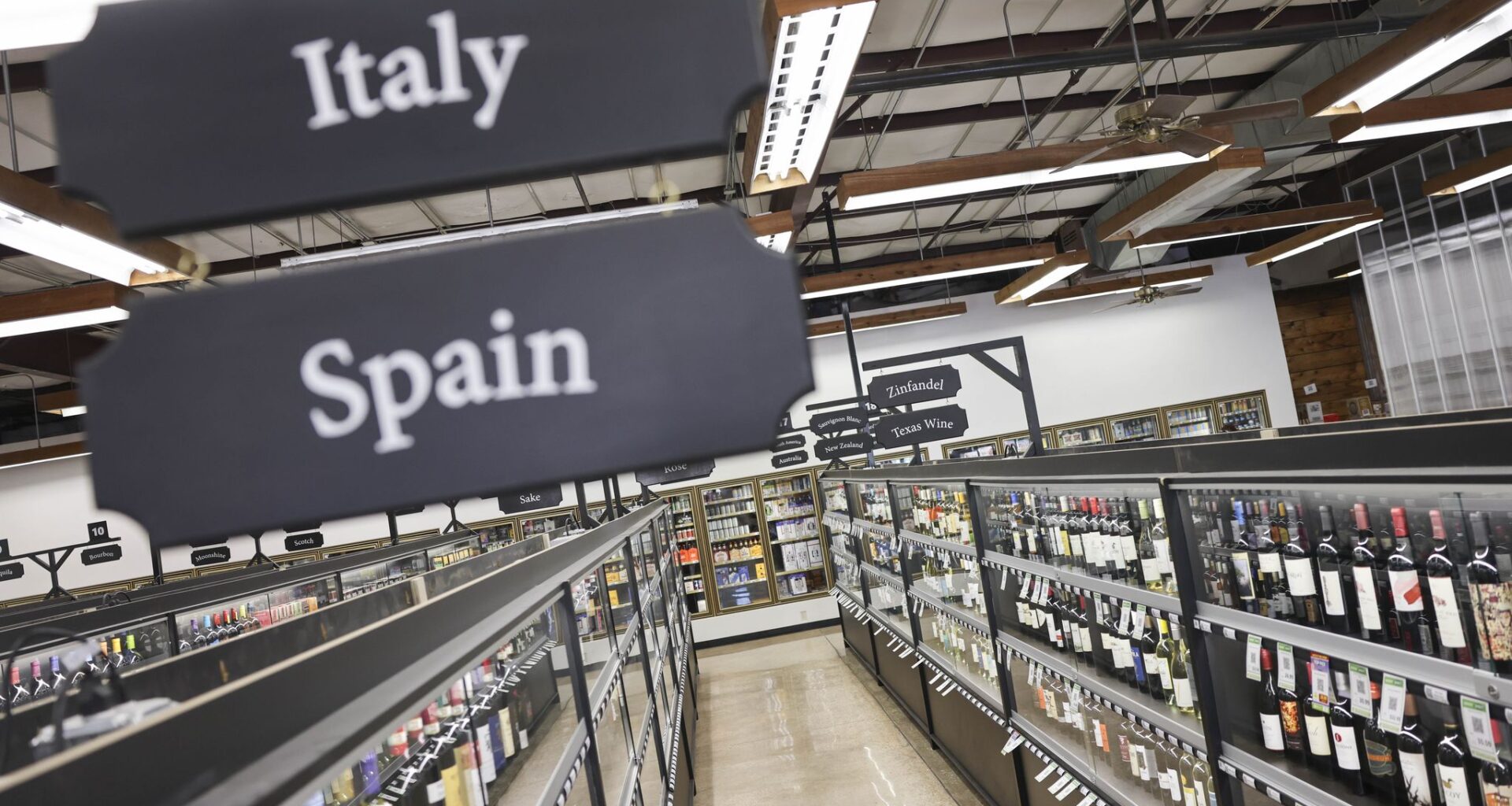
The longstanding beer and wine industry is getting some new automation at a North Texas store.
Goody Goody Liquor recently unveiled a shop in Dallas that’s using digital tools and robotics — and the investment has shrunk the physical size of the shop by about half while driving other savings, said Scott Jansen, the company’s president.
“We’re trying to keep the selection up without using such a huge footprint — but still make it really friendly to shop,” Jansen said in an interview.
Even with the smaller size, the company, which is based in Dallas, can carry about 10% more items than it could before the overhaul, he said in a separate email.
And it’s faster. The updated store, which is a is at 7124 Greenville Ave., recently tested the new system as if it were a busy holiday hour, when customers were waiting in line, maybe eight to 10 minutes. Under the new approach, the store was processing orders about every 24 seconds, Jansen said.
Goody Goody Liquor, founded in 1964, is looking to increase efficiency with the help of technology to compete amid rising costs. In the future, the new approach, which leverages robot technology from a European business, could roll out to new shops and a handful of existing stores.
At the Greenville site, the new automation system securely stores bottles in bins within a grid, and robots then retrieve the wine and liquor to an area where employees can provide them to customers.
“The robots themselves — they’re like little cars,” Jansen said. “It is pretty amazing how quickly they can retrieve an order.”
The system is in a separate part of the store that forms a wall that customers can see. Shoppers can watch a monitor that shows the robots moving on top of a grid. The process maintains accurate inventory and saves huge amounts of space, as the products can be stored more tightly than they can in the shopping area.
Amid the aisles, customers will find display items to examine as they shop. Once customers find what they want, they can use a new digital service to scan a QR code with their mobile devices. The orders can then be managed instantly through the automated system behind the scenes — and it’s ready for pickup before they leave. Cold beer is less automated, and accessible in a refrigerated area.
“’It’s like we’re recreating a store experience — we’re just using your phone as a cart,” Jansen said. “Usually, by the time you get to the front, your order’s there. If it’s not ready quite yet, it’ll be there in a few seconds.”
With all the automation, employees get more time with customers, Jansen said.
“We are not reducing employees,” he said. “We are able to use them to help customers instead of stocking and dusting shelves. In fact, we have added a full-time employee to the store’s budget.”