
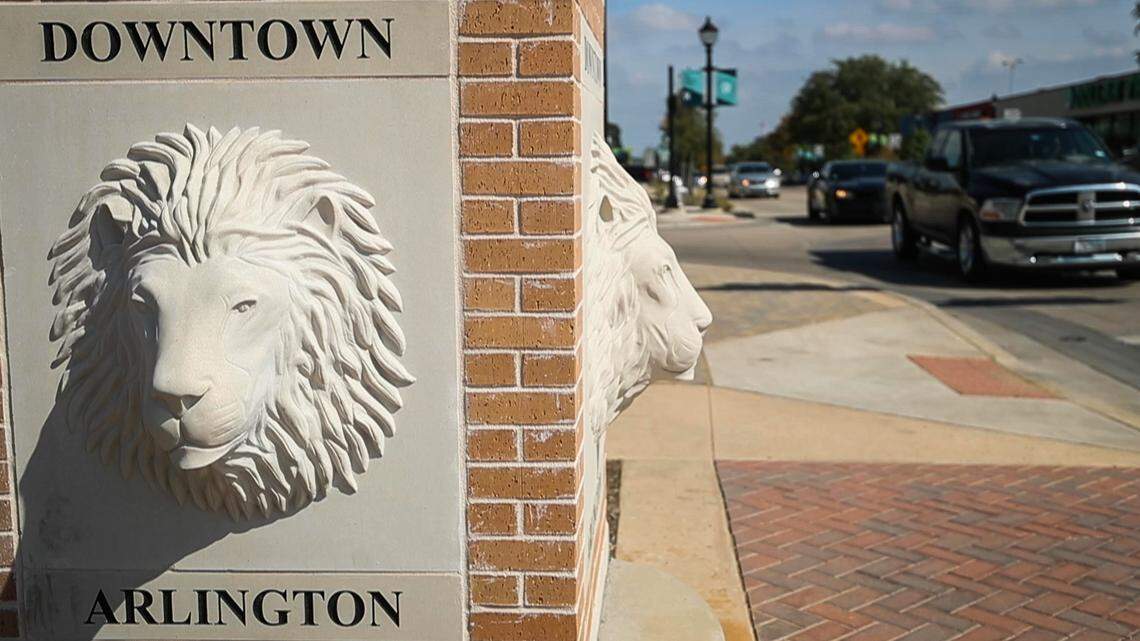
The city of Arlington celebrated the completion of the 7-mile rebuild project of Abram Street Friday, Oct. 9, 2020, in Arlington.
Yffy Yossifor
yyossifor@star-telegram.com
After several years, the city of Arlington has passed measures that will transform real estate development downtown.
At its meeting on April 7, the Arlington City Council unanimously gave initial approval to a zoning code that will offer a list of specific uses for buildings and focuses on the overall look and character of neighborhoods rather than categories of land use.
The measure designates a Downtown Form-Based Zoning District, consisting of about 681 acres between Davis Drive and Willis Avenue, north of the UT Arlington campus.
That district is divided into five sub-districts, with a combination of residential, commercial, and mixed-use development that transitions into the entertainment district.
Arlington City Council District 5 council member Rebecca Boxall has been among the biggest proponents of the measure. She said it would attract businesses and contribute to years-long efforts to revitalize downtown.
“I’m really happy to see this happen,” Boxall said. “It’s been successful everywhere it’s been tried, across the nation, and I’m looking forward to seeing what it brings.”
Arlington adopted a downtown master plan in 2018, which set a goal to create a “walkable, connected, and vibrant urban core.” The form-based code is the zoning portion of that plan.
Discussions about adopting the new strategy began in 2022, with an area near Interstate 30 and Collins Street identified as the first area to test the new strategy in early 2025.
⭐ Our editors also recommend:
After that, the city spent a year meeting with residents and business owners as city staff developed the standards that would be included in the new code.
Single-family residential neighborhoods, the code’s language says, would be preserved by ensuring that new buildings match the aesthetic and visual character of surrounding buildings, and by creating what the city calls “walkable experiences.”
For developers, the code would reduce the need for planned developments, streamline development standards, and make the city’s code more approachable.
Sherrie Phillips owns the Mosaic Market on West Street in downtown Arlington. She said that the form-based code will streamline a construction and rezoning process that was tedious when she purchased her building in 2023.
“The current code is long, and it was limiting — there was a lot of hoops that we had to jump through,” Phillips said. “I think it will really help to attract other small business owners to be able to purchase buildings and do the removing like we did, or even if they’re not purchasing the building, just going through the build out process with the city will be simplified.”
Palma emphasized to the Star-Telegram what she said is a common misconception from business owners about the new code — worries that they would be punished for not conforming with the new guidelines.
“This is just a regulation that’s being adopted into the code, so whenever a property is developed or redeveloped, that’s when you need to follow these regulations,” Palma said. “This has nothing to do with eminent domain.”
Arlington identified 63 properties that would become legally non-conforming, but Palma said that this would not change anything unless the building was sold. Buildings also will not be taken through eminent domain.
“I know what a heavy lift this was,” Boxall said at the City Council meeting. “This has been a long time coming, and I’m very pleased.”
The council adopted two measures. The first one adopted an amendment to the city’s unified development code, and the second amended the city’s zoning map to adopt the new downtown zoning district.
Council members will hear the items again at its next meeting on April 21 at Arlington City Council chambers, 101 South Center Street.

Fort Worth Star-Telegram
Emily Holshouser is a local news reporter at the Fort Worth Star-Telegram.