
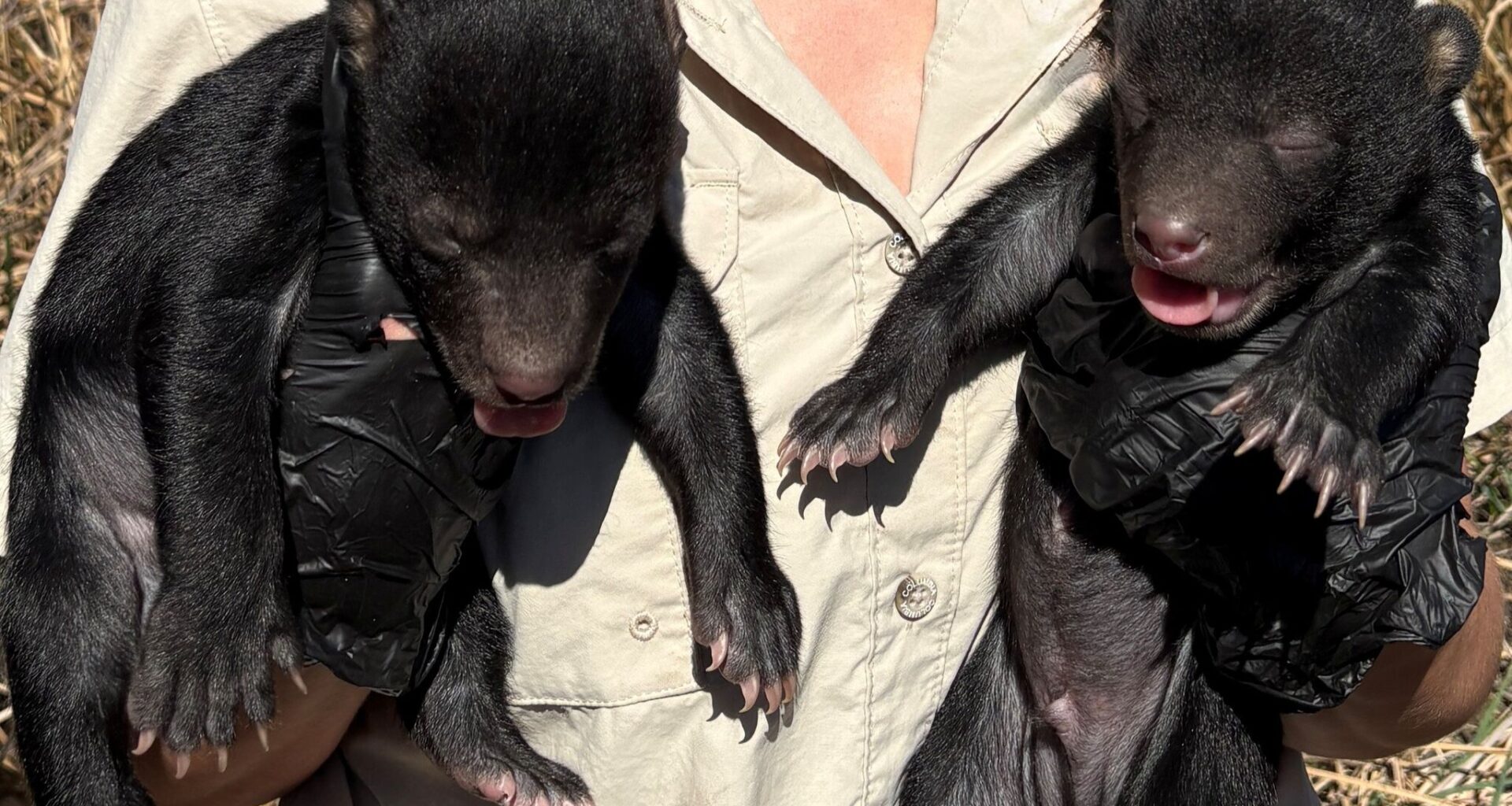
Pancakes Jr.’s mother, Pancakes, isn’t just any bear. She’s part of an ongoing research project led by partners at the Borderlands Research Institute, which is tracking the return of black bears to Texas. Researchers fit her with a collar in November 2024, allowing them to follow her movements across the rugged landscape.
“Her GPS location told us she was denning on the preserve, and den checks are a regular part of tracking her health, breeding and habitat use,” The Nature Conservancy’s West Texas Preserve Manager Ryan Thornton told Chron. “When we went to check on her in her den, we discovered she had given birth to two cubs.”
The cubs—Pancakes Jr. and his brother—were briefly handled during that check before being returned to their den.
“After taking a few biometrics from the cubs, we complete the den check and put him and his brother back with their mother, Pancakes, where they are continuing to den today,” Thornton said.
Both cubs have been PIT-tagged and are expected to be tracked as part of the ongoing research, offering scientists a rare look at how young bears survive and move through the region.
The names carry a bit of personality. Pancakes got her name from the preserve manager’s children, and “Syrup” is already a top contender for a future cub. The conservancy is still gathering additional name suggestions, though.
Behind the lighthearted names is serious science. The Borderlands Research Institute is studying how black bears navigate habitat that spans the U.S.-Mexico border, including how infrastructure may affect their movement. Researchers are also examining whether the population can sustain itself long-term in West Texas.
That resilience marks a sharp turnaround. Black bears once roamed widely across Texas but were largely wiped out by the early 1900s due to hunting and habitat loss. Decades later, a small population in the northern Mexico mountains began slowly crossing back over the Rio Grande. By the 1990s, bears started to reestablish a foothold.
Now, sightings are becoming more common—from the Big Bend region to parts of the Hill Country—as bears reclaim pieces of their historic range.
“Black bears seem to be quickly reinhabiting their native range in West Texas, and Pancakes giving birth to two cubs displays the resilience and adaptability of the species,” Thornton said.
The Nature Conservancy in Texas is working to support that return by acquiring land and building wildlife corridors to connect habitats across the region.
“As far as we know, these two new cubs make up a total of six young that Pancakes has raised on The Nature Conservancy’s Independence Creek Preserve.”