
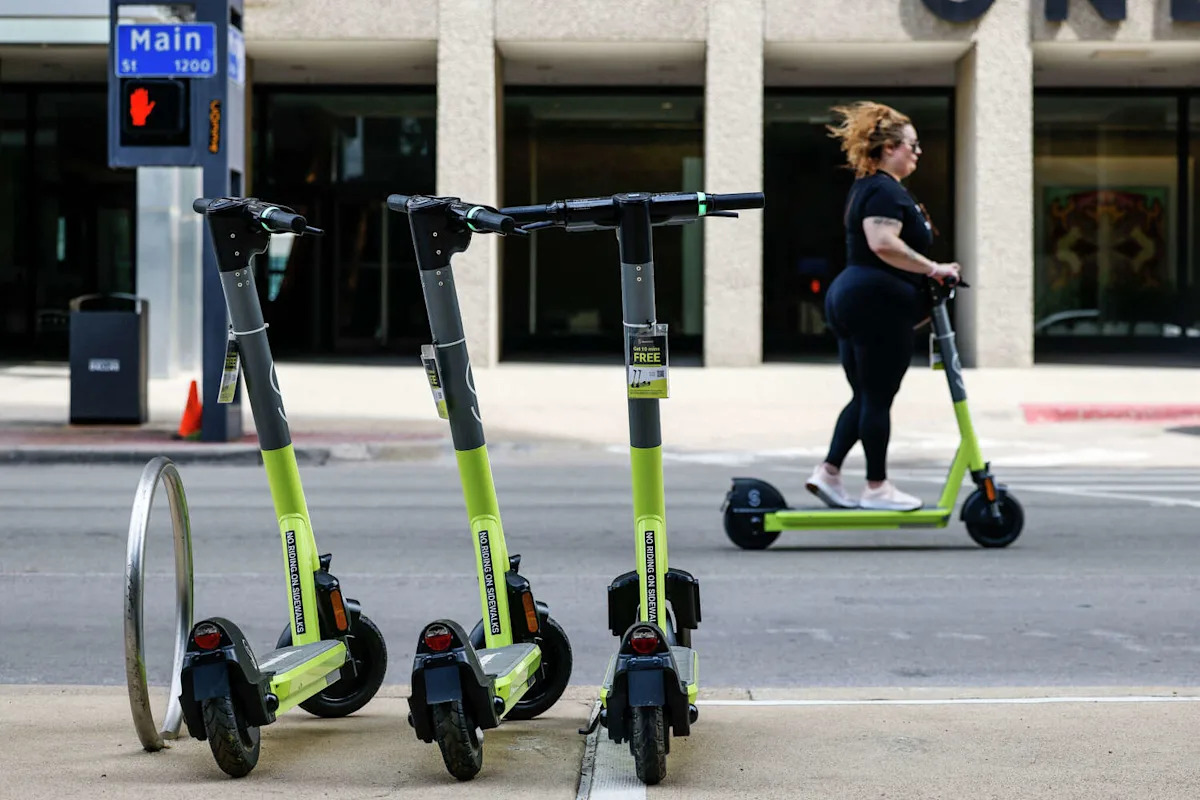
Dallas officials are weighing changes to the city’s dockless scooter and bike rules as ridership climbs and a new round of permits nears.
More than 463,000 trips were taken between June 1, 2025, and March 31, nearly double the number recorded during the same period a year earlier, according to a memo sent to City Council members on Friday.
Use was especially strong late in the year: From August through December, monthly ridership topped 50,000 trips. The average ride covered 1.15 miles and lasted about 12 minutes.
The question now is whether Dallas can maintain its fast-growing program — once put on pause after a rocky rollout years earlier — while adjusting rules governing where devices are placed and how they operate in parts of the city.
Among the proposed changes are the removal of the West End slow zone, allowing temporary no-ride-zone changes for special events or bicycle detours, and a one-time pilot that would extend operating hours by as much as an hour for 30 days.
City staff are also proposing to replace the program’s previous Equity Opportunity Zones with new Mobility Opportunity Zones. The earlier zones were retracted in November 2025 to comply with federal and city regulations, according to the memo.
A public hearing on the changes is set for April 16, with the new rules anticipated to take effect April 26.
Related: Lime launching ‘LimeGliders,’ accessible seated scooters, in Dallas
As officials consider the changes, Mayor Pro Tem Jesse Moreno, whose district includes parts of downtown and Deep Ellum, is urging residents to weigh in.
“I want to make sure we don’t have a remake of when the scooters first launched downtown,” the District 2 council member told a group of downtown residents during a meeting on Tuesday. “I know none of us want that.”
The city first allowed dockless scooters in 2018, but the implementation was troubled. Two years later, the city suspended the program amid public safety concerns, complaints about misuse downtown, and repeated compliance problems by operators.
Three operators, Bird, Lime, and Spin, launched the current permit cycle in May 2025, the memo says. Lime has expanded to 1,750 scooters after meeting performance benchmarks, while Bird operates 750. Spin, also permitted for 750 devices, is currently on hiatus.
The city has received three applications for up to three one-year operating permits for 2026-27. A review panel made up of city staff and police will evaluate the proposals, including in-person demonstrations of scooter technology and compliance features.
Though the memo does not include local crash data, broader research suggests safety concerns remain as scooter use grows.
The U.S. Consumer Product Safety Commission said electric scooter injuries rose 22% in 2022, and a 2019 study found that head injuries accounted for roughly 40% of emergency department cases involving standing electric scooters.