
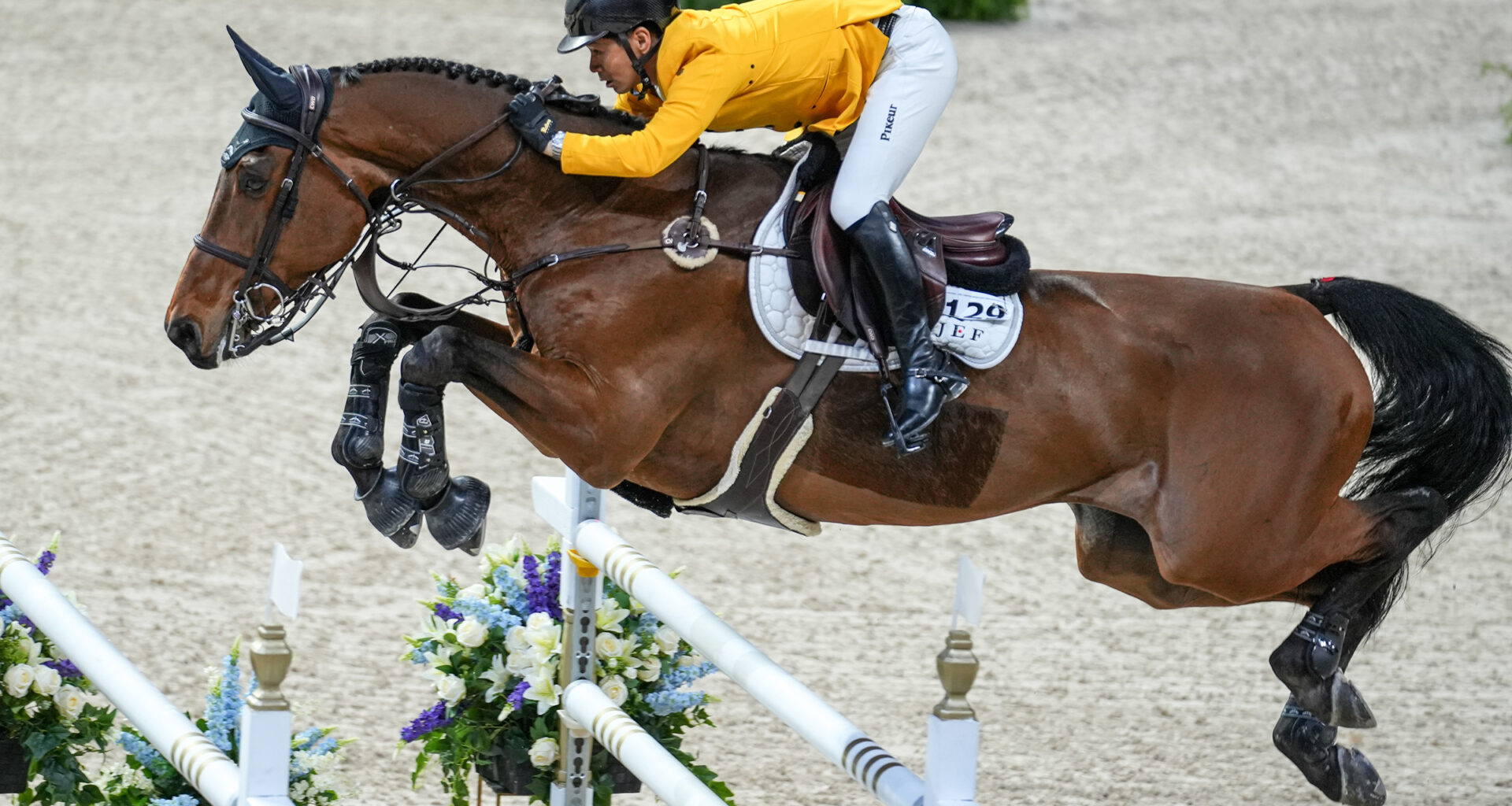
 Eiken Sato & Chadellano JRA (Chacco-Blue x Centana). Photo © Lauren Mauldin / The Plaid Horse
Through two rounds of the 2026 Longines FEI Jumping World Cup™ Final, performance in the ring has begun to separate not just riders, but bloodlines. Though you can’t analyze bloodlines based off a single final, it is interesting to see which lines are proving most competitive under championship pressure.
A closer look at the top 10 finishers from Friday’s class reveals clear patterns in modern sport horse breeding, particularly the continued dominance of a handful of elite sires and the growing importance of proven damsire lines.
The Top 10: Proven Bloodlines Rise to the Top
At the very top, Kent Farrington’s winning mount Greya represents one of the most influential sires in modern show jumping: Colestus, a son of Cornet Obolensky. Cornet Obolensk’s influence is deeply embedded throughout the field, either directly or through the sire’s pedigree.
Second-place finisher Eiken Sato’s Chadellano JRA is by Chacco-Blue, another modern powerhouse whose offspring continue to dominate at the highest levels of the sport. Chacco-Blue’s reputation for producing scope, carefulness, and rideability was evident in Chadellano’s efficient jump-off performance.
Third-place finisher Kevin Staut’s veteran mare Visconti du Telman is by Toulon, one of the most consistent producers of top-level jumpers over the past decade. Toulon’s offspring are known for their carefulness and reliability.
Across the top 10, several key sire lines repeat:
Toulon (directly represented by Visconti du Telman, and also appearing elsewhere in the field)
Chacco-Blue (directly and through damsire influence)
Cornet Obolensky (primarily through sons and as a damsire)
Kannan (appearing in multiple pedigrees across the broader field)
These results confirm some of the current breeding hierarchy at the top of the sport.
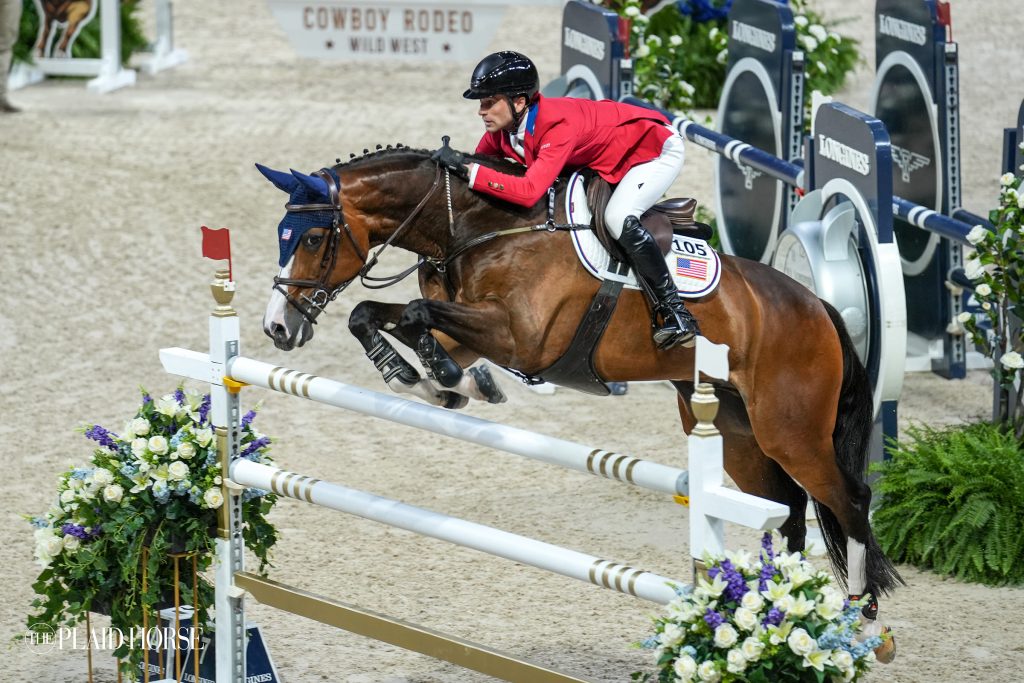 Jacob Pope & Highway FBH. (Plot Blue x Cornet Obolensky (Cornet Obolensky))Looking at the Dam’s Line
While sires often dominate the conversation, Friday’s results highlighted the importance of damsire lines in producing consistent championship horses.
Cornet Obolensky, in particular, appears repeatedly as a damsire across the field, reinforcing his influence not just as a sire of top horses, but as a foundational contributor to modern jumping pedigrees. Similarly, Contender and Darco, both known for producing strong, rideable offspring, continue to show up in the second generation of many competitive horses.
This pattern suggests that while modern breeding often prioritizes flashy, scopey sires, the underlying reliability and rideability required for championship rounds is just as dependent on the maternal line as it is the stallion.
Breeding Patterns Across the Entire Field
Looking beyond the top 10 to the full field across Thursday and Friday, the same elite bloodlines appear again and again:
By % of total field (sire + damsire combined):
Cornet Obolensky — 14.3% (5 of 35)
Toulon — 11.4% (4 of 35)
Chacco-Blue — 11.4% (4 of 35)
Kannan — 5.7% (2 of 35)
This concentration suggests that success at the World Cup Final level is not evenly distributed across breeding lines, but heavily clustered among a relatively small group of proven sires.
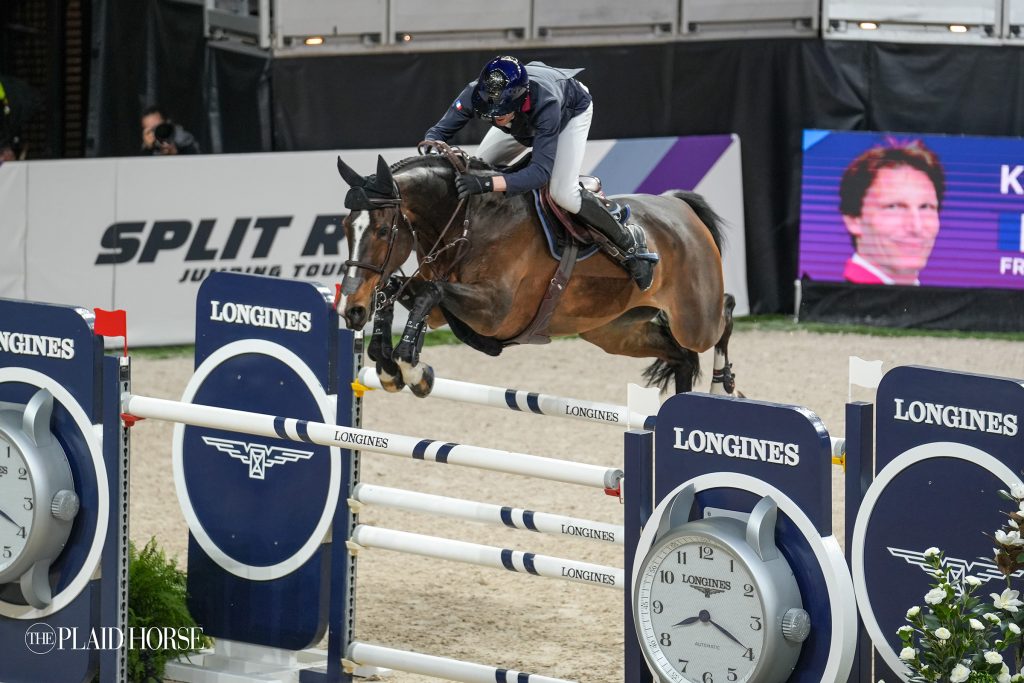 Kevin Staut & Visconti Du Telman (Toulon x Rohanne Du Telman)Looking at Horse Age and Gender
Friday’s class did not simply reward the most common profile in the field. It rewarded a specific kind of horse: experienced enough to handle a technical first round, and in several cases, sharp enough to stay efficient in the jump-off.
Among the top 10 finishers, the average age was 12.8 years, which reinforces a familiar championship trend: horses in their early-to-mid teens continue to offer the best blend of mileage, rideability, and consistency. The top seven, all of whom advanced to the jump-off, averaged 13.0 years old, showing just how important experience was in a class that demanded both carefulness and precision.
The younger end of the field was less consistent. Horses aged 10 to 12 made up a large share of the starters and still produced several top results, including Greya and Carabella vd Neyen Z, but as a group they averaged 6.3 penalties on Friday. Horses aged 13 to 15 averaged 7.25 penalties, while the small 16-and-up group averaged 4 penalties, helped by Kevin Staut’s 17-year-old Visconti du Telman finishing third on a clear jump-off. That does not mean older horses dominated numerically, but it does suggest that proven championship experience still carries real value in a World Cup setting.
Gender tells an even more interesting story. Geldings were by far the most common type in the field, but they were not the most efficient performers on Friday. Across the class, geldings averaged 7.4 penalties, compared to 6.0 penalties for stallions and just 4.1 penalties for mares. Mares also punched above their weight at the top of the order: they accounted for five of the top 10 finishers and four of the seven jump-off qualifiers, including winner Greya, third-place Visconti du Telman, fourth-place Carabella vd Neyen Z, and 10th-place LT Holst Freda.
In other words, Friday’s results suggest that while geldings still dominate the population of top-level jumpers, mares were the standout performers in this class.