
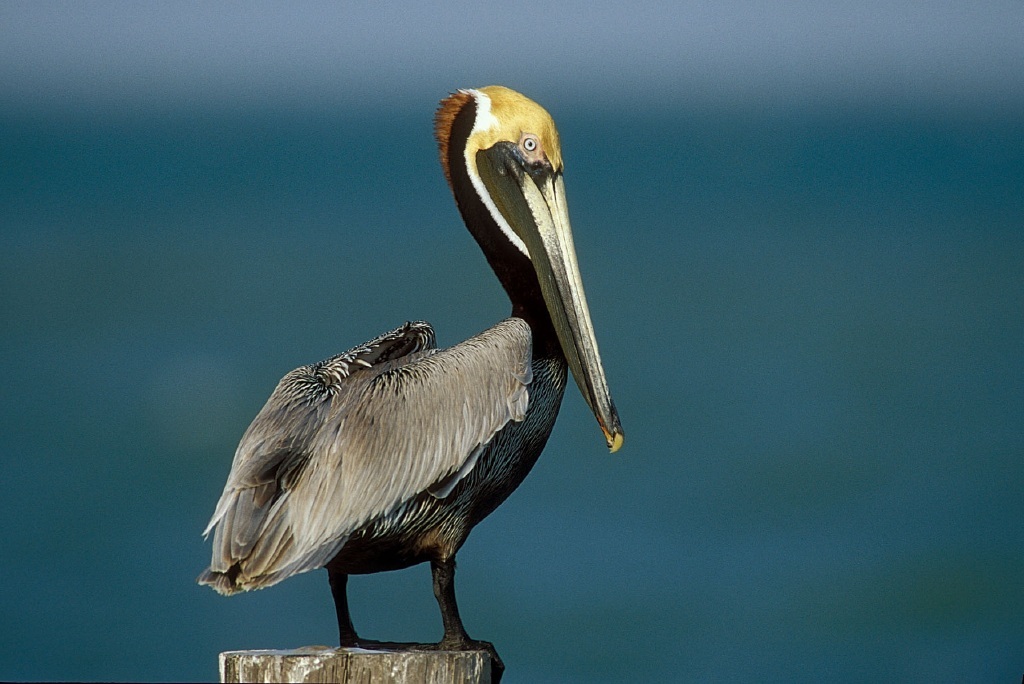
Spring is settling over Southeast Texas, and the rise in fishing and boating activity coincides with the onset of nesting season for several of the state’s most recognizable coastal bird species. It’s not always harmonious.

Texas Parks and Wildlife wants anglers and boaters to be aware of rookeries, the small inshore islands that serve as temporary homes for nesting birds, their eggs and newborns. Human activity too close to these islands may frighten birds away from their nests, the department noted last week, leaving eggs and chicks exposed to the sun and vulnerable to predatory species such as gulls and grackles.
Jeffrey Fato, Galveston Bay Foundation’s habitat restoration manager, has seen the grim results.
Article continues below this ad
“We see this a lot in some of our islands we go to a few times a year, where we do see failure of nests,” Fato told Chron Monday. “Most of that we could attribute toward people getting too close and just not being aware of their presence, frightening off these birds and leading to these different mortality events.”
The roseate spoonbill lent its name to a private gated community on Galveston’s West End.
Texas Parks and Wildlife
These birds, including well-known species such as brown pelicans and roseate spoonbills, are protected by the Migratory Bird Treaty Act and Texas Parks and Wildlife Code, but more in theory than reality. According to TPWD, Texas has about 25 species of colonial nesting waterbirds, more than half of which are experiencing “major population declines.” The black skimmer, the bird featured on TPWD’s Great Coastal Birding Trail signs, has declined by about 70 percent since 1973, the department said.
Some rookeries may appear as little more than sandbars, but—as long as they’re left alone—that’s all the surface area birds need to make themselves at home. TPWD recommends staying at least 50 yards away from these rookeries. It’s equally important, Fato added, that birders, anglers, photographers, or anyone else even remotely close to these sensitive areas dispose of their trash responsibly.
Article continues below this ad
“It’s amazing just how little trash can cause such large mortality events sometimes, especially when it comes to fishing line,” Fato said. “So we highly recommend that boaters and anglers please pick up after themselves and, if they find trash out in the water, that they try to, if they can, remove it where they see it. [Besides] helping improve the cleanliness and quality of our bay system, it goes a long way to ensuring that these trash events don’t lead to mortality events with these birds.”
Galveston Bay Foundation restored this tiny island last fall to serve as both an oyster reef and a rookery for visiting coastal birds.
Galveston Bay Foundation
This week presents a perfect opportunity to heed TPWD’s warning. Hundreds of bird lovers, pardon the pun, will flock to Galveston between April 18 and 21 for FeatherFest, the annual event combining guided tours and nature photography outings with workshops and social gatherings.
Overall, Fato said, GBF has restored about seven acres of bird habitat in the Galveston Bay estuary, including two islands in Dickinson Bay and four in Jones Bay near the I-45 causeway. Lately, it has been expanding an island built about a decade ago with dredged material from the Bay Harbor development near San Luis Pass. The restored islands, he added, also contain a few acres of oyster reefs, an easy and convenient food source for these nesting birds.
Article continues below this ad
Despite the stark population decline among many coastal species, Fado insisted that conservationists do see some reason for cautious optimism.
“The islands are being utilized by colonial water birds, and we’re seeing a lot of successful things on those islands that we have completed,” he said. “So while things are dire and we need to be aware, we are seeing some success and [proof] that restoring these islands does provide habitat. And I think for many people who are birders [and] like to come out and see these birds, it provides an opportunity for that as well.”
At a safe distance, naturally.
Article continues below this ad