
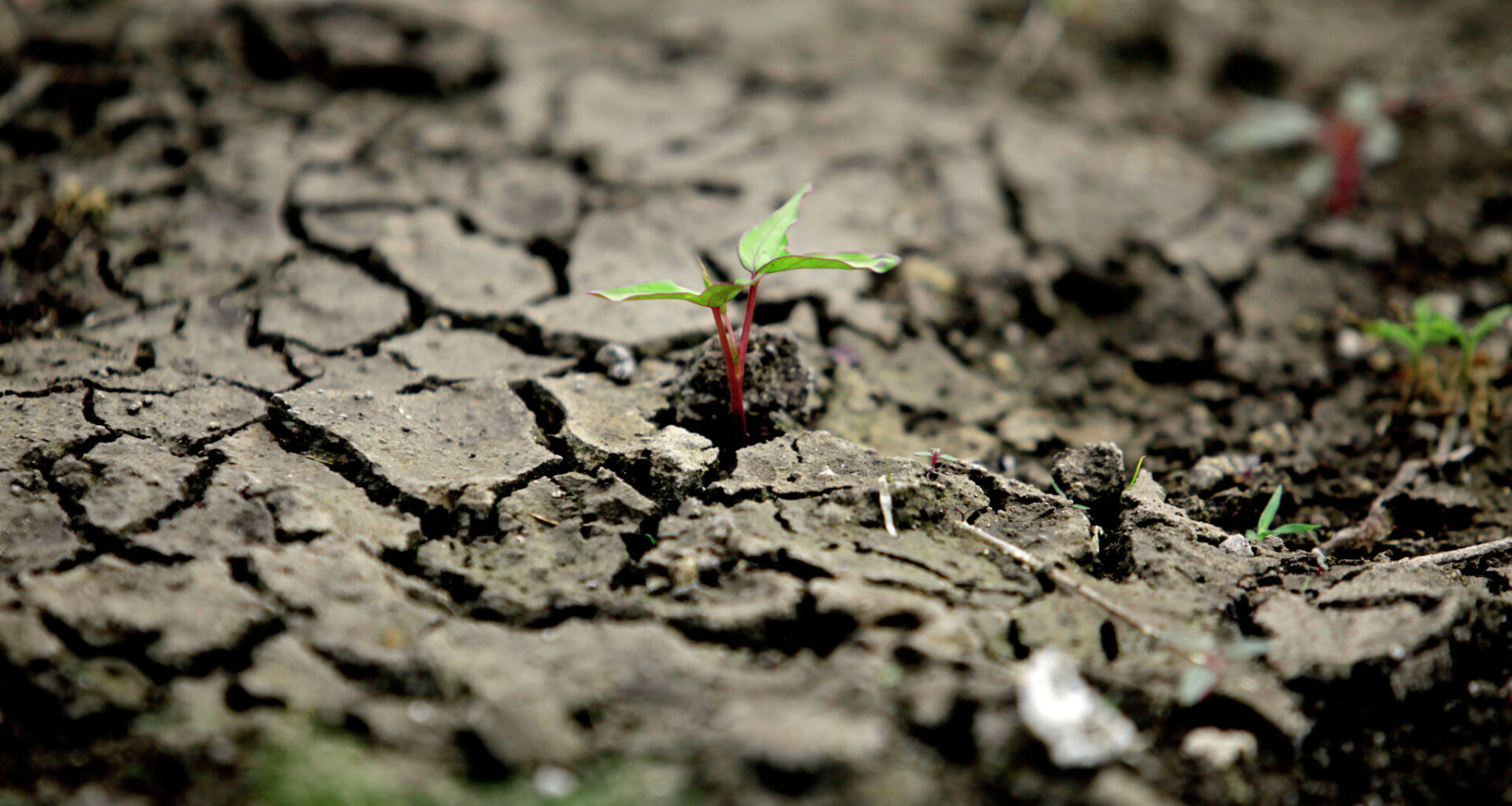
A plant grows out of the cracked dirt on the shore of Lake Ray Hubbard on July 26, 2013 in Garland. (Sarah Hoffman/The Dallas Morning News) 07292013xNEWS drought
TBA/Staff Photographer
Drought is pervasive across Texas this spring, but April showers could bring a little relief.

Eight months ago, drought in Texas had shrunk to its smallest in almost four years, with less than 20% of Texas’ land affected. Drought levels across Texas had been dropping since March, but the decrease was particularly accelerated by the Hill Country flooding in July.
Article continues below this ad
Rain hasn’t been as plentiful in the months since. Mark Wentzel, a hydrologist with the Texas Water Development Board, said monthly rainfall totals for the state have been below average every month since August. It’s resulted in Texas being about 5.5 inches behind on precipitation.
“That’s kind of a tough thing to make up,” Wentzel said.
Level 1 drought, which includes low water levels in creeks and streams and an increased risk of wildfires, has climbed relatively steadily since December, a particularly dry month. At DFW International Airport, the month only brought 0.08 inches of rain compared to the average of 2.8 inches. As of March 31, almost 90% of Texas’ land was in at least level 1 drought.
The intermediate drought levels have climbed at a somewhat similar rate, primarily in South Texas and along the Gulf Coast. In those conditions, soil moisture is low enough that the dirt can have large cracks, hindering planting. River flow is also very low and water restrictions may be implemented.
Article continues below this ad
Make Dallas News a preferred source so your search results prioritize writing by actual people, not AI.
Add Preferred Source
Level 4 drought, the most severe, has returned somewhat, but not to the same extent as last spring. In March 2025, 14% of the state was experiencing those conditions, compared to 5% on March 31.
Wentzel also said good news could be on the horizon for parts of the state. The first weekend of April brought significant rainfall, and several lighter storms passed through in the following days. That first dousing often only has a minimal impact on drought measurements, Wentzel said, because most of it’s absorbed by the ground instead of running off into bodies of water. But still, between March 31 and April 7, 5% of the state exited level 1 drought.
“That’s a trend in the right direction, but it won’t necessarily cure all our problems overnight,” Wentzel said of the April rains.
Article continues below this ad
North Texas and East Texas could see significant drought recovery before summer if the spring rains continue, he said, but South Texas isn’t expected to be as lucky. Wentzel said the Corpus Christi area in particular is likely to be in drought through at least the fall.
An El Niño pattern is forecast to emerge later this year, which brings more rain to Texas in the winter. Wentzel said increased winter rain would likely be the earliest the Corpus Christi area could exit drought conditions.
Monthly rainfall totals for the state have been below average every month since August.
“Drought is always right around the corner. One of the best things you can do is plan your landscape accordingly,” he said.
Article continues below this ad
Some industrial operations, like oil refineries, can’t reduce their water usage without creating different issues. But Wentzel noted that some agricultural operations, such as those that grow annual crops like onions, peppers and alfalfa, can sometimes take a year off and hope for better growing conditions in the future.
Russell Boening, president of the Texas Farm Bureau, said the cumulative impacts of the drought on soil and grass health have forced him to change some tactics on his ranch in the San Antonio area. He noted that irrigation is only meant to be supplemental, and without more help from Mother Nature, he’s had to reduce the number of acres he irrigates to ensure they irrigate well.
Boening also said he would have usually already planted by this time of year, but he’s held off, waiting for more rain. Some relief came Easter Sunday, with just under an inch of water. He noted the slow pace of that rainfall was crucial for good soil absorption when the ground had gotten so dry.

By signing up, you agree to our Terms Of Use and acknowledge that your information will be used as described in our Privacy Policy.
“That’s exactly what we need. We just need it to come more frequently,” he said.
Article continues below this ad
Some ranchers may have to sell off part of their herds if conditions don’t improve, but Boening said the long-range forecast looks promising for a change, so they haven’t given up hope yet.
“Farmers and ranchers are eternal optimists,” he said. “Otherwise, you wouldn’t do this.”