
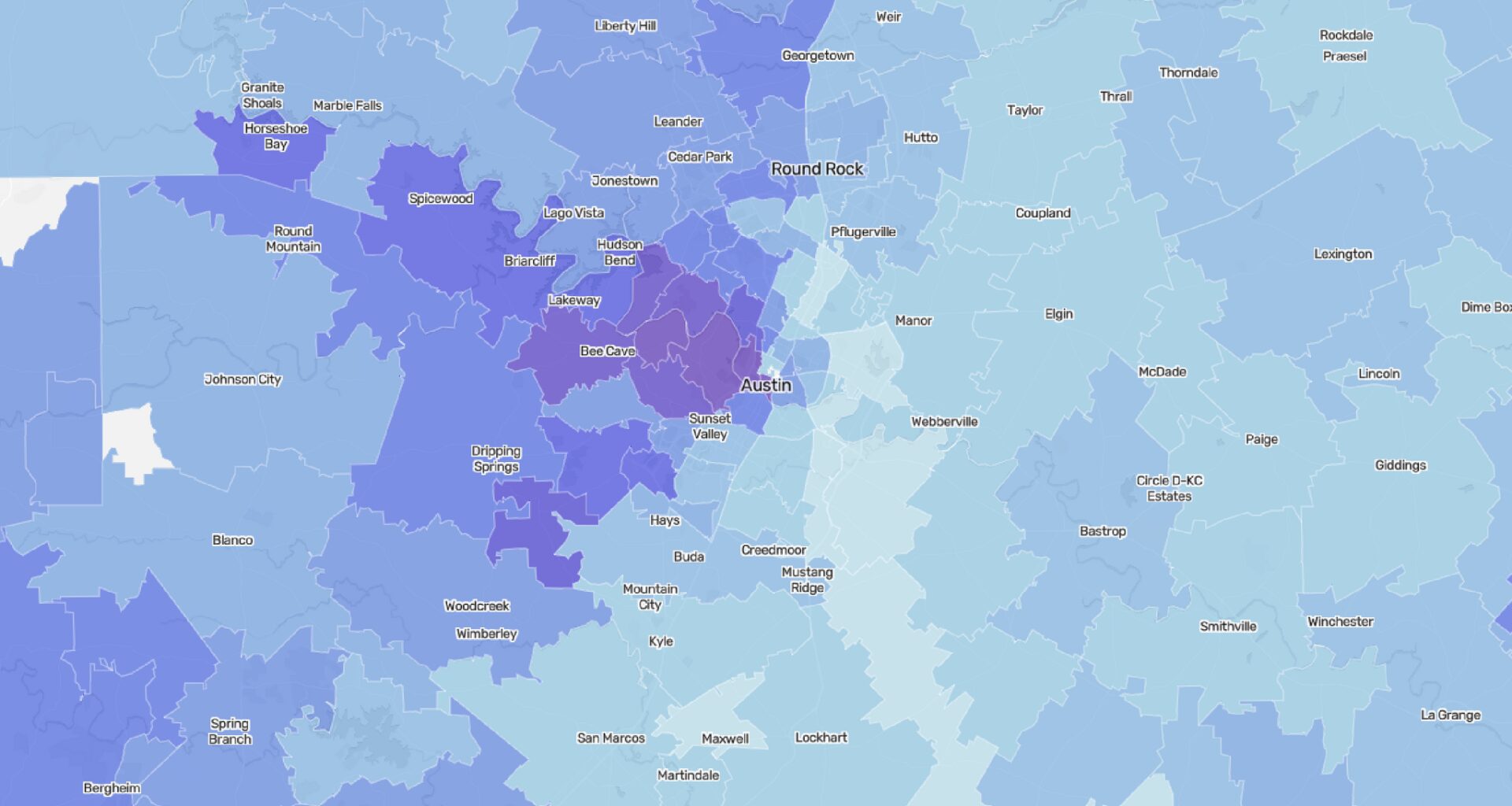
The wealthiest ZIP codes in the Austin area — and some of the wealthiest in Texas — are nestled alongside a winding, scenic stretch of the Colorado River, just west of downtown.
ZIP code 78746 — which encompasses West Lake Hills, Rollingwood and Lost Creek — is the richest in the Lone Star State. Here, residents reported an average income just shy of $1 million in 2022, the latest year IRS records are available. That is about 10 times the statewide average of $93,997. The IRS data is based on 2023 tax filings which reflects 2022 income for individuals and couples and is the most recent data available.
In addition to wages, IRS income includes earned interest, capital gains and money made from the sale of digital assets like cryptocurrency.
Average 2022 incomes of tax filers, by ZIP code
Select a ZIP code below or use the search bar to see more information
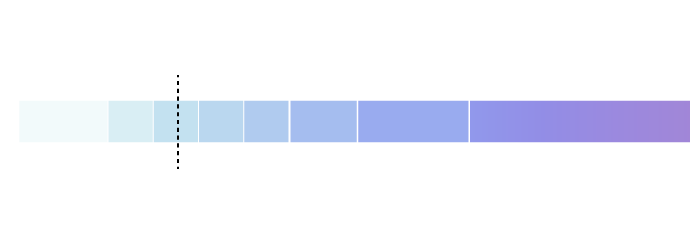
U.S. median income, 2022:
$75k
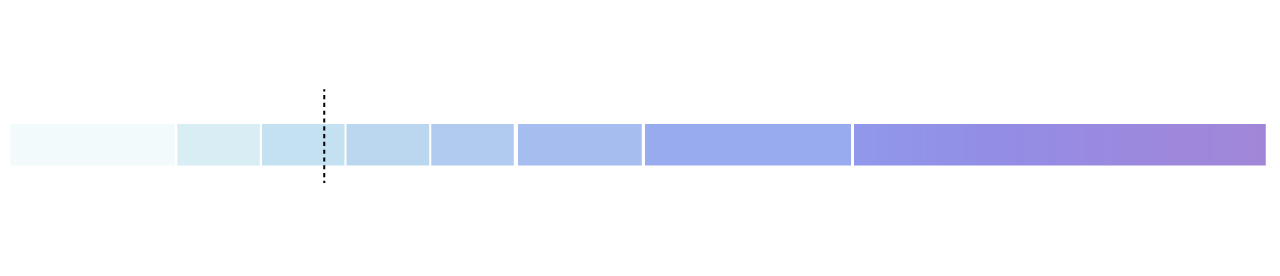
U.S. median income, 2022:
$75k

U.S. median income, 2022:
$75k
Map: Hanna Zakharenko • Source: IRS
Most of Austin’s richest ZIP codes fall within city limits — like 78701, which covers downtown, and 78703 which includes neighborhoods like Clarksville and Tarrytown. But a handful lie in the suburbs — like 78738, which covers Bee Cave and Lakeway, and 78619, home to Dripping Springs.
The Austin area is also home to three of the 10 richest ZIP codes in Texas.
Austin ZIP codes with the lowest income lie largely south and east of downtown.
Located near the airport, ZIP codes 78719 and 78742 reported an average income of $45,017 and $47,309, respectively.
Every ZIP code in the Austin area experienced an increase in average income from 2019 to 2022, compared to only 60% of ZIP codes statewide.
But the rising tide did not lift all boats equally. The average income in ZIP code 78746 — the wealthiest in Austin and Texas — increased by almost 75%. The city’s median was about 30%, and some ZIPs only increased by 10%.
Residents in the wealthiest ZIP codes make the majority of their money from capital gains — money earned from the sale of assets, such as property or stocks — as well as interest and dividends on assets rather than wages. Filers in these ZIP codes also tended to earn more from interest and dividends on investments than the statewide average.
The IRS records also show how many households in each ZIP code made money from the sale of “digital assets,” which includes nonfungible tokens (NFTs) and cryptocurrency like bitcoin.
ZIP codes 78701 and 78702 — which cover downtown and east Austin — reported the highest percentage of households selling digital assets in Austin and Texas.
About the data
IRS data on incomes is available by ZIP code for individuals and couples who filed taxes in 2023, reflecting income earned in 2022. IRS data only includes total income and total filers per zip code, so the Statesman analysis used average income per zip code. In areas with fewer returns, a small number of very high-income earners may significantly inflate the average. The Statesman defined the Austin area as ZIP codes that start with 787 or 786. This includes ZIP codes in Travis, Williamson, and Hays counties, and parts of Burnet and Bastrop counties.