
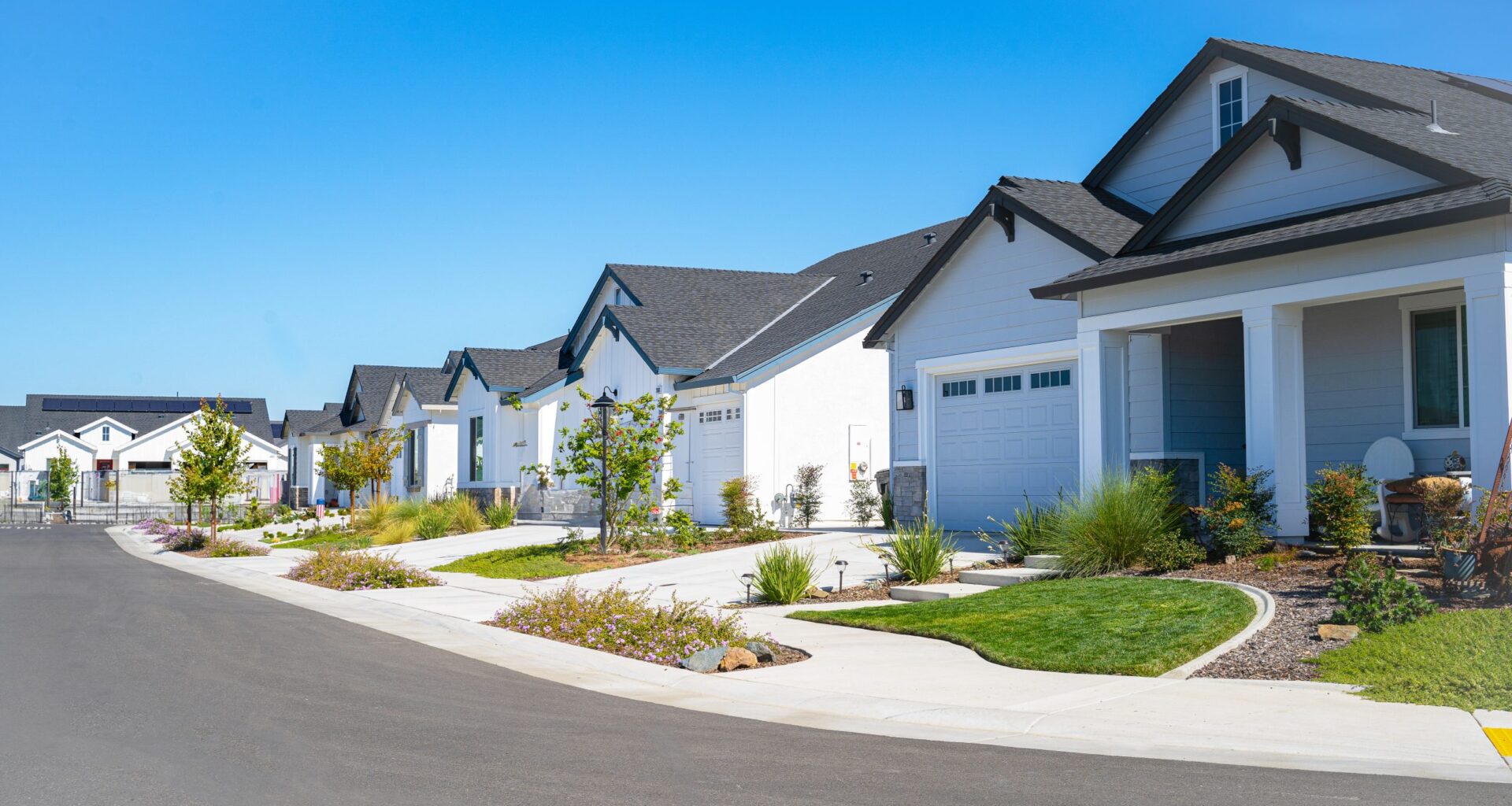
Fort Worth’s continued growth is a sign of economic strength, attracting new residents, businesses and investment to the region. But with that growth comes a set of challenges that business leaders are increasingly paying attention to, chief among them, housing. While much of the public conversation tends to focus on luxury development or housing support for lower-income households, there is a critical and often overlooked gap in the middle of the market that has meaningful implications for employers and the broader economy.
This gap is commonly referred to as the “missing middle,” reflecting the growing shortage of attainable housing options for working professionals. These are the employees who form the backbone of a thriving local economy—teachers, first responders, healthcare workers, skilled tradespeople and mid-level professionals across industries. They are essential to business operations and community stability, yet many are finding it increasingly difficult to afford homes near their workplaces.
Traditionally, housing is considered “affordable” when a household spends no more than 30% of its income on total housing costs, including mortgage or rent, utilities, taxes and insurance. This benchmark has long guided housing policy and planning. However, in fast-growing regions like North Texas, home prices and rents have risen at a pace that often exceeds wage growth. As a result, even households with steady, moderate incomes are struggling to meet that standard.
This is where the concept of attainable housing becomes particularly relevant. Unlike affordable housing, which is often tied to income thresholds and government-supported programs, attainable housing focuses on market-based solutions that bridge the gap between wages and housing costs. It reflects the reality that many working individuals earn too much to qualify for assistance but not enough to comfortably afford market-rate homes in the communities where they contribute professionally and personally.
For business leaders, this is not just a housing issue. It is a workforce issue.
When employees cannot find housing within a reasonable distance of their workplace, the effects ripple across an organization. Longer commutes can lead to decreased productivity, increased absenteeism and reduced employee satisfaction. Recruitment and retention become more challenging, particularly for roles that are critical but not compensated at levels that keep pace with rising housing costs. Over time, this can impact a company’s ability to grow, compete and maintain operational efficiency.
There are also broader economic implications. A lack of attainable housing can limit the region’s ability to attract new talent, especially younger professionals seeking to establish roots and build long-term financial security through homeownership. It can also place added strain on infrastructure as workers commute from farther distances, contributing to congestion and increased demand on transportation systems.
From a real estate perspective, these challenges are visible every day. REALTORS® regularly work with financially responsible, fully employed individuals and families who are ready to buy but struggle to find options within their budget. Limited housing inventory at attainable price points, combined with rising land and construction costs, continues to constrain supply. Regulatory processes, while important for ensuring quality and safety, can also add time and expense, making it more difficult to deliver housing at lower price points.
Interest rate fluctuations and broader economic conditions further complicate the picture. What may be within reach for a buyer one month can quickly shift the next, creating uncertainty and making long-term planning more difficult for both households and businesses.
Addressing the missing middle requires a balanced and forward-looking approach that recognizes housing as a key component of economic development. Expanding the range of housing types available in a community is an important step. This can include townhomes, duplexes, smaller single-family homes and other options that provide more attainable entry points into homeownership without compromising quality.
Equally important is fostering collaboration between the public and private sectors. Business leaders, developers, policymakers and community stakeholders all have a role to play in identifying solutions that are both practical and sustainable. Streamlining processes where appropriate, encouraging responsible development and supporting innovation in construction and design can all contribute to increasing supply and improving affordability.
Language also matters. The term “attainable housing” helps shift the conversation in a way that resonates with a broader audience, particularly within the business community. It underscores that this is not solely a challenge affecting lower-income households, but one that directly impacts the workforce that drives economic growth and community vitality.
For business leaders in Fort Worth, engaging in this conversation is both an opportunity and a responsibility. Supporting efforts that expand housing options can strengthen the local talent pipeline and contribute to a more resilient regional economy. It also signals a commitment to the community’s long-term health, which is an important factor for companies looking to build lasting roots.
At its core, attainable housing is about access and opportunity. It is about ensuring that the people who contribute to a company’s success—and to the broader community—have a realistic path to living where they work. As Fort Worth continues to grow, keeping an eye on this “missing middle” will be essential to sustaining that momentum in a way that benefits businesses, employees and neighborhoods alike.
This <a target=”_blank” href=”https://fortworthreport.org/2026/04/13/gfwar-the-missing-middle-why-attainable-housing-matters-for-fort-worths-business-community/”>article</a> first appeared on <a target=”_blank” href=”https://fortworthreport.org”>Fort Worth Report</a> and is republished here under a <a target=”_blank” href=”https://creativecommons.org/licenses/by-nd/4.0/”>Creative Commons Attribution-NoDerivatives 4.0 International License</a>.<img src=”https://i0.wp.com/fortworthreport.org/wp-content/uploads/2021/04/cropped-favicon.png?resize=150%2C150&quality=80&ssl=1″ style=”width:1em;height:1em;margin-left:10px;”>
<img id=”republication-tracker-tool-source” src=”https://fortworthreport.org/?republication-pixel=true&post=487046&ga4=2820184429″ style=”width:1px;height:1px;”><script> PARSELY = { autotrack: false, onload: function() { PARSELY.beacon.trackPageView({ url: “https://fortworthreport.org/2026/04/13/gfwar-the-missing-middle-why-attainable-housing-matters-for-fort-worths-business-community/”, urlref: window.location.href }); } } </script> <script id=”parsely-cfg” src=”//cdn.parsely.com/keys/fortworthreport.org/p.js”></script>