
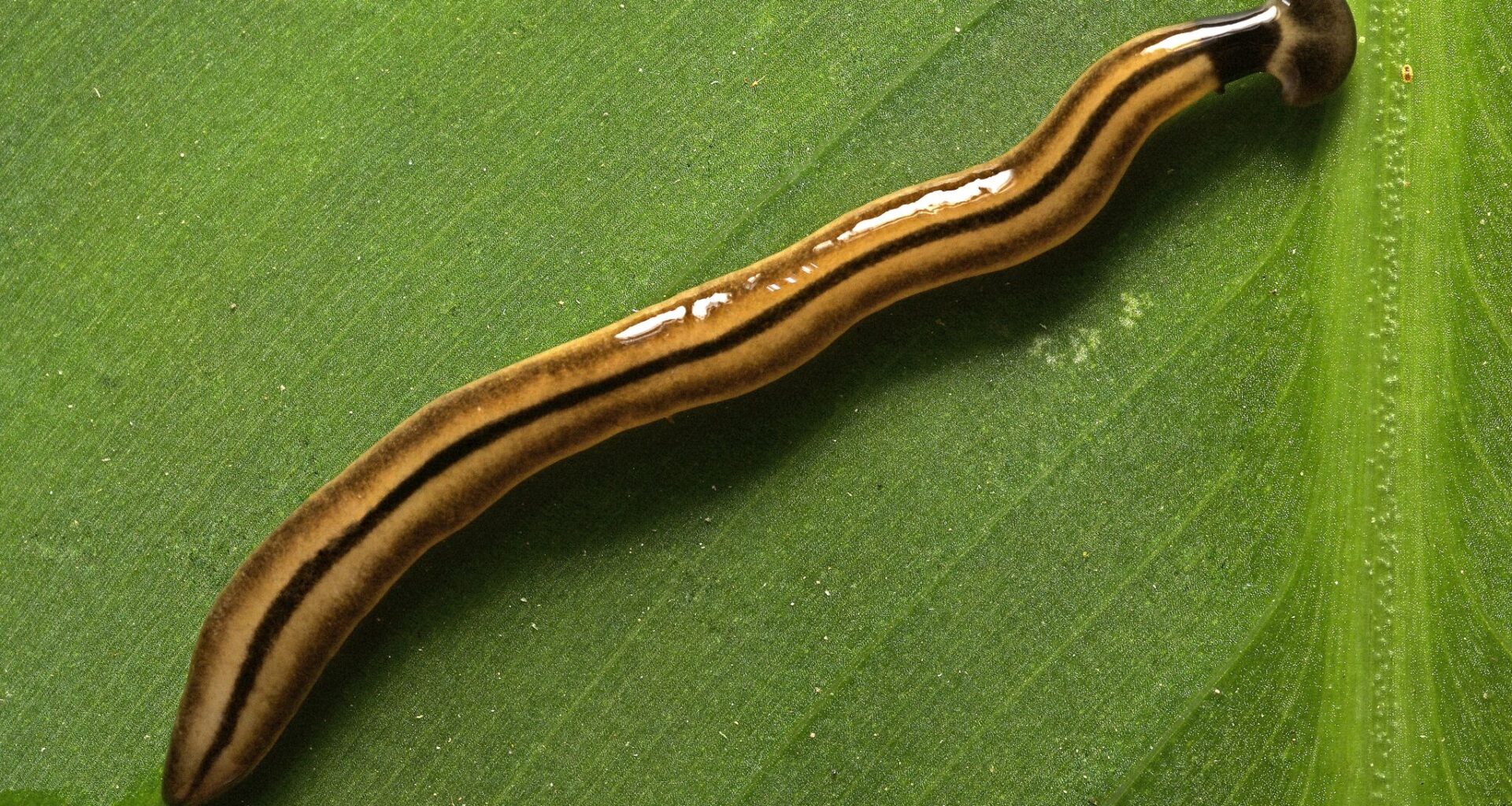
For Diana Kim Nguyen Kim, the discovery came while tending to her plants in Bellaire.
She said one worm was about 4 to 5 inches long and grayish brown with dark stripes, while the other was much smaller and thinner. Nguyen Kim had been digging in her garden bed to plant seeds when she spotted them, something she had heard about before but never seen in person.
The worms’ appearance alone can be jarring. Their flattened bodies and distinctive, shovel-shaped heads give them their name and an almost otherworldly look.
“I was kind of surprised like ‘they DO exist’ and also thought ‘eww gross,'” Nguyen Kim said. The hammerhead shape, she added, creeped her out.
But the real concern is not how they look.
According to the Texas Invasive Species Institute, hammerhead flatworms are a non-native species known for their ability to regenerate. Even small fragments can grow into new worms, which is why cutting or squishing them can actually spread them.
The institute also notes that the worms produce a slime containing a neurotoxin that can irritate skin, making it important to avoid direct contact.
That is why common suggestions like stepping on them, chopping them up, freezing or burning them are ineffective.
Nguyen Kim said she saw that advice firsthand after posting about her find in a local Facebook group. Instead, she used a shovel to place the worms in a sealed bag, poured salt inside and left it outside overnight before throwing it away.
“I can’t imagine putting that in my freezer like some said to do,” she said.
Experts recommend handling the worms carefully. Using gloves or a tool, the worm should be sealed in a bag. Once sealed, they can be killed with salt, vinegar or even citrus oil, also known as orange essence, which breaks down the worm and prevents it from regenerating.
Hammerhead worms also pose a risk to soil health. They feed on earthworms and other organisms that help break down organic matter, which can disrupt garden ecosystems over time.
The institute asks anyone who finds one to document it by taking a photo with location coordinates and submitting it to help track where the species is spreading across Texas.