
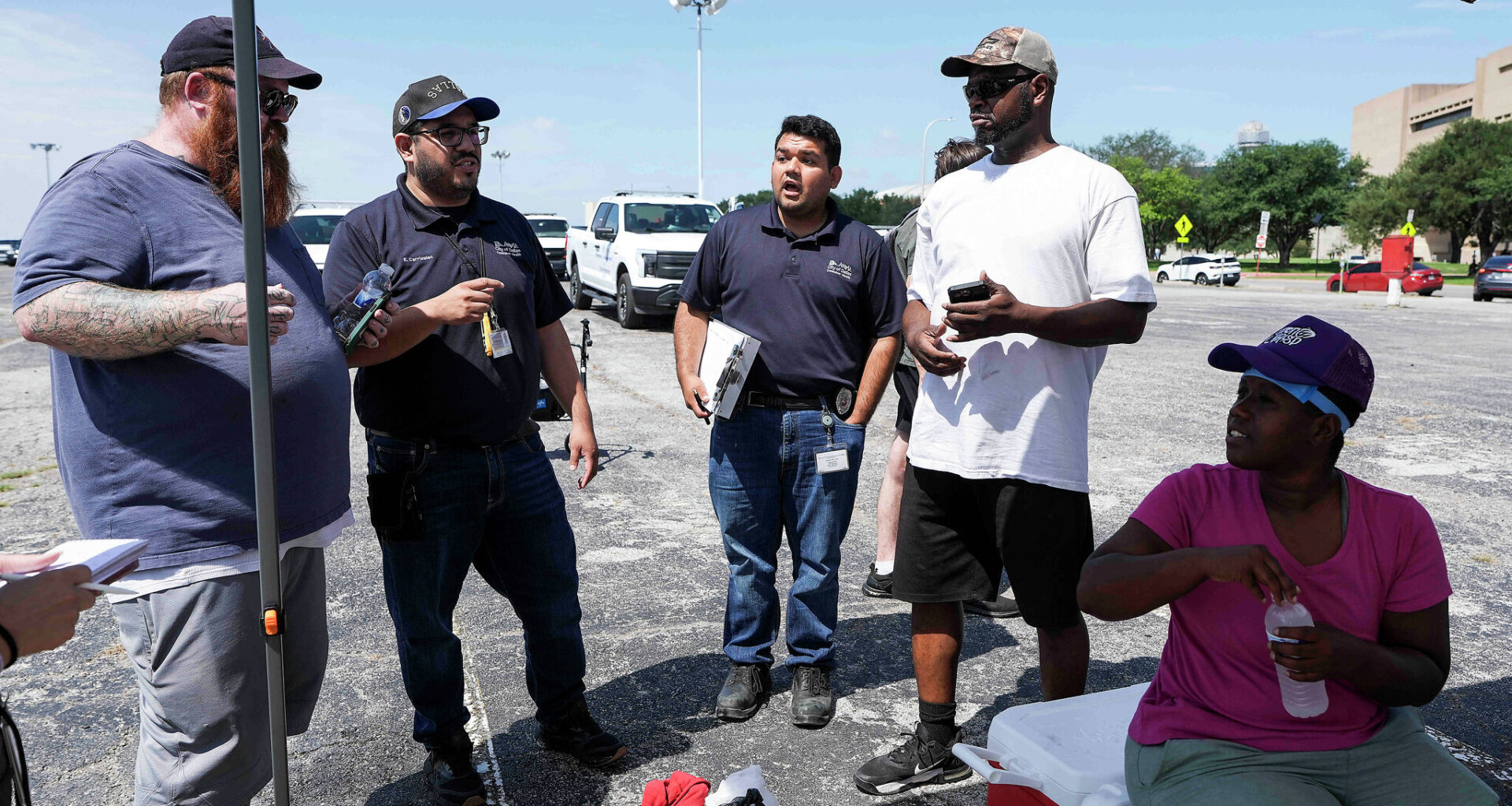
For years, faith-based groups and nonprofits have hosted food drives to assist those who experience heightened food insecurity on the streets. Several of the groups have set up tables and pop-up tents in the parking lots behind City Hall to help nearly hundreds of people at a time.
City officials have raised concerns about the safety and hygiene of the drives, saying there’s no way to ensure food is handled safely and the trash left behind negatively impacts nearby neighborhoods. Food providers told The Dallas Morning News last year that the city’s crackdown unfairly targets those who are just trying to help the most vulnerable.
At Wednesday’s City Council meeting, some council members wanted the city to redo its proposed regulations to address legal concerns, while others wanted the council to hash out changes when they finally vote.
Council member Adam Bazaldua said the current proposal was too broad, and ran the risk of overregulating groups if the city interpreted their actions as an “imminent threat to public safety or public health.” This, he said, could set the city up for future lawsuits under the Texas Religious Freedom Restoration Act.
“This ordinance raises serious concerns, especially when it comes to religious freedom,” Bazaldua said. “For many people, feeding the hungry is not just charity.”
Mayor Pro Tem Jesse Moreno, whose district includes parts of downtown where these drives regularly occur, said the proposed regulations were specific to the city government’s efforts to improve food regulation. Moreno asked Chris Christian, the code compliance services director, who was responsible for paying for the cleanup after food distribution events.
Christian said a lot of the cleanup was done by the city’s Department of Transportation and Public Works and the city’s clean sweep team that’s funded by a yearly $36 fee for taxpayers. Downtown Dallas Inc., the nonprofit overseeing downtown, has paid contractors some bills exceeding $100,000 to clean up, he said.
The city’s code currently does not outline safety standards for street vendors to prevent contamination and food-borne illnesses.
Council member Cara Mendelsohn said the current homelessness data did not show whether this was an actual issue. She said food-related illnesses and emergency visits would have better explained a need for regulation. But she had not seen that.
Instead, she said food safety regulations were already in place and the impacted groups offer not just food but a personal connection. While it’s happening outside the city’s formal system, “it still should be recognized as adding value,” she said.
The City Council’s approval would help the city place requirements on street vendors to monitor the location and frequency of distribution drives. It also would require vendors to include safeguards such as hand sanitizers and disposable gloves.
The item will be up for debate again next Wednesday.