
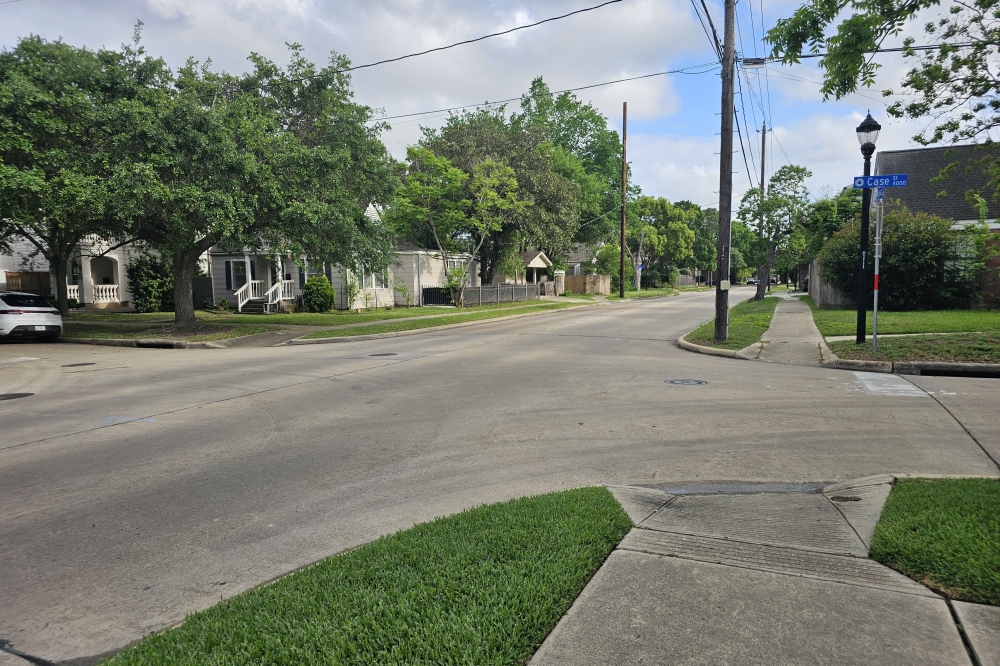
West University Place officials were hesitant to approve recommendations that would make traffic improvements along several intersections in the city.
What happened
A traffic study was conducted over two days in January and February after residents brought up concerns of speeding on certain city streets. The results of the study found that installing bulb-outs at four intersections could help address concerns. Bulb-outs are curb extensions that can be used as a traffic-calming feature that widens the sidewalk for a short distance.
However, City Council members brought up concerns about the necessity of the changes after seeing the results of the study, which showed that at most only 13 people were at a given intersection during peak hours.
The approach
Engineering firm BGE observed four areas over two days during morning and evening peak hours. Morning observations were from 7-8 a.m., and evening observations were from 2:30-3:30 p.m.
Observations took place at these four intersections:
Wesleyan Street at Rice BoulevardWesleyan Street at University BoulevardWesleyan Street at Case StreetWesleyan Street at Marquette StreetRecommendations also included a pedestrian-activated flashing sign and high-visibility crosswalk striping, as well as flashers for motorists’ awareness.
The discussion
Megan Siercks, a traffic engineer with BGE who led the study, said all of the recommended changes are still conditional.
“We don’t want these crosswalks to give pedestrians a false sense of security,” she said. “They still have to be aware.”
Siercks also added that the city does not have to implement all of the recommendations. They could add bulb-outs but not lights, or vice versa.
However, council member John Bertini said that when putting up traffic signals, it has to be reasonable.
“I want to be reasonable and be driven by the data,” he said. “When you put in a traffic-controlled campaign in places they aren’t warranted, bad things happen.”
What’s next
Officials agreed that including families who use the intersections would be effective before making a decision, and they will survey residents about the intersections. Council is set to revisit the issue in May.