
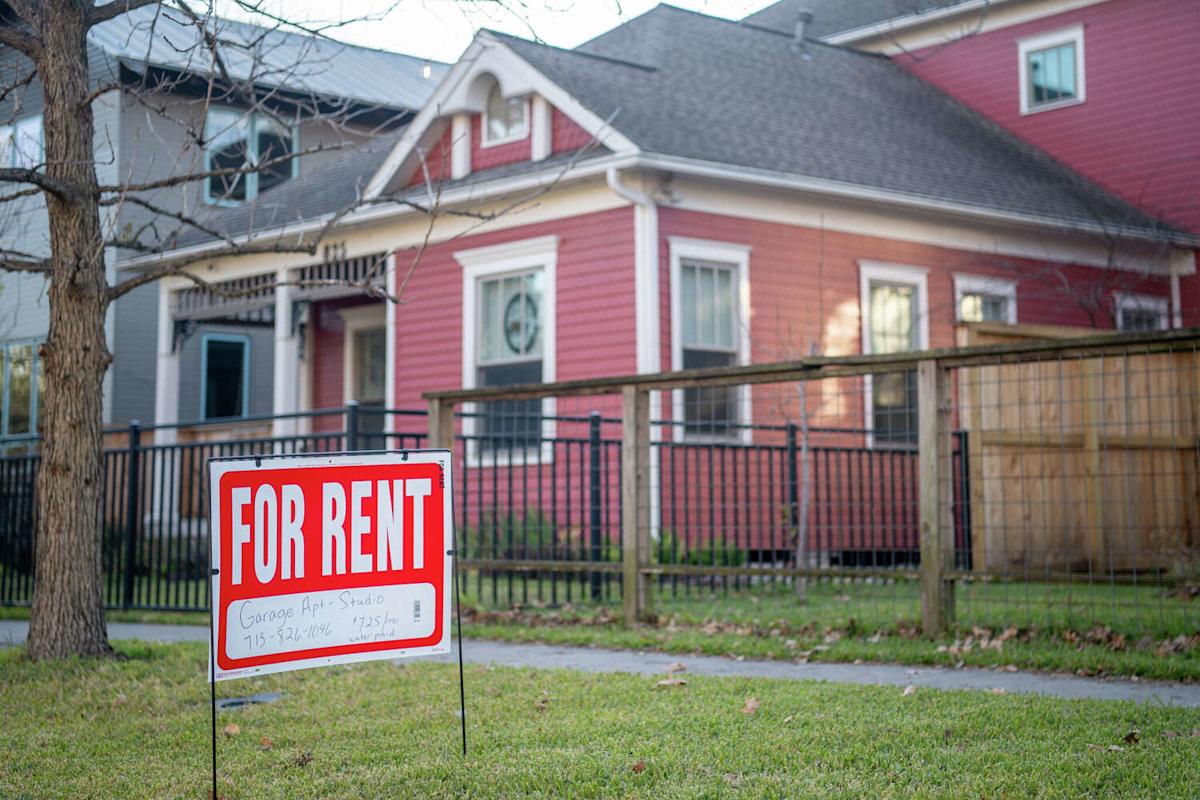
 A ‘For Rent’ sign is posted near a home on February 07, 2022 in Houston. A recent WalletHub analysis reveals the city has one of the largest rent burdens in Texas. (Brandon Bell/Getty Images)
Despite early 2026 trends showing a decline in prices, rent remains a major issue for millions of Americans. The Federal Reserve’s Consumer Price Index (CPI) shows rental costs have increased by more than 50% in the past decade, along with a similar surge in home prices. Meanwhile, wage growth lags behind — pushing more people into the “rent-burdened household” classification.
While overall trends are consistent across the U.S., location influences rent affordability. In a new analysis by WalletHub, the median annual gross rent was compared with the median household income in over 180 cities.
“In the most affordable cities for renters, the median cost of rent is as low as 15% of the median income, compared to nearly 34% in the most expensive cities,” WalletHub analyst Chip Lupo says. “This gives people in the least expensive cities a clear financial advantage; the money they save on rent could go toward their emergency fund or savings for future home ownership.”
Where did your Texas city land regarding rent affordability? Here’s what the study found.
Read more: Austin wasn’t always expensive. Here’s how it became Texas’ priciest metropolis.
 The Austin-area apartment market saw the second- largest rent decline year-over-year in December, a new study finds. (Sara Diggins/Austin American-Statesman file photo)
WalletHub calculated rent’s share of income in each city by dividing the median annual gross rent by the median annual household income. A total of 16 Texas cities were analyzed, with the rent averaging 22.785% of income.
Laredo had the state’s smallest rent burden (19.34%), while Garland had the largest (25.8%). Dallas and Houston’s rent burdens were bigger than Austin and El Paso’s, while Fort Worth’s landed closest to the average.
Overall rank
City
Total score
Rent’s share of income*
18
Laredo
78.11
19.34%
25
Plano
76.26
19.68%
28
Amarillo
75.18
19.88%
47
Brownsville
67.79
21.25%
53
El Paso
66.14
21.55%
65
Austin
62.88
22.15%
72
Fort Worth
59.52
22.78%
77
Corpus Christi
58.27
23.01%
84
Lubbock
56.72
23.29%
92
Arlington
55.78
23.47%
98
Irving
54.29
23.74%
102
Grand Prairie
53.16
23.95%
110
San Antonio
50.60
24.42%
122
Dallas
47.21
25.05%
126
Houston
46.40
25.20%
143
Garland
43.14
25.80%
*calculated with the median annual gross rent as a percentage of median annual household income
Source: WalletHub
Bismarck, N.D.
Sioux Falls, S.D.
Cedar Rapids, Iowa
Charleston, W.V.
Fargo, N.D.
Cheyenne, Wyo.
Juneau, Alaska
Casper, Wyo.
Anchorage, Alaska
Overland Park, Kan.
Miami
Detroit
Newark, N.J.
New Haven, Conn.
Jackson, Miss.
Bridgeport, Conn.
Glendale, Calif.
Orlando, Fla.
Pembroke Pines, Fla.
Birmingham, Ala.